

Chennai-based Endovascular & IR Specialist, Dr. Ravindran Ramalingam offers minimally invasive, scar-free treatments ensuring faster recovery and minimal pain.

Endovascular &
IR Specialist

Center Address
- Gleneagles Health City, Perumbakkam, Chennai, TN
- Maruti Scans, Velachery, Chennai, TN

Ascitic Fluid Drainage

Image-Guided Ascitic Fluid Drainage

A Safe, Minimally Invasive Way to Relieve Abdominal Fluid and Breathlessness

Ascites means extra fluid collected inside the abdomen. It is most commonly seen in liver disease, but can also happen with cancer, heart failure, kidney disease, or infections. This fluid can cause abdominal swelling, pain, poor appetite, and breathing difficulty.

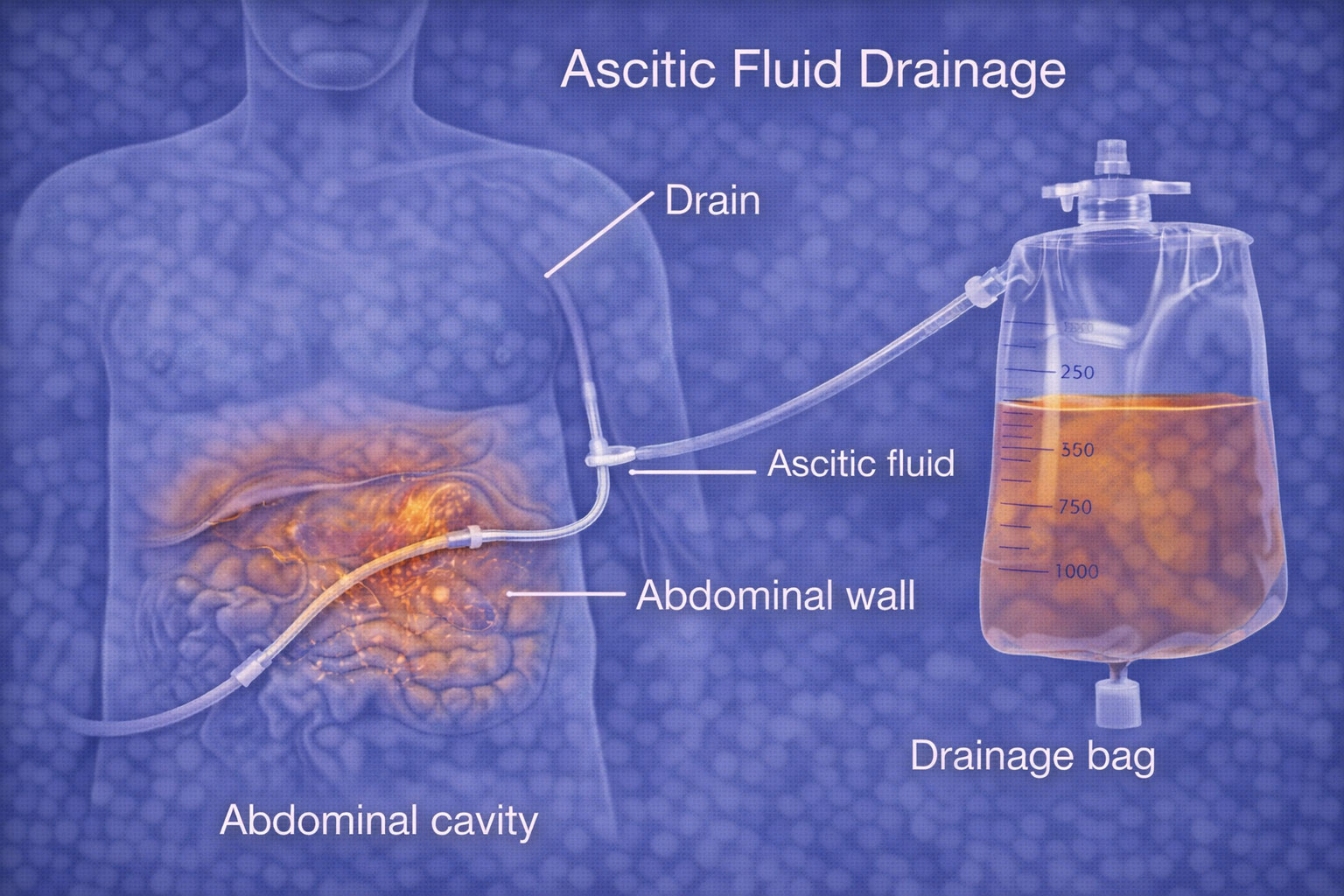
Image-guided ascitic fluid drainage (also called paracentesis) is a minimally invasive procedure where doctors use ultrasound to safely remove this fluid using a small needle or tube—relieving symptoms quickly and often avoiding surgery.
👉Feeling breathless or uncomfortable due to abdominal fluid?

What Is Image-Guided Ascitic Fluid Drainage?

Image-guided ascitic fluid drainage is a procedure in which a specialist:

  • Uses ultrasound to locate the fluid safely, and
  • Inserts a small needle or thin tube (catheter) through the skin to drain the fluid from the abdomen

This:

  • Relieves abdominal pressure and pain
  • Improves breathing and comfort
  • Helps you eat and move better
  • Allows fluid to be sent for lab testing to find the cause
  • Minimally invasive

  • No big cuts or stitches

  • Quick symptom relief

  • Can be done under local anesthesia

Why Is Ascitic Fluid Drainage Done?

Ascitic fluid drainage is done when:

  • There is large or tense ascites causing discomfort or breathlessness
  • The abdomen is very swollen and painful
  • Medicines (diuretics) are not enough
  • Doctors need fluid for testing (infection, cancer, TB, etc.)
  • There is suspected infection in ascitic fluid (spontaneous bacterial peritonitis)
  • The patient needs quick symptom relief or repeated large-volume drainage

Common causes of ascites include:

  • Liver cirrhosis and portal hypertension
  • Cancer
  • Heart failure
  • Kidney disease
  • Abdominal infections

Main goals:

  • Reduce pressure and pain
  • Improve breathing and comfort
  • Help diagnose the cause of fluid
  • Improve quality of life

How Is Image-Guided Ascitic Fluid Drainage Done?

The procedure is done by a doctor trained in image-guided procedures, usually using ultrasound guidance.

Step-by-step:

  • You lie comfortably on a bed; local anesthesia is given to numb the skin
  • Ultrasound is used to choose the safest spot to enter
  • A small needle or thin tube is gently inserted into the fluid
  • The fluid is drained into bottles or a bag
  • If needed, a sample is sent for lab tests
  • The tube is removed (or left briefly for large-volume drainage), and a small dressing is applied

What Are the Risks?

Image-guided ascitic fluid drainage is very safe when done properly. Possible risks with approximate incidence include:

  • Mild pain or discomfort at puncture site – common (10–20%)
  • Leakage of fluid from the skin site – uncommon (5–10%)
  • Low blood pressure or dizziness (after large-volume drainage) – uncommon (3–5%)
  • Minor bleeding – rare (<1–2%)
  • Infection – rare (<1%)
  • Injury to bowel or other organs – very rare (<1%)

What Are the Alternatives?

Your treatment options depend on:

  • Whether the fluid is infected or not
  • How often the fluid comes back
  • Your liver function and overall health

Your doctor will help you choose the safest and most effective option.

Alternative 1: No Paracentesis (Observation and Medicines)

  • May be considered if there is no concern for infection
  • Avoids undergoing a drainage procedure
  • Limitations:
    • The fluid can build up again, causing discomfort and breathing difficulty
    • If the fluid is infected, delaying drainage can delay the correct treatment and worsen the illness

For Patients with Recurrent or Long-Lasting Ascites

Alternative 2: Tunneled Drainage Catheter

  • A long-term tube placed into the abdomen
  • Allows you to drain fluid at home into special containers
  • Helps control symptoms without repeated hospital visits
  • Requires regular care to reduce infection risk

Alternative 3: Denver Shunt

  • A long-term internal shunt with a small pump placed under the skin
  • Moves fluid from the abdomen back into the bloodstream through a vein in the neck
  • Reduces the need for repeated fluid drainage
  • Used less commonly and requires surgical placement and monitoring

Alternative 4: TIPS (Transjugular Intrahepatic Portosystemic Shunt)

  • A procedure to treat high pressure in the liver (portal hypertension)
  • A small tube (stent) allows blood to bypass the liver, lowering pressure
  • Can reduce fluid buildup in the abdomen
  • Limitation:
    • Has higher risks compared to the other options
    • Not suitable for all patients, especially those with advanced liver disease or heart problems

Choosing the Right Ascites Treatment

For many patients, paracentesis offers quick relief from discomfort, while longer-term solutions like tunneled catheters or TIPS may be considered if ascites keeps coming back. A personalized evaluation helps choose the safest and most effective plan.

📌 When symptoms are severe or medicines are not enough, drainage is the fastest relief.

What Happens After Your Procedure?

After drainage:

  • You usually feel lighter and more comfortable quickly
  • Breathing and appetite often improve the same day
  • You may be observed for a short time for blood pressure and comfort
  • A small bandage is placed and can be removed later
  • If a large amount of fluid was removed, you may receive IV albumin
  • You can usually go home the same day
  • Your doctor may adjust medicines and diet to slow fluid re-accumulation
  • Some patients may need repeat drainage if fluid comes back

Frequently Asked Questions (FAQs) – Image-Guided Ascitic Fluid Drainage

Image-guided ascitic fluid drainage, also called paracentesis, is a minimally invasive procedure where doctors use ultrasound to safely remove excess fluid from the abdomen to relieve discomfort and breathing difficulty.

You may need it if:

  • Your abdomen is very swollen and painful
  • You feel breathless or uncomfortable due to fluid
  • Medicines are not controlling the fluid
  • Doctors need fluid for testing infection or cancer
  • You need quick symptom relief

No. It is a simple needle or small tube procedure, not surgery.

It is done under local anesthesia, so you may feel pressure or mild discomfort, but usually no severe pain.

The procedure usually takes 15 to 45 minutes, depending on how much fluid is removed.

Many patients go home the same day after short observation.

Most patients feel immediate or same-day relief in abdominal tightness and breathing.

In many cases, several liters of fluid can be safely removed in one session under medical supervision.

It can come back if the underlying disease continues, so some patients may need repeat drainage or long-term treatment.

Possible risks include mild pain, fluid leakage from the skin, low blood pressure after large-volume drainage, minor bleeding, infection, or very rarely injury to nearby organs.

Alternatives include medicines (diuretics), salt restriction, TIPS procedure for selected patients, and treating the underlying cause of ascites.

Yes. When done with ultrasound guidance, it is very safe and widely performed with low complication rates.

Image guidance makes the procedure safer and more accurate, reducing the risk of organ injury or complications.

The procedure is performed by a trained doctor, often an interventional radiologist or physician, using ultrasound guidance.

Yes. Image-guided ascitic fluid drainage is available in most hospitals and diagnostic centers across India.

Why Choose Image-Guided Ascitic Fluid Drainage?

  • Minimally invasive

  • Quick relief from discomfort and breathlessness

  • Safe and ultrasound-guided

  • No big cuts or stitches

  • Same-day recovery in most cases

  • Widely used and proven procedure

Don’t Suffer With Abdominal Fluid Buildup

Large ascites can make it hard to breathe, eat, and move comfortably. Image-guided ascitic fluid drainage can quickly relieve your symptoms and improve your quality of life—safely and simply.

Relief can be just one simple procedure away.
Call Now Button