

Chennai-based Endovascular & IR Specialist, Dr. Ravindran Ramalingam offers minimally invasive, scar-free treatments ensuring faster recovery and minimal pain.

Endovascular &
IR Specialist

Center Address
- Gleneagles Health City, Perumbakkam, Chennai, TN
- Maruti Scans, Velachery, Chennai, TN

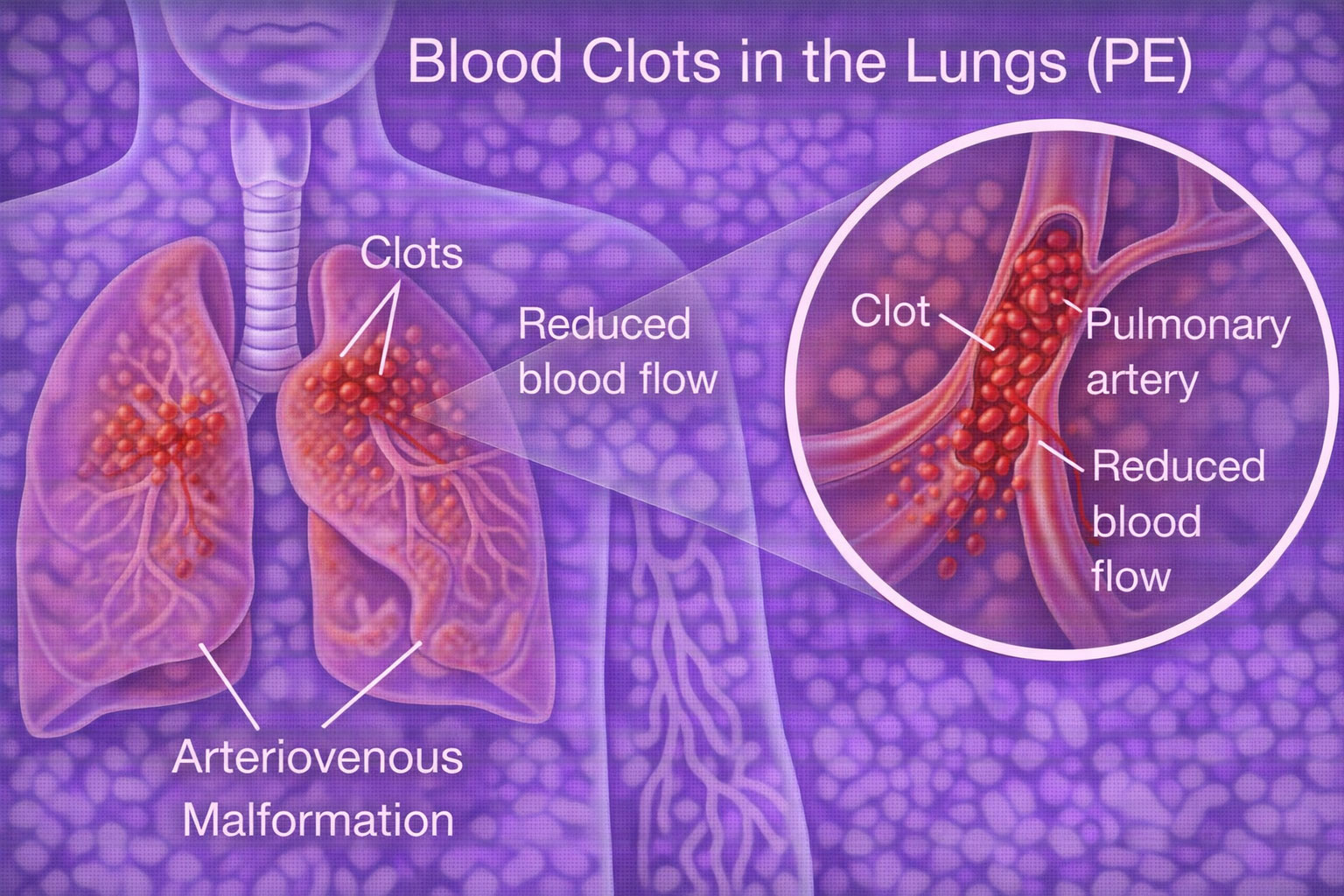
Blood clots in the lungs (PE)

Pulmonary Embolism Thrombectomy / Thrombolysis

Life-Saving, Minimally Invasive Treatment to Remove Lung Blood Clots

A pulmonary embolism (PE) is a dangerous blood clot in the lungs that can cause sudden breathlessness, chest pain, collapse, or even death if not treated quickly.

Pulmonary embolism thrombectomy or thrombolysis are advanced, minimally invasive treatments that remove or dissolve the clot, quickly improve blood flow to the lungs, and save lives in selected patients.
👉 Sudden breathlessness, chest pain, or diagnosed pulmonary embolism?

What Is Pulmonary Embolism Thrombectomy / Thrombolysis?

  • Pulmonary embolism thrombectomy is a procedure that physically removes the clot from the lung arteries using special devices through a thin tube (catheter).
  • Pulmonary embolism thrombolysis is a treatment where clot-dissolving medicine is delivered directly into the clot through a catheter.

These treatments:

  • Quickly open blocked lung arteries
  • Improve oxygen levels and heart strain
  • Reduce the risk of shock and death
  • Speed up recovery in severe cases
  • No open surgery

  • Small puncture, no big cuts

  • Rapid improvement in breathing and circulation

  • Used for moderate to high-risk PE in selected patients

What Is Pulmonary Embolism?

Pulmonary embolism (PE) happens when a blood clot (usually from the leg or pelvis) travels to the lungs and blocks a lung artery.

Common symptoms include:

  • Sudden shortness of breath
  • Chest pain (worse on breathing)
  • Fast heartbeat
  • Cough, sometimes with blood
  • Dizziness or collapse

Why PE is dangerous:

  • It can strain or fail the heart
  • It can reduce oxygen to the body
  • Large clots can be life-threatening

How Is Pulmonary Embolism Thrombectomy / Thrombolysis Done?

The procedure is performed by an interventional specialist in a cath lab under X-ray guidance.

Step-by-step:

  • You lie on the procedure table and are given local anesthesia (and often light sedation)
  • A small puncture is made in the groin or neck vein
  • A thin catheter is guided to the lung arteries
  • Imaging confirms the clot location
  • For thrombolysis: clot-dissolving medicine is delivered directly into the clot
  • For thrombectomy: special devices are used to break and remove the clot
  • Sometimes both methods are combined
  • Blood flow and pressure are checked, and the catheter is removed

What Are the Risks?

Pulmonary embolism thrombectomy/thrombolysis is generally safe in experienced centers, especially when benefits outweigh risks.
Possible risks with approximate incidence include:

  • Bleeding at puncture site – common (5–10%)
  • Minor bleeding elsewhere – uncommon (3–5%)
  • Major bleeding (including internal bleeding) – rare (1–2%)
  • Allergic reaction to contrast dye – rare (<2%)
  • Heart rhythm problems during procedure – uncommon (1–3%)
  • Infection – rare (<1%)
pulmonary embolism treatment chennai

What Are the Alternatives?

Treatment choices depend on:

  • The size and severity of the clot in the lungs
  • Your symptoms and overall health condition
  • Your bleeding risk and personal preferences

Your clinician will guide you in selecting the safest and most effective option.

Alternative 1: Blood Thinners (Anticoagulation Therapy)

  • The most common treatment for pulmonary embolism
  • Helps prevent new clots while the body gradually dissolves the existing clot
  • Suitable for most patients with PE
  • Has a relatively low risk of major bleeding (about 3 in 100 people)
  • However, this approach may be too slow for large or life-threatening clots

Alternative 2: Clot-Busting Medicines (tPA) via IV

  • Uses tPA (tissue plasminogen activator) to dissolve the clot more quickly
  • Given through a vein (IV), so the medicine is not targeted only to the clot
  • Can be effective in severe PE cases
  • Has a higher risk of serious bleeding (about 9 in 100 people)

Alternative 3: Surgical Removal of Clots (Pulmonary Embolectomy)

  • Involves open surgery to remove clots from the lungs
  • Rarely performed today
  • Many patients with large or unstable clots are too critically ill to safely undergo major surgery
  • Carries a high risk of complications and death

Choosing the Right PE Treatment

For selected patients with severe or high-risk pulmonary embolism, minimally invasive, catheter-based clot removal treatments may offer faster relief with lower risk compared to IV clot-busting drugs or surgery. A rapid, expert evaluation is essential.

📌 Catheter-based thrombectomy/thrombolysis is usually chosen for moderate to high-risk PE or when the patient is worsening despite medicines.

What Happens After Your Procedure?

After treatment:

  • You will be monitored in ICU or a high-dependency unit
  • Breathing and heart strain usually improve over hours to days
  • You will continue blood thinners to prevent new clots
  • Oxygen may be needed for a short time
  • Most patients gradually return to normal activities over weeks
  • Follow-up scans and heart tests may be done

Early treatment helps protect your heart and lungs and improves recovery.

Frequently Asked Questions (FAQs) – Pulmonary Embolism Thrombectomy / Thrombolysis

Pulmonary embolism thrombectomy removes a blood clot from the lung arteries using special catheter-based devices, while thrombolysis uses clot-dissolving medicine delivered directly into the clot through a thin tube.

A pulmonary embolism is a dangerous blood clot in the lungs, usually coming from a clot in the leg, that blocks blood flow and can cause sudden breathlessness, chest pain, collapse, or even death.

These treatments are considered for patients with:

  • Moderate to high-risk PE
  • Severe breathlessness or low blood pressure
  • Signs of heart strain
  • Worsening condition despite blood thinners

No. It is a minimally invasive, catheter-based procedure, not open chest surgery.

The procedure is done under local anesthesia and often light sedation, so most patients feel minimal discomfort.

The procedure usually takes 1 to 3 hours, depending on the size and location of the clot.

Yes. In experienced centers and selected patients, it is safe and effective. Serious complications like major bleeding are uncommon.

Possible risks include bleeding, heart rhythm problems, allergic reaction to contrast dye, or infection. Major complications are rare compared to the benefit in severe PE.

Yes. Blood thinners are still required to prevent new clots from forming in the future.

Many patients notice improvement in breathing and oxygen levels within hours to days, depending on how severe the PE was.

Yes. Most patients stay in the hospital for a few days for monitoring, especially after thrombolysis or thrombectomy.

Yes. PE can recur, which is why long-term medicines and follow-up are very important.

Blood thinners prevent new clots and help the body dissolve clots slowly. Thrombectomy/thrombolysis removes or dissolves the clot faster, which is important in severe or high-risk PE.

Patients with high bleeding risk, recent major surgery, or certain medical conditions may not be suitable. Your doctor will decide after careful evaluation.

Yes. Pulmonary embolism thrombectomy and thrombolysis are available in advanced cardiac and interventional centers across India.

Why Choose Catheter-Based Treatment for Pulmonary Embolism?

  • Rapid removal or dissolution of the clot

  • Faster improvement in breathing and heart strain

  • Minimally invasive, no big surgery

  • Life-saving in severe cases

  • Helps protect the heart and lungs long term

Don’t Ignore a Dangerous Lung Clot

If you or your loved one has sudden breathlessness, chest pain, collapse, or diagnosed pulmonary embolism, every minute matters.

Pulmonary embolism thrombectomy/thrombolysis can be life-saving in the right patient at the right time.
Call Now Button