

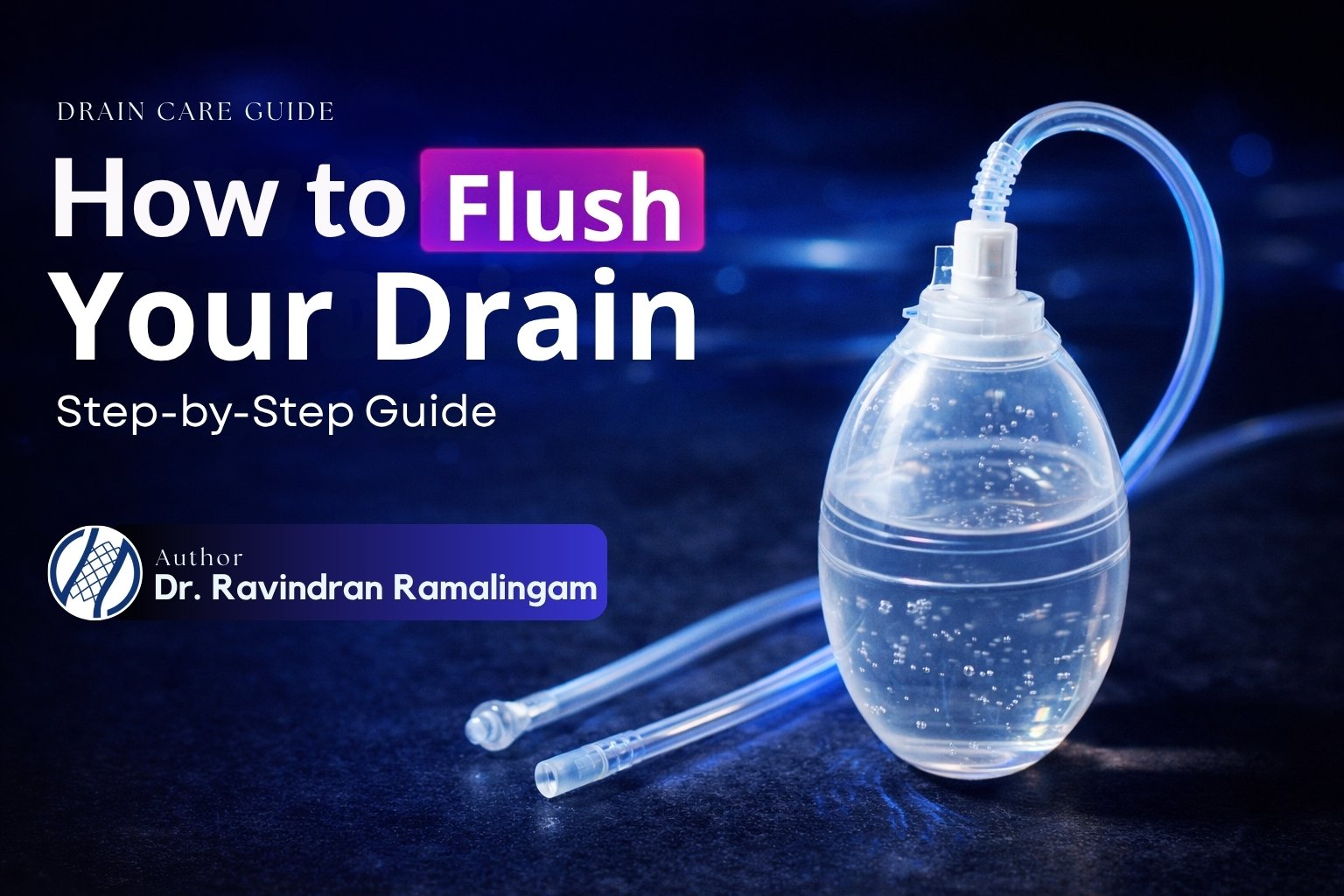
If you’re wondering how to care for a drain at home, you’re not alone. Many patients need simple guidance after an IR procedure to safely manage their drain.
Step-by-Step Patient Guide
Flushing your drain helps keep the tube open, prevents blockage, and reduces the risk of infection. Your doctor or nurse will tell you how often you need to flush your drain.
Follow these simple steps carefully.
Before You Start
- Wash your hands well with soap and water
- Keep these items ready:
- Pre-filled syringe of sterile saline
- Alcohol swabs
- Clean tissue or towel
- Make sure you are in a clean, well-lit area
- Do not pull, twist, or bend the drain tube
Step 1: Check and Empty the Drain Bag
- Before emptying, write down the amount and color of the fluid
- Try to empty the bag at the same time every day or when it is about 2/3 full
- Open the spout and empty the fluid into the toilet
- You may place a paper towel or clean cloth under the bag to avoid spills
- Close the spout properly after emptying
- Do not flip or twist the drain tube, as this may cause it to move or come out
Step 2: How to Flush If You Have a 3-Way Valve
- Carefully remove the cap from the middle port of the valve
- Clean the port with an alcohol swab
- Connect the saline syringe to the middle port (do not touch the tip)
- Turn the valve so it is OFF toward the drainage bag
- Slowly and gently push the saline into the tube
- Turn the valve so it is OFF toward the middle port
- Remove and throw away the empty syringe
- Put the cap back on the port securely
Step 3: How to Flush If Your Tube Is Connected Directly to the Bag (No 3-Way Valve)
- Hold the tube steady and gently unscrew the drainage bag (turn counterclockwise)
- You do not need to clamp the tube
- Clean the tip of the tube with an alcohol swab
- Attach the saline syringe to the tube by gently screwing it on
- Slowly inject the saline into the tube
- Remove and discard the syringe
- Reconnect the drainage bag securely
Important Safety Tips
- Always flush exactly as your doctor instructs
- Never force the saline if you feel strong resistance
- Do not reuse syringes
- Keep the area around the tube clean and dry
- Do not twist or pull on the drain tube
When to Call Your Doctor
Contact your healthcare provider if you notice:
- Pain, swelling, or redness around the tube site
- Fever or chills
- Leakage around the tube
- No drainage or sudden drop in drainage amount
- You cannot flush the drain or feel strong resistance
Why Flushing Your Drain Is Important
Regular flushing:
- Keeps the drain working properly
- Helps prevent blockage
- Reduces the risk of infection
- Helps your body heal faster
Comments are closed