
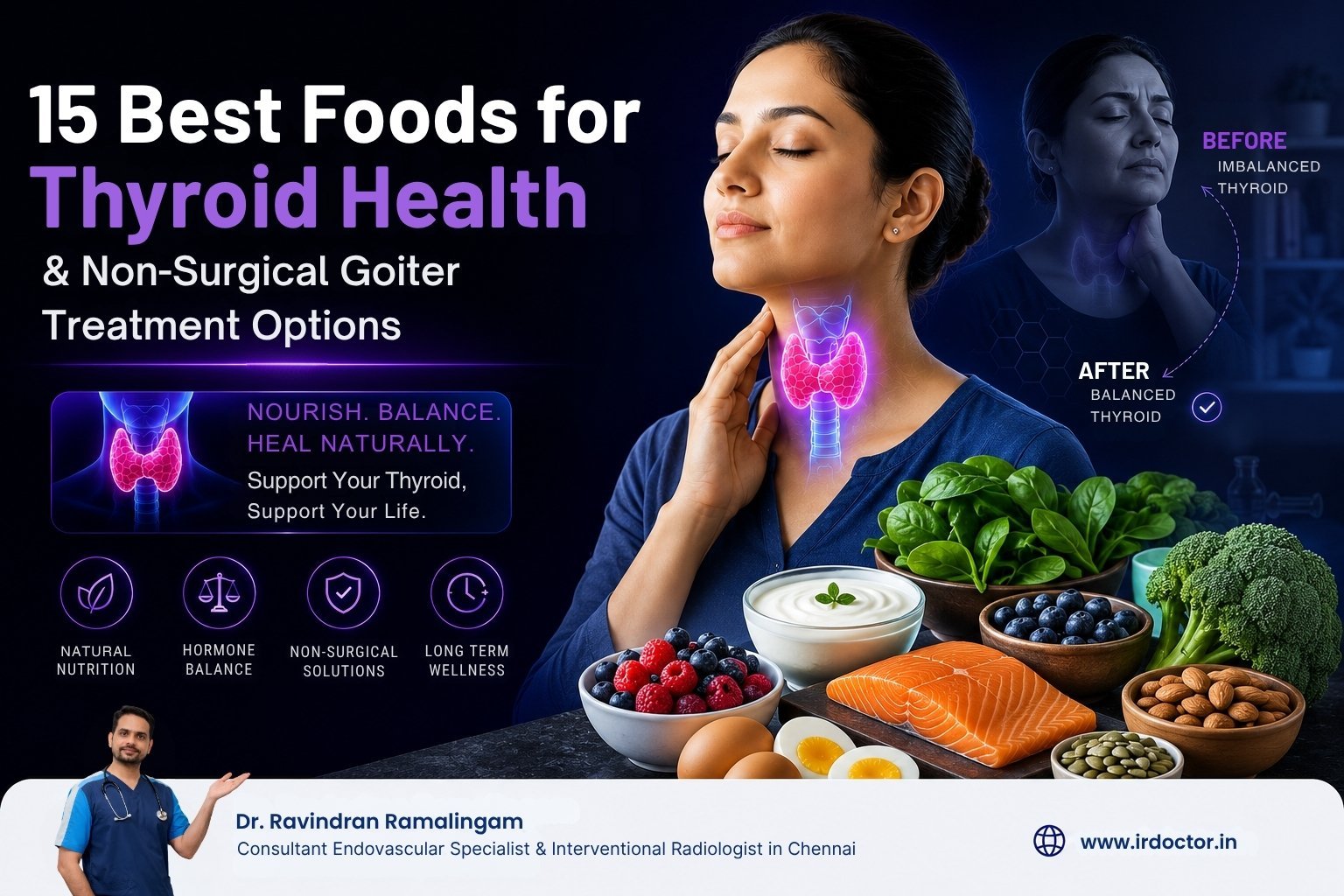
If your thyroid panel came back slightly off, or a doctor casually told you to “watch your iodine”, food is usually the first fix everyone reaches for. And rightly so; the thyroid is a nutrient-hungry little gland, and the right minerals genuinely support hormone production, energy, metabolism, and mood. But there’s an important distinction that most diet articles quietly skip over: the difference between a thyroid that’s simply running low on nutrients and a thyroid that has physically grown a lump. One is a chemistry problem. The other is a structural one, and no amount of clean eating rewrites structural biology.
This guide covers both sides honestly. First, 15 foods genuinely worth building into your routine, drawn from clinical nutrition guidance on iodine, selenium, zinc, iron, and magnesium. Then, what to actually do once the diet has done what it can, because for a real nodule, it eventually reaches a ceiling. If you’re specifically researching thyroid treatment without surgery, skip ahead to the RFA section further down; that’s where the more actionable answer lives.
Quick answer: Iodine, selenium, zinc, iron, and magnesium-rich foods support healthy thyroid hormone production and conversion, but they cannot shrink an existing thyroid nodule. Structural nodules are physical tissue growths, not nutrient deficiencies. Non-surgical options like radiofrequency ablation (RFA) can treat them precisely, without a single surgical cut.
Top 15 Foods to Support Your Thyroid Function
Think of these less as a strict checklist and more as a rotation. Your thyroid doesn’t need every nutrient every single day; it needs consistency across the week.
Iodine-Rich Superfoods
Iodine is the raw material that your thyroid actually converts into a hormone. Without enough of it, the gland simply doesn’t have the building blocks it needs, no matter how healthy the rest of your diet looks.
- Greek yoghurt and dairy are reliable, everyday iodine sources that also bring protein and calcium along with them
- Iodised salt is the simplest fix of all, though it’s easy to overdo; moderation genuinely matters here, since excess iodine can be as disruptive as deficiency.
- Seafood and shellfish are among the richest natural iodine sources available, with a useful dose of zinc thrown in
- Eggs are a quietly efficient food, carrying iodine alongside selenium and vitamin B12 in one bite.
Selenium Powerhouses
Selenium doesn’t get nearly enough credit. Its real job is converting the inactive T4 hormone your thyroid produces into the active T3 form your cells actually use. Skip this step, and even good iodine intake won’t translate into how you feel.
- Brazil nuts are remarkably potent; one or two a day is genuinely enough, since more isn’t better and can tip into excess.
- Salmon, tuna, and sardines: selenium bundled with anti-inflammatory omega-3 fats and a useful dose of vitamin D
- Legumes (lentils, chickpeas, beans): an underrated selenium source that also brings zinc, iron, and magnesium to the same plate
Zinc, Iron & Steady-Energy Sources
Zinc and iron work quietly in the background of hormone synthesis, and their absence tends to show up as fatigue long before it shows up on a blood test.
- Pumpkin seeds are an easy, plant-based zinc source you can add to almost any meal.
- Lean beef and chicken provide zinc, iron, and B12 together, making them efficient choices for non-vegetarians.
- Whole grains provide steady, slow-release energy that avoids the blood sugar spikes known to stress hormone balance over time.
- Iron deficiency is consistently linked with hypothyroidism, particularly in women, and is one of the more overlooked nutritional gaps in thyroid care.
Magnesium & Antioxidant Boosters
This last group is where most diet plans fall short: magnesium and antioxidants rarely get billed as “thyroid foods”, even though the research increasingly points to their role.
- Almonds, flaxseeds, and other nuts and seeds: a dependable, natural magnesium source that also supports better sleep and mood.
- Cooked leafy greens (spinach, kale): rich in magnesium and antioxidants; cooking, rather than eating them raw, meaningfully reduces their mild iodine-blocking effect.
- Berries: among the highest antioxidant fruits you can eat, and genuinely useful against the oxidative stress linked to worsening thyroid symptoms
- Avocados and fortified dairy or mushrooms: healthy fats paired with vitamin D, a nutrient several studies associate with healthier thyroid antibody levels and better long-term gland function.
Foods to Limit or Avoid
Raw cruciferous vegetables like broccoli, cabbage, and kale contain compounds that can block iodine uptake when eaten in very large raw quantities, but cooking breaks down most of this effect, so there’s no real need to cut them out entirely; just don’t rely on giant raw salads of them daily. Soya is a genuine concern if you’re on thyroid medication, since it interferes with levothyroxine absorption; leaving a four-hour gap between soy-based foods and your tablet is usually enough to sidestep the issue. Kelp and sea moss supplements are worth avoiding altogether, since the excess iodine they deliver can tip a stable thyroid into imbalance rather than help it. And then there are the usual suspects: ultra-processed snacks, refined carbs, and added sugar, which don’t attack the thyroid directly but do drive the inflammation and weight gain that make existing thyroid symptoms noticeably worse.
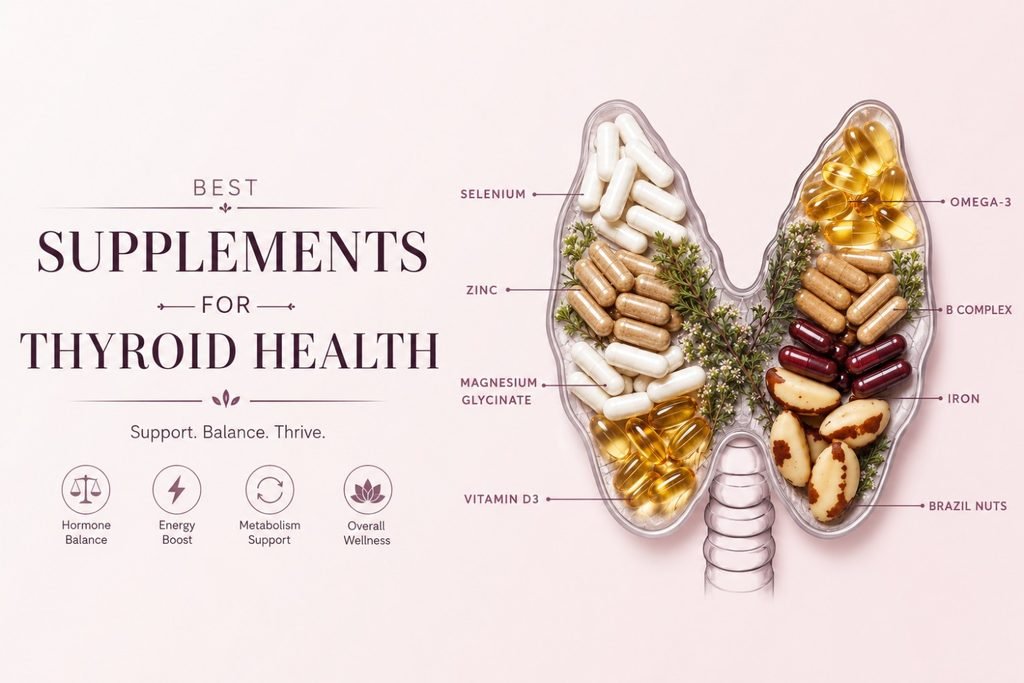
Diet vs. Nodule Reality Check: A nutrient-dense diet supports hormone production, but it cannot shrink a structural thyroid nodule. If you can feel a lump in your neck, notice tightness while swallowing, or your collar suddenly feels tighter, that’s not something food fixes. A 20-minute non-surgical RFA procedure can treat the nodule directly, without surgical cuts.
When Diet Isn’t Enough: What Causes Structural Thyroid Nodules?
Hormonal imbalance is a chemistry problem: your T3, T4, or TSH levels have drifted out of range, and that’s usually manageable through diet, medication, or a combination of both. A thyroid nodule is a different animal entirely. It’s an actual lump of tissue that has grown within the gland, and once that tissue exists, no dietary adjustment reaches back in and reverses it. This is the distinction most food-focused articles gloss over, and it’s the one that matters most if you’ve actually felt something in your neck.
Warning signs worth acting on rather than watching:
- Visible or felt swelling at the front of the neck, even a small one
- Difficulty swallowing, or a sense of food “catching” partway down
- A voice that’s turned hoarse or raspy without an obvious cause like a cold
- Tightness around the collar or shirt buttons that wasn’t there a few months ago
An ultrasound will confirm that a nodule exists and give a rough picture of its shape and size, but it can’t tell you what the tissue actually is. That’s the job of FNAC Fine-Needle Aspiration Cytology, a quick, minimally invasive test that samples the nodule directly and confirms whether it’s benign before any treatment path is decided. If you’ve already had one done, here’s exactly what to do after your thyroid FNAC test.
Non-Surgical Thyroid Nodule Ablation (RFA): Shrinking Nodules Without Surgery
Thyroid nodule ablation works on a simple, elegant principle: a thin probe, guided in real time by ultrasound, delivers controlled heat directly into the nodule itself. There’s no incision on the neck, no removal of the healthy tissue surrounding it, and no general anaesthesia to plan your week around. Learn more about the thyroid nodule ablation procedure here.
| Neck scar | Visible incision | No probe access only |
| Anaesthesia | General anaesthesia required | Local; patient stays awake. |
| Thyroid tissue removed | Often partial or full gland | Only the nodule itself |
| Lifelong medication risk | Common if the gland is removed | Usually not required |
| Recovery time | 1–2 weeks, activity restricted | Same day to next day |
| Hospital stay | Typically overnight or longer | Daycare, no admission needed |
Because RFA leaves the healthy surrounding gland completely untouched, most patients retain normal thyroid function afterward, which is precisely why it’s become the preferred thyroid RFA procedure for people who’d rather not spend the rest of their lives dependent on hormone replacement tablets. If you’ve been searching for thyroid swelling treatment in Chennai or wondering about the thyroid RFA cost in India, that’s a conversation best had directly during your consultation, since pricing genuinely depends on nodule size, number, and complexity.
Consult Chennai’s Leading Non-Surgical Thyroid Specialist
Your first visit typically includes a thorough review of your symptoms and thyroid history, a detailed ultrasound mapping the nodule’s exact size, location, and characteristics, and an honest, pressure-free conversation about whether RFA is genuinely the right fit for your case or whether further evaluation is needed first. Dr Ravindran Ramalingam offers thyroid nodule treatment and thyroid nodule ablation in Chennai, giving patients who qualify a real thyroid goitre treatment without the option of surgery, rather than a choice between ignoring the problem and going under the knife.
Frequently Asked Questions
No. Diet supports healthy hormone production in the tissue surrounding a nodule, but the nodule itself is structural tissue growth; food doesn’t reduce its size, no matter how disciplined the diet is. RFA is currently the leading non-surgical option for genuinely shrinking one.
No, and this is a common mix-up. RFA is a needle-based, image-guided procedure with no incision, no general anesthesia, and no gland removal, a fundamentally different category of treatment from thyroid nodule surgery.
In most cases, FNAC is required first to confirm that the nodule is benign before RFA is considered. Your specialist will guide this decision based on what your ultrasound findings show.
Usually not. Since RFA treats only the nodule itself and leaves the healthy surrounding tissue intact, most patients continue producing their own thyroid hormone normally, unlike traditional surgery, which often removes part or all of the gland and creates lifelong dependence on medication.
Conclusion
Food genuinely matters for your thyroid: iodine, selenium, zinc, iron, and magnesium all feed into how well the gland produces and converts hormones, and getting them consistently right can meaningfully improve how you feel day to day. But diet has a ceiling, and it’s an honest one worth accepting rather than working around. It can support a gland that’s under-fuelled, but it can’t undo a nodule that’s already formed, and no amount of Brazil nuts, leafy greens, or iodised salt will make an existing lump quietly disappear. If you’ve noticed swelling at the front of your neck, a change in your voice, or a tightness around your collar that wasn’t there before, that’s your body’s signal to get an ultrasound, not a reason to adjust your grocery list one more time. Book your consultation here and get a clear, honest answer on exactly where you stand.
Support your thyroid health with the right foods. If you have noticed thyroid swelling or a neck lump, or have been diagnosed with a thyroid nodule, consider discussing your options with Dr Ravindran at Gleneagles Hospital, Velachery, Chennai.
+91 8190 907 908 | Learn About Thyroid Nodule Ablation
Comments are closed