

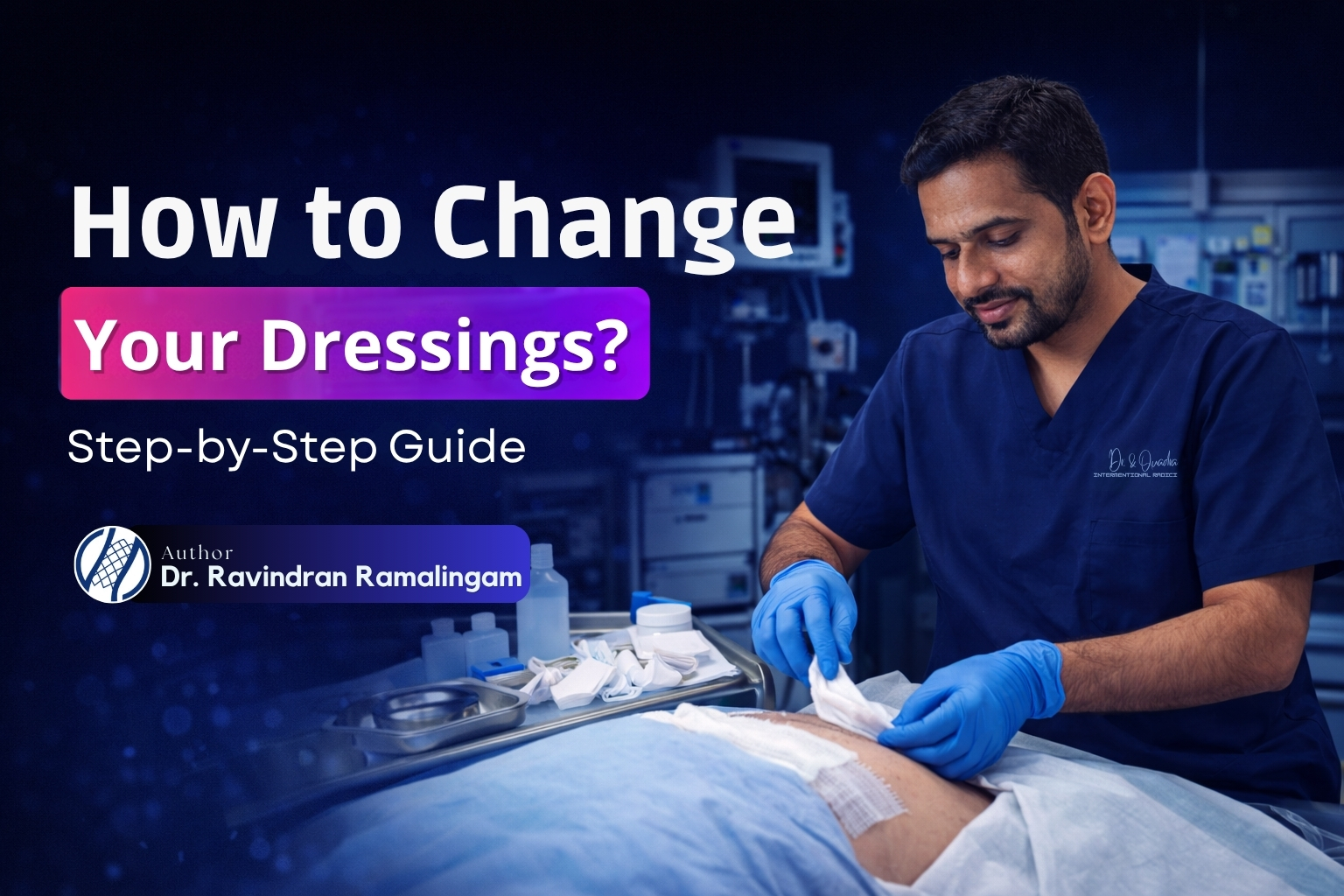
Step-by-Step Wound Care Guide
Proper dressing changes are important to keep your wound clean, prevent infection, and help your body heal faster. Follow these simple instructions exactly as advised by your doctor or nurse.
When Should You Change Your Dressing?
You should change your dressing:
- 24 hours after your procedure (first change)
- At least once every day
- After bathing or showering
- Whenever the dressing becomes wet or dirty
- Until the wound is fully healed
Can I Get the Dressing Wet?
- Ask your clinician if it is safe to get the area wet while showering
- If it is allowed:
- Make sure the skin is clean and completely dry before applying a new dressing
- If it is not allowed:
- Cover the dressing to keep it dry while bathing
- Your clinician can suggest the best way to protect it
How to Change Your Dressing: Step-by-Step
If possible, ask someone to help you, especially if the dressing is in a hard-to-reach area.
Step 1: Get Your Supplies Ready
- New gauze or dressing
- Tape or plastic film to secure it
- Mild soap and water (if needed)
- A clean towel or paper towel
Place all supplies on a clean surface.
Step 2: Wash Your Hands
- Wash your hands thoroughly with soap and water
- Dry them with a clean towel
Step 3: Remove the Old Dressing
- Carefully take off the old dressing
- Throw it away in the trash
- Do not pull on any tubes or drains, if present
Step 4: Check Your Skin
- Look for signs of:
- Redness
- Swelling
- Rash
- Discharge or bad smell
- If you notice any of these, tell your doctor or nurse
These may be signs of infection or a skin reaction to the tape or dressing
Step 5: Clean and Dry the Area (If Needed)
- If the skin is dirty:
- Gently clean with mild soap and water
- Pat dry with a clean towel
- Do not rub the area
Step 6: Apply the New Dressing
- Place fresh, clean gauze over the wound
- Secure it with tape or plastic film
- Make sure the dressing is:
- Clean
- Dry
- Not too tight
Step 7: Secure Any Tube or Drain (If You Have One)
- If you have a drain or tube, make sure it is:
- Well secured
- Not pulling on the skin
- This helps prevent accidental pulling out of the tube
Important Wound Care Tips
- Always change dressings with clean hands
- Keep the area clean and dry
- Do not reuse old dressings
- Do not apply creams or powders unless your doctor tells you to
- Follow your doctor’s instructions on how long to continue dressing changes
When to Call Your Doctor
Contact your healthcare provider if you notice:
- Increasing pain, redness, or swelling
- Pus or bad-smelling discharge
- Fever or chills
- Bleeding that does not stop
The wound is not healing or looks worse
Why Proper Dressing Changes Matter
Regular and correct dressing changes help:
- Prevent infection
- Protect the wound
- Speed up healing
- Reduce scarring and complications
Comments are closed