

Chennai-based Endovascular & IR Specialist, Dr. Ravindran Ramalingam offers minimally invasive, scar-free treatments ensuring faster recovery and minimal pain.

Endovascular &
IR Specialist

Center Address
- Gleneagles Health City, Perumbakkam, Chennai, TN
- Maruti Scans, Velachery, Chennai, TN

Biopsy

A Simple Test to Find Out What’s Really Going On Inside Your Body 

When a scan or exam shows a lump, swelling, or abnormal area, doctors often recommend a biopsy to know exactly what it is. 

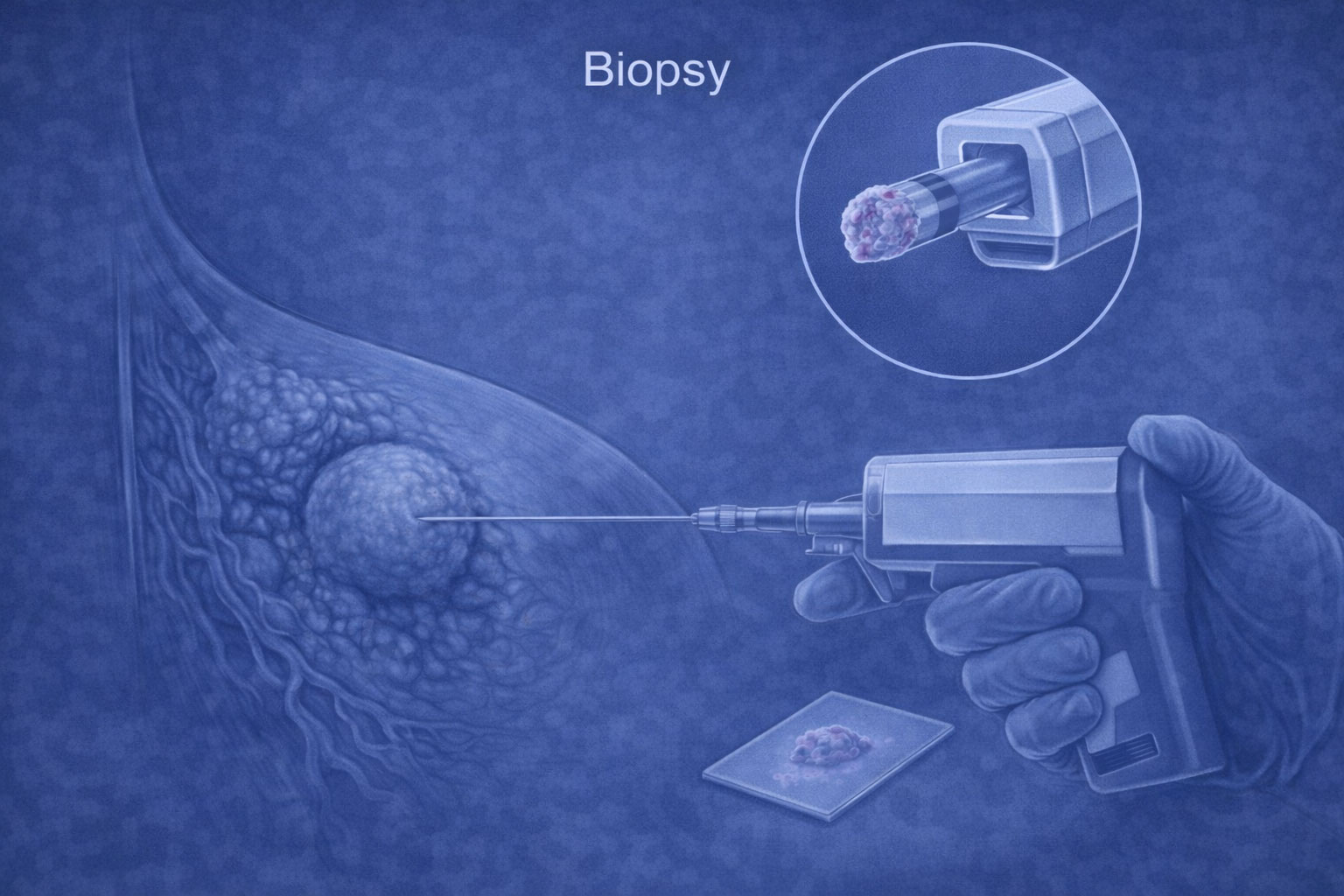
biopsy is a safe, commonly done medical test where a small sample of tissue is taken and examined under a microscope to check for infection, inflammation, or cancer. 
👉 Have a lump or abnormal scan and need clarity? 

What Is a Biopsy?

biopsy is a medical procedure where a doctor removes a small piece of tissue from the body and sends it to the lab for testing. 

The test helps to: 

  • Confirm or rule out cancer 
  • Identify infection or inflammation 
  • Find out the exact nature of a lump or growth 
  • Guide the right treatment plan 

Biopsies can be done from many parts of the body, such as: 

  • Breast 
  • Thyroid 
  • Liver 
  • Lung 
  • Lymph nodes 
  • Bone or soft tissue 
  • Quick and accurate diagnosis
  • Usually done with a needle or small cut
  • Often done as a day-care procedure

Why Is a Biopsy Done?

A biopsy is done when: 

  • There is a lump, swelling, or mass 
  • A scan (USG/CT/MRI) shows an abnormal area 
  • Blood tests suggest something unusual 
  • Doctors need to confirm or rule out cancer 
  • The cause of infection or inflammation is unclear 

Main goals: 

  • Get a clear diagnosis 
  • Avoid guessing or unnecessary treatment 
  • Choose the right medicine or surgery 
  • Plan the best and safest treatment 

How Is a Biopsy Done?

Most biopsies today are done using image guidance (ultrasound, CT, or X-ray) for safety and accuracy. 

Common steps: 

  • You lie comfortably on the procedure table 
  • The skin is cleaned and local anesthesia is given to numb the area 
  • thin needle (or sometimes a slightly thicker needle) is guided into the lump 
  • small tissue sample is taken 
  • Pressure is applied to stop bleeding, and a small dressing is placed 
  • The sample is sent to the lab for testing 

Types of biopsy include: 

  • Needle biopsy (core biopsy or FNAC) – most common 
  • Incision or excision biopsy – small cut by surgeon (in some cases) 

What Are the Risks?

Biopsy is very safe in most patients. Possible risks with approximate incidence include: 

  • Mild pain or soreness – common (20–30%) 
  • Bruising at the biopsy site – common (10–20%) 
  • Minor bleeding – uncommon (5–10%) 
  • Infection – rare (<1–2%) 
  • Injury to nearby structures – very rare (<1%, especially with image guidance) 
  • Need for repeat biopsy (if sample is insufficient) – uncommon (5–10%) 

What Are the Alternatives?

Your treatment choices depend on: 

  • Your symptoms and overall health 
  • The size, location, and appearance of the spot or lesion 
  • How likely it is to be a serious condition 

Your clinician will help you decide the best approach. 

Alternative 1: No Biopsy 

  • Avoids undergoing a biopsy procedure 
  • However, without a biopsy, doctors may not be able to confirm a diagnosis 
  • This can lead to delay or inappropriate treatment if the condition requires medical care 


Alternative 2: Watchful Waiting (Monitoring) 

  • Regular follow-up with imaging tests or lab investigations 
  • Used to see whether the spot changes in size or behavior over time 
  • Avoids immediate invasive testing 
  • Main drawback: if the condition is serious, treatment may be delayed 


Alternative 3: Surgical Removal 

  • Involves surgery to remove the spot or lesion completely 
  • Considered a more invasive option 
  • Carries higher risks such as pain, infection, and complications 
  • Requires a longer recovery period 
  • Surgeons often prefer a biopsy diagnosis before surgery to plan the operation properly 


Making the Right Choice 

An image-guided biopsy offers a safe, minimally invasive way to reach an accurate diagnosis, helping ensure timely and appropriate treatment while avoiding unnecessary surgery or delays. 

📌 A biopsy is often the only way to know for sure what a lump or lesion really is. 

What Happens After Your Procedure?

After a biopsy: 

  • You’ll rest for a short time and then go home the same day 
  • Mild pain or swelling can occur for 1–2 days 
  • You can usually return to normal activities the next day 
  • Keep the area clean and dry as advised 
  • The lab report usually comes in a few days 
  • Your doctor will explain the result and plan further treatment if needed 

Frequently Asked Questions (FAQs) – Biopsy

A biopsy is a simple medical test in which a small sample of tissue is taken from the body and examined under a microscope to find out if a lump, swelling, or abnormal area is benign, infected, inflamed, or cancerous. 

Doctors recommend a biopsy to: 

  • Confirm or rule out cancer 
  • Find the exact cause of a lump or abnormal scan 
  • Identify infection or inflammation 
  • Decide the best treatment plan 

Most biopsies are done under local anesthesia, so you may feel pressure or a small prick, but not much pain. 

No. Most biopsies today are minimally invasive, needle-based procedures, not major surgery. Some special cases may need a small surgical biopsy. 

The procedure usually takes 10 to 30 minutes, depending on the body part being tested. 

Most biopsies are day-care procedures, and you can go home the same day. 

Usually 2 to 7 days, depending on the type of biopsy and special tests needed on the sample. 

No. A biopsy is done to find out what the problem is. Many biopsy results show non-cancerous (benign) conditions. 

This is a common worry, but with modern biopsy techniques, the risk of spreading cancer is extremely low to almost zero.

Most risks are minor, such as mild pain, bruising, or small bleeding. Serious complications like infection or organ injury are rare. 

Your doctor may advise: 

  • Blood tests before the procedure 
  • Stopping certain blood-thinning medicines 
  • Not eating for a few hours (for some biopsies) 


Yes. Most people return to normal activities within a day, unless your doctor advises rest for a specific reason. 

Sometimes the sample may not be enough. In that case, your doctor may suggest a repeat biopsy or another test. 

Yes. Ultrasound- or CT-guided biopsies are more accurate and safer because the doctor can see exactly where the needle is going. 

Yes. Biopsies are commonly done in hospitals and diagnostic centers across India using modern, safe techniques. 

Why Choose Angioembolization for Visceral Artery Aneurysm?

  • Accurate diagnosis
  • Minimally invasive
  • Quick procedure
  • Low risk
  • Faster treatment planning
  • Avoids unnecessary surgery

Don’t Delay a Clear Diagnosis

If you have a lump, abnormal scan, or unexplained swelling, a biopsy can give you clear answers and peace of mind.

Early and accurate diagnosis leads to better treatment and better outcomes.
Call Now Button