Your treatment options depend on:
- Your symptoms and stroke risk
- Overall health and medical conditions
- The degree of narrowing (plaque buildup) in the carotid artery
- Your personal preferences
Your doctor will help you choose the safest and most effective approach.
Alternative 1: Medical Treatment and Lifestyle Changes
- Focuses on medicines and healthy lifestyle habits to slow or stop plaque growth
- Blood thinners and cholesterol-lowering medicines
- Blood pressure and diabetes control
- Stopping smoking, healthy diet, and regular exercise
- Avoids any invasive procedure
- Limitation: may not be enough once the plaque becomes large or starts causing symptoms
- With this approach, the risk of a major stroke is about 1–2 in 100 per year
- This risk is higher if you have already had a stroke or warning symptoms (TIA)
Alternative 2: Carotid Endarterectomy (Surgical Plaque Removal)
- A surgical procedure to remove plaque from the carotid artery
- Often recommended for symptomatic or severe narrowing
- Can reduce the risk of future stroke in suitable patients
- Compared to minimally invasive options, surgery:
- Leaves a scar on the neck
- Has a longer recovery period
- Carries a slightly higher risk of nerve injury or damage to nearby neck structures
- May have a slightly lower risk of stroke during the procedure in some patients who already have symptoms
Choosing the Right Carotid Treatment
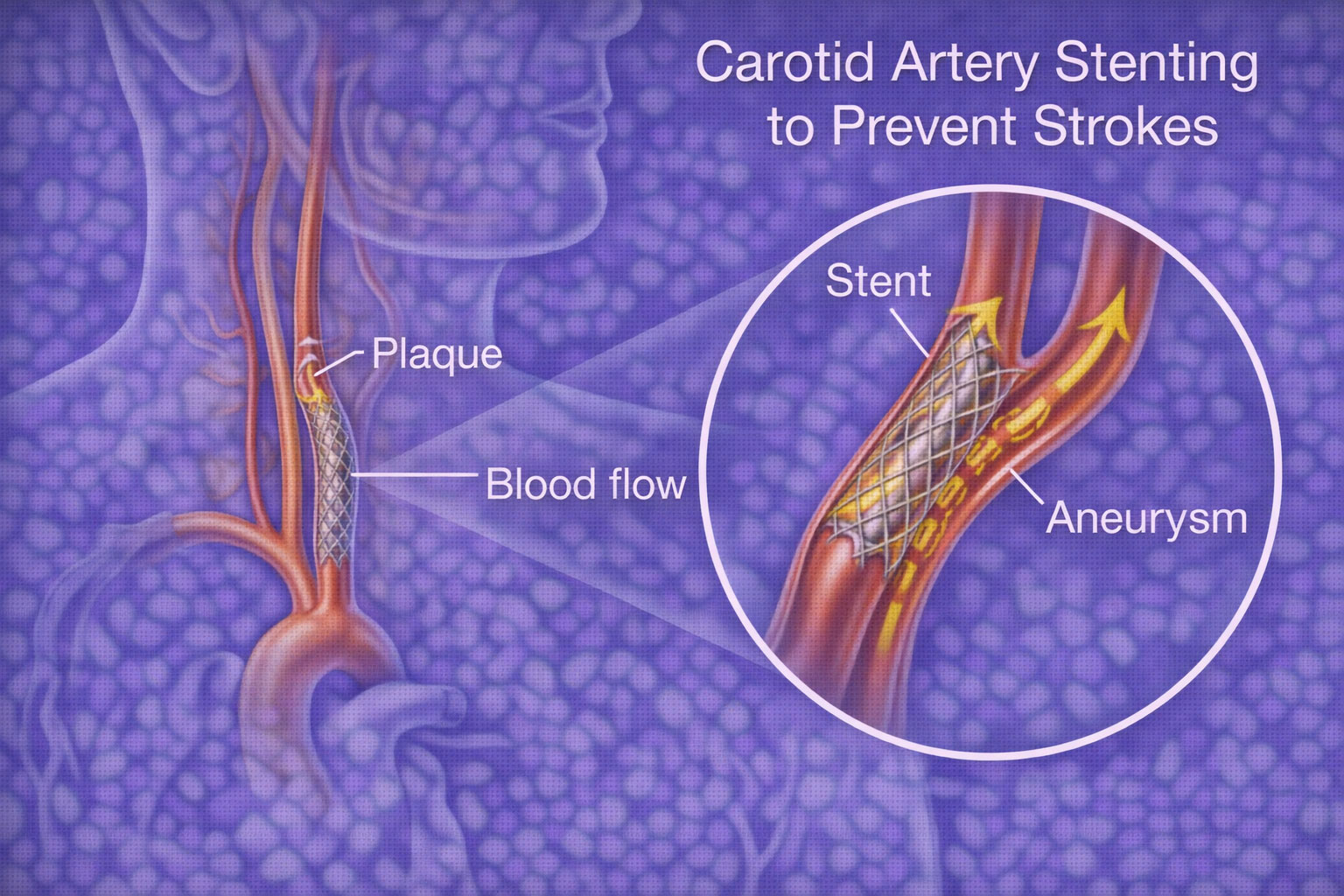
Many patients today benefit from minimally invasive carotid artery stenting, which treats the narrowing from inside the artery with less pain, smaller scars, and faster recovery compared to open surgery. A personalized evaluation helps select the best strategy to prevent stroke.
📌 The best choice depends on how severe the narrowing is, your symptoms, and your overall health.