
Chennai-based Endovascular & IR Specialist, Dr. Ravindran Ramalingam offers minimally invasive, scar-free treatments ensuring faster recovery and minimal pain.

Endovascular &
IR Specialist

Center Address
- Gleneagles Health City, Perumbakkam, Chennai, TN
- Maruti Scans, Velachery, Chennai, TN

Feeding Tube

Percutaneous Gastrostomy & Gastrojejunostomy

A Safe, Minimally Invasive Way to Provide Nutrition When Eating Is Not Possible

Some patients cannot swallow safely or cannot take enough food by mouth because of stroke, cancer, neurological disease, or long-term illness.

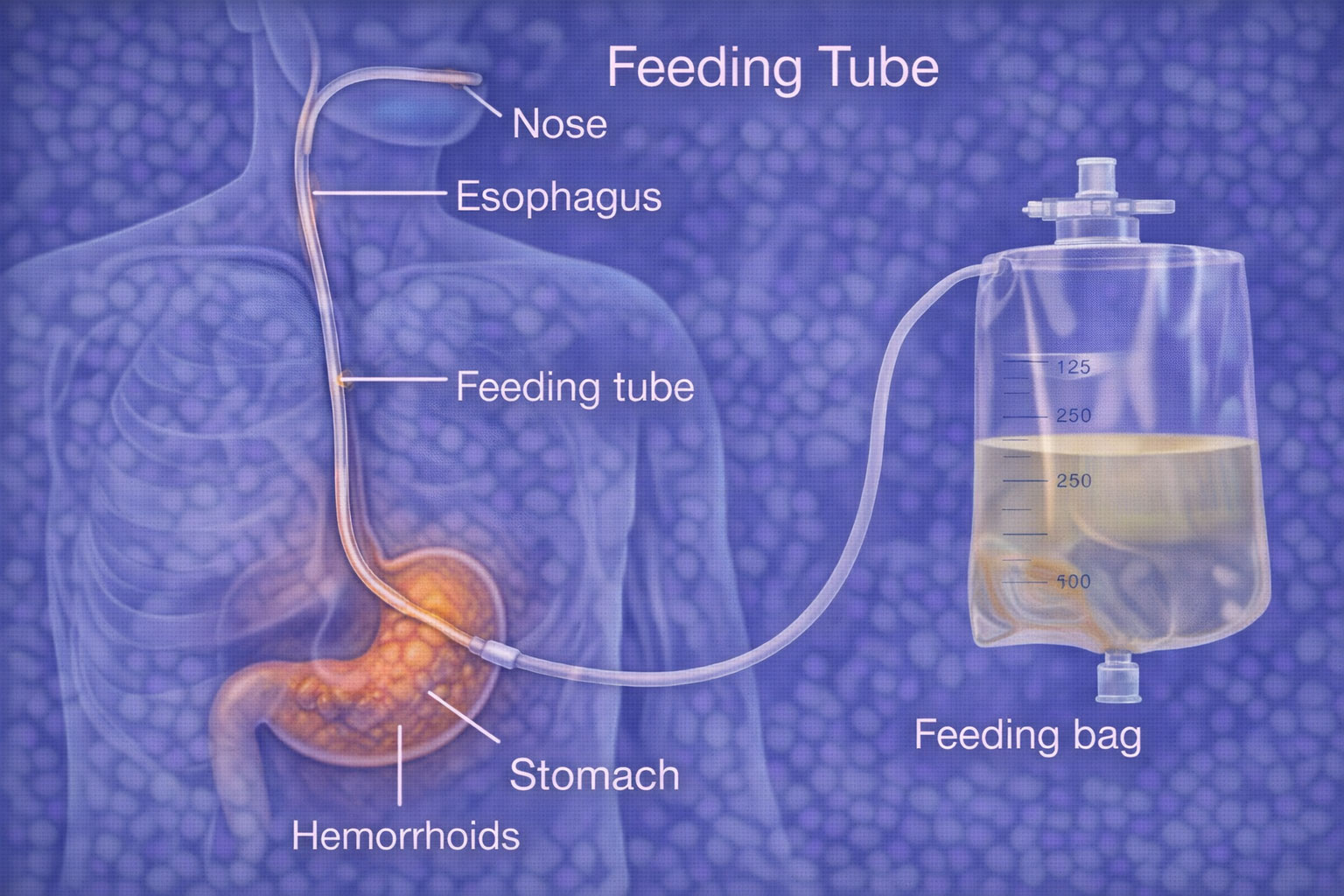
Percutaneous gastrostomy and gastrojejunostomy are minimally invasive, image-guided procedures that place a feeding tube directly into the stomach (gastrostomy) or into the small intestine through the stomach (gastrojejunostomy) to provide nutrition, fluids, and medicines safely—often without major surgery.
👉Difficulty swallowing or not getting enough nutrition?

What Is Percutaneous Gastrostomy & Gastrojejunostomy?

  • Percutaneous gastrostomy (G-tube): A feeding tube is placed directly into the stomach through the skin.
  • Percutaneous gastrojejunostomy (GJ-tube): A longer tube goes from the stomach into the small intestine (jejunum)—useful when the stomach cannot be used safely for feeding.

These tubes:

  • Provide nutrition, water, and medicines
  • Reduce the risk of choking or aspiration
  • Improve strength and recovery
  • Can be temporary or long-term, depending on the condition
  • Minimally invasive

  • Usually done under local anesthesia

  • Quick recovery

  • Reliable way to maintain nutrition

Why Is Percutaneous Gastrostomy & Gastrojejunostomy Done?

These procedures are done when a person:

  • Has difficulty swallowing (stroke, Parkinson’s disease, ALS, head injury)
  • Has head and neck cancer or throat blockage
  • Needs long-term feeding support
  • Is at high risk of aspiration (food going into lungs)
  • Has severe weight loss or malnutrition
  • Cannot eat enough due to chronic illness
  • Needs feeding bypassing the stomach (for reflux, vomiting, or stomach emptying problems → GJ tube)

Main goals:

  • Ensure safe, adequate nutrition
  • Prevent aspiration pneumonia
  • Improve energy, healing, and quality of life
  • Support long-term care at home

How Is Percutaneous Gastrostomy & Gastrojejunostomy Done?

The procedure is usually performed by an interventional radiologist or gastroenterologist using X-ray or ultrasound guidance.

Step-by-step:

  • You lie comfortably on the table; local anesthesia (and sometimes mild sedation) is given
  • The stomach is gently filled with air to bring it close to the abdominal wall
  • Using imaging guidance, a small puncture is made in the skin
  • A feeding tube is placed into the stomach (G-tube) or advanced into the small intestine (GJ-tube)
  • The tube is secured in place and position is checked with X-ray
  • A dressing is applied, and feeding usually starts within 24 hours

What Are the Risks?

Percutaneous gastrostomy and gastrojejunostomy are generally safe. Possible risks with approximate incidence include:

  • Mild pain or soreness at tube site – common (20–30%)
  • Skin irritation or minor infection around the tube – uncommon (5–10%)
  • Leakage around the tube – uncommon (5–10%)
  • Tube blockage or dislodgement – uncommon (5–10%)
  • Bleeding – rare (<2%)
  • Infection inside the abdomen – rare (<1–2%)
  • Aspiration during early feeding – rare with proper care (<1–2%)

What Are the Alternatives?

our treatment choices for feeding tube placement depend on:

  • The reason you need nutritional support (stroke, cancer, neurological disease, swallowing difficulty, etc.)
  • Whether the problem is temporary or long-term
  • Your overall health and other medical conditions
  • Your risk of aspiration (food going into the lungs)
  • Your personal preferences and comfort

Your specialist will help you choose the safest and most effective option for long-term or short-term nutritional support.

Alternative 1: No Procedure (Oral Feeding or Nasogastric Tube Only)

  • Some patients may be able to continue oral feeding or use a temporary nasogastric (NG) tube
  • NG tubes can provide short-term nutrition without a procedure
  • This avoids the risks of an interventional procedure

Limitation:

  • Not suitable for long-term feeding
  • NG tubes are uncomfortable, can dislodge easily, and have a higher risk of aspiration
  • If swallowing does not improve, a more permanent feeding solution is usually needed

Alternative 2: Surgical Gastrostomy or Jejunostomy

  • An open or laparoscopic surgery to place a feeding tube directly into the stomach or intestine
  • Can provide a long-term and reliable feeding route
  • Useful when percutaneous (through the skin) methods are not possible

However, compared to minimally invasive image-guided procedures, surgery:

  • Is more invasive
  • Has a higher risk of complications such as infection, bleeding, or wound problems
  • Requires a longer hospital stay and longer recovery time

Despite these risks, surgical feeding tube placement can be effective in selected patients

Choosing the Right Feeding Tube Method

Many patients today benefit from minimally invasive image-guided procedures like Percutaneous Gastrostomy (PEG) or Gastrojejunostomy (GJ tube) placement, which offer:

  • Lower risk compared to open surgery
  • Less pain and discomfort
  • Faster recovery and shorter hospital stay
  • A safe and reliable way to provide long-term nutrition and medications

A personalized evaluation helps determine the best way to maintain nutrition, reduce aspiration risk, and improve quality of life.

📌 For long-term feeding, percutaneous tubes are usually more comfortable and safer than nose tubes.

What Happens After Your Procedure?

After the procedure:

  • The tube site may be sore for 1–2 days
  • Feeding usually starts within 12–24 hours as advised
  • Nurses will teach you how to clean the site and use the tube
  • You can usually go home the same day or next day
  • The tube can be used for food, water, and medicines
  • Regular follow-up ensures the tube stays clean and working well
  • The tube can be removed later if it is no longer needed

Frequently Asked Questions (FAQs) – Percutaneous Gastrostomy & Gastrojejunostomy

Percutaneous gastrostomy is a minimally invasive procedure in which a feeding tube is placed directly into the stomach through the skin to provide nutrition, fluids, and medicines when a person cannot swallow safely.

Percutaneous gastrojejunostomy is a procedure where a feeding tube goes through the stomach into the small intestine (jejunum). It is used when stomach feeding is not safe due to reflux, vomiting, or aspiration risk.

They are needed to:

  • Provide safe and adequate nutrition
  • Prevent choking and aspiration pneumonia
  • Help patients with stroke, cancer, neurological diseases, or long-term illness
  • Support recovery, strength, and healing

No. These are minimally invasive, tube placement procedures, not open surgery.

It is done under local anesthesia, so you may feel pressure or mild discomfort, but usually no severe pain.

The procedure usually takes 20 to 40 minutes.

Feeding usually starts within 12 to 24 hours, as advised by the doctor.

Many patients go home the same day or the next day, depending on their condition.

The tube can be temporary or long-term, depending on the patient’s medical condition and recovery.

Possible risks include pain at the tube site, skin infection, leakage around the tube, tube blockage or dislodgement, and rarely bleeding or internal infection. Serious complications are uncommon.

Yes. Most patients go home with the tube and continue feeding at home with simple care.

You will be taught how to clean the skin around the tube, flush the tube, give feeds, and watch for signs of infection or blockage.

Alternatives include nasogastric (NG) tube feeding, surgical feeding tube placement, or IV nutrition in selected cases.

Yes. When done by experienced specialists, it is a safe and commonly performed procedure for long-term nutrition support.

Yes. These procedures are available in major hospitals with interventional radiology or gastroenterology services across India.

Why Choose Percutaneous Gastrostomy / Gastrojejunostomy?

  • Minimally invasive

  • Safe and reliable nutrition delivery

  • Reduces risk of choking and aspiration

  • Quick recovery

  • Suitable for long-term feeding

  • Improves strength and quality of life

Worried About Nutrition or Swallowing Problems?

Good nutrition saves strength, supports healing, and improves recovery. If you or your loved one cannot eat safely or enough, a percutaneous feeding tube can be a safe, simple, and effective solution.

The right nutrition at the right time can change outcomes.
Call Now Button