

Chennai-based Endovascular & IR Specialist, Dr. Ravindran Ramalingam offers minimally invasive, scar-free treatments ensuring faster recovery and minimal pain.

Endovascular &
IR Specialist

Center Address
- Gleneagles Health City, Perumbakkam, Chennai, TN
- Maruti Scans, Velachery, Chennai, TN

Gastrointestinal Bleeding

Gastrointestinal (GI) Bleeding Embolization

A Fast, Minimally Invasive Way to Stop Dangerous Bleeding in the Stomach or Intestines

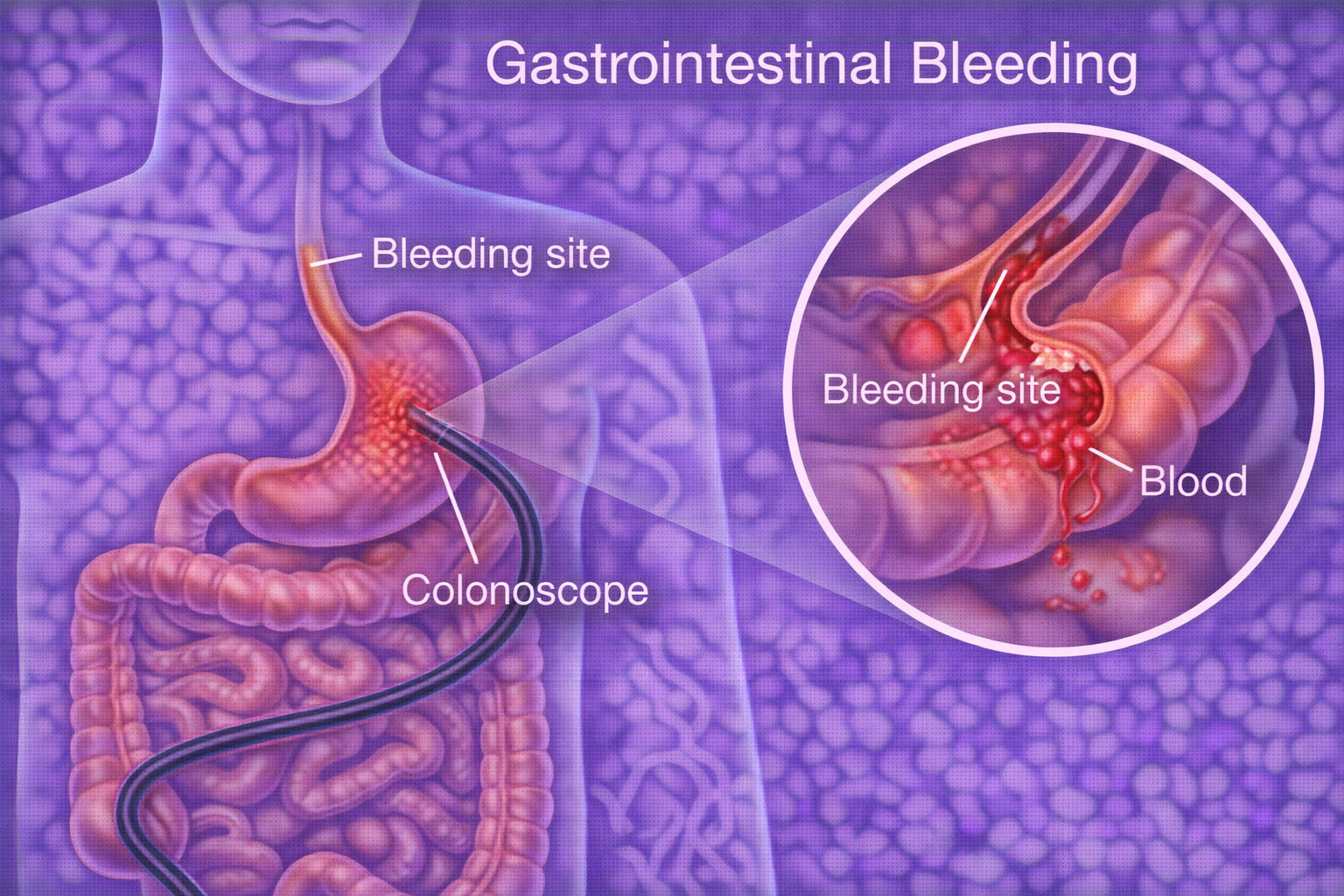
Bleeding from the stomach or intestines (called gastrointestinal bleeding) can be serious and sometimes life-threatening. It may cause vomiting blood, black stools, weakness, or sudden drop in blood pressure.

GI bleeding embolization is a modern, image-guided procedure that stops the bleeding from inside the blood vessel—often without open surgery—and helps stabilize the patient quickly.
👉 Vomiting blood, black stools, or ongoing bleeding?

What Is Gastrointestinal Bleeding Embolization?

Gastrointestinal bleeding embolization is a procedure where a doctor uses a thin tube (catheter) to reach the bleeding blood vessel and blocks it using special materials such as coils, glue, gel foam, or tiny particles.

This treatment:

  • Stops active bleeding quickly
  • Targets only the bleeding vessel
  • Often works when endoscopy or medicines fail
  • Avoids major surgery in many patients
  • No big cuts

  • Small puncture in the groin or arm

  • Rapid control of bleeding

  • Often life-saving in emergencies

What Is Gastrointestinal Bleeding?

Gastrointestinal (GI) bleeding means bleeding anywhere in the digestive tract, including:

  • Food pipe (esophagus)
  • Stomach
  • Small intestine
  • Large intestine (colon)

Common causes include:

  • Stomach or duodenal ulcers
  • Erosions or inflammation
  • Diverticular disease
  • Tumors or polyps
  • Abnormal blood vessels (angiodysplasia)
  • Bleeding after procedures or surgery

Common symptoms:

  • Vomiting blood or coffee-ground–like material
  • Black, tarry stools or fresh blood in stools
  • Dizziness, weakness, or fainting
  • Drop in blood pressure or low hemoglobin

Why it’s dangerous:

  • Can cause severe blood loss and shock
  • May become life-threatening if not controlled quickly

How Is Gastrointestinal Bleeding Embolization Done?

The procedure is performed by an interventional radiologist in a cath lab using X-ray guidance.

Step-by-step:

  • You lie on the procedure table; local anesthesia (and sometimes sedation) is given
  • A small puncture is made in the groin or arm artery
  • A thin catheter is guided to the arteries supplying the gut
  • Contrast dye is injected to find the exact bleeding point
  • Embolic materials (coils, glue, gel foam, particles) are placed to block the bleeding vessel
  • Blood flow is checked to confirm bleeding has stopped
  • The catheter is removed and a small dressing is applied

What Are the Risks?

GI bleeding embolization is generally safe in experienced centers. Possible risks with approximate incidence include:

  • Bruising or pain at puncture site – common (10–20%)
  • Fever or mild abdominal pain for 1–2 days – common (10–20%)
  • Re-bleeding – uncommon (10–20%, depends on cause)
  • Infection – rare (<1–2%)
  • Allergic reaction to contrast dye – rare (<2%)
  • Unintended blockage of nearby bowel vessels – rare (<1–2%)
Gastrointestinal bleeding treatment chennai

What Are the Alternatives?

What Are the Treatment Alternatives for Gastrointestinal (GI) Bleeding?

Your treatment options depend on:

  • The cause and severity of bleeding
  • Your overall health and medical conditions
  • Your personal preferences and response to initial treatment

Your doctor will help you choose the safest and most effective approach.

Alternative 1: Conservative Treatment (No Procedure)

  • In many cases, GI bleeding stops on its own or with medications
  • Blood transfusions may be given to replace lost blood and stabilize you
  • Avoids procedures or surgery
  • Limitation: some patients may continue to bleed or may bleed so heavily that it becomes life-threatening

Alternative 2: Endoscopic Treatment

  • Uses a thin camera (endoscope) to locate the bleeding site
  • The scope is passed:
    • Through the mouth into the stomach and upper intestine (endoscopy), or
    • Through the rectum into the colon (colonoscopy or sigmoidoscopy)
  • Doctors can use clips, bands, or laser/thermal treatment to stop the bleeding
  • Minimally invasive and often the first-line procedure for GI bleeding
  • May not work in all cases, especially with heavy or hard-to-reach bleeding

Alternative 3: Surgery

  • Involves open surgery to repair the bleeding area
  • Considered the most invasive option
  • Carries the highest risk of complications and longer recovery time
  • Usually reserved for emergency situations or when other treatments fail

Choosing the Right Bleeding Control Treatment

For many patients, minimally invasive embolization offers an effective way to stop GI bleeding when medicines or endoscopy are not enough—often with lower risk and faster recovery than surgery. A personalized evaluation ensures the best and safest treatment plan.

📌 Embolization is often chosen when bleeding is severe, recurrent, or not controlled by endoscopy.

What Happens After Your Procedure?

After embolization:

  • Bleeding usually stops immediately or soon after
  • You’ll be monitored in the hospital for 1–3 days
  • Blood counts and vital signs are checked
  • Mild pain or fever may occur briefly
  • You can gradually return to eating and normal activities as advised
  • Treatment of the underlying cause (ulcer, tumor, etc.) continues
  • Follow-up is important to reduce the chance of re-bleeding

Frequently Asked Questions (FAQs) – Gastrointestinal (GI) Bleeding Embolization

GI bleeding embolization is a minimally invasive, catheter-based procedure used to stop active bleeding in the stomach or intestines by blocking the bleeding blood vessel from inside.

Gastrointestinal bleeding means bleeding anywhere in the digestive tract, such as the food pipe, stomach, small intestine, or large intestine. It can cause vomiting blood, black stools, or weakness.

Embolization is usually done when bleeding is severe, ongoing, keeps coming back, or cannot be controlled by endoscopy or medicines.

No. It is a minimally invasive, image-guided procedure, not open surgery.

It is done under local anesthesia and sometimes sedation, so most patients feel little or no pain during the procedure.

The procedure usually takes 45 minutes to 2 hours, depending on where the bleeding is and how easy it is to reach.

Embolization is highly effective in stopping active GI bleeding, especially in emergency situations or when endoscopy fails.

Yes, re-bleeding can happen in some patients, depending on the cause, but repeat embolization or other treatments are possible.

Possible risks include bruising, mild pain, fever, infection, allergic reaction to contrast dye, or rarely reduced blood flow to a part of the intestine. Serious complications are rare.

Most patients stay in the hospital for 1–3 days for monitoring after embolization.

Yes. Because it is minimally invasive, embolization is often safer than surgery for elderly or high-risk patients.

In most cases, bleeding stops immediately or very soon after the procedure.

Some patients may still need treatment of the underlying cause (like ulcers or tumors), but many avoid emergency surgery after successful embolization.

Yes. This procedure is available in advanced interventional radiology and tertiary care centers across India.

You should seek urgent care if you have:

  • Vomiting blood
  • Black or bloody stools
  • Dizziness, weakness, or fainting
  • Sudden drop in blood pressure or severe anemia

Why Choose GI Bleeding Embolization?

  • Fast control of bleeding
  • Minimally invasive
  • Avoids major surgery in many cases
  • Targets only the bleeding vessel
  • Life-saving in emergencies
  • Faster recovery compared to surgery

Don’t Ignore Signs of GI Bleeding

If you or your loved one has vomiting blood, black stools, weakness, or ongoing bleeding, it can be dangerous and needs urgent care.

Gastrointestinal bleeding embolization can stop the bleeding quickly and safely—often without surgery.
Call Now Button