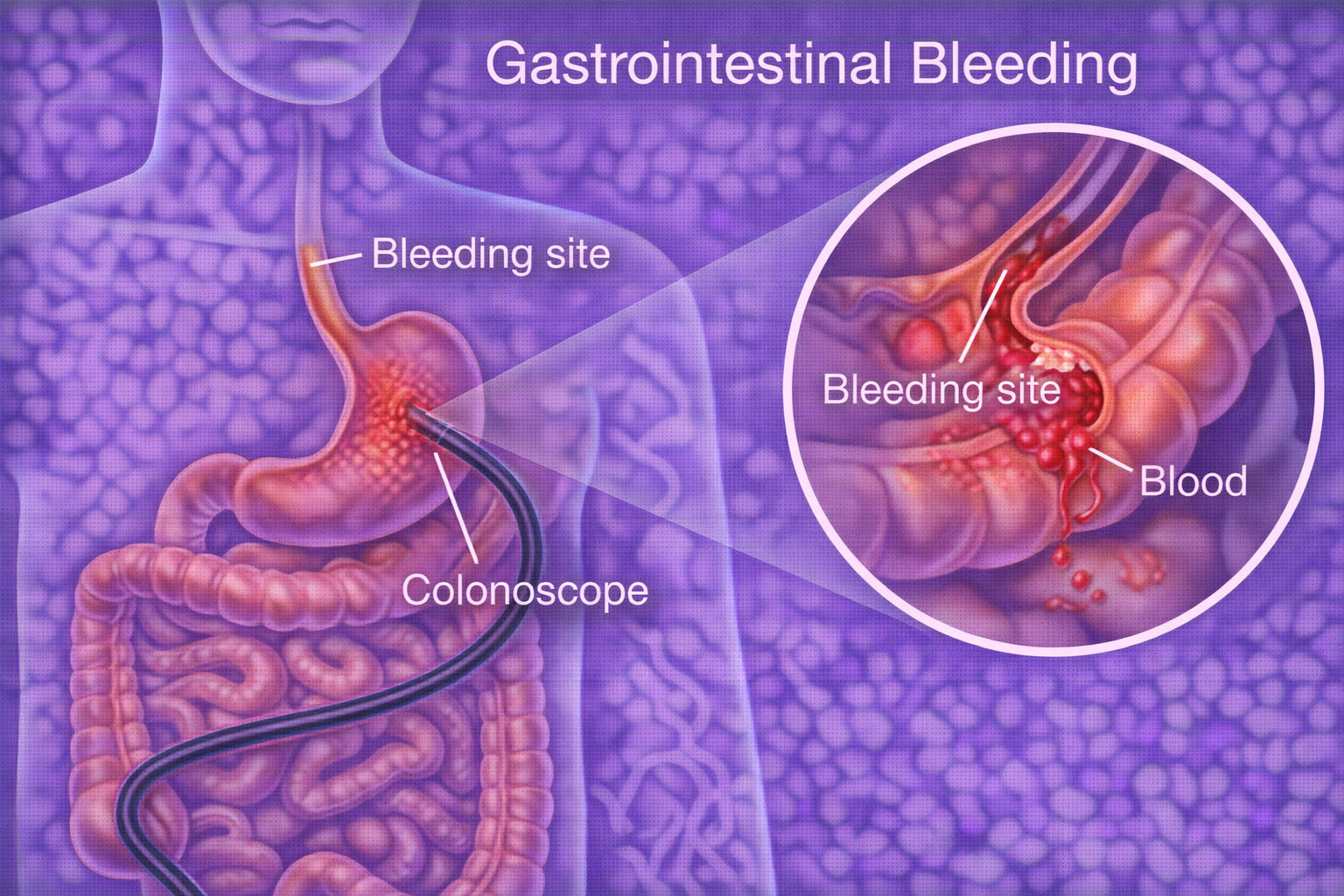
Gastrointestinal bleeding embolization is a procedure where a doctor uses a thin tube (catheter) to reach the bleeding blood vessel and block it using special materials such as coils, glue, gel foam, or tiny particles.
This treatment:
- Stops active bleeding quickly
- Targets only the bleeding vessel
- Often works when endoscopy or medicines fail
- Avoids major surgery in many patients
GI bleeding does not always originate from the digestive tract alone. In patients who have suffered a road accident, fall, or abdominal injury, internal bleeding from damaged vessels can track into the gut and present in the same way. Bleeding from trauma is managed using the same catheter-based embolization technique, navigating to the injured vessel and sealing it precisely, making it one of the most versatile emergency tools available to an interventional radiologist.
One of the most common but underappreciated sources of lower gastrointestinal bleeding is hemorrhoids. When hemorrhoidal bleeding becomes persistent, heavy, or recurrent despite conventional treatment, hemorrhoid artery embolization offers a minimally invasive solution — reducing blood flow to the swollen hemorrhoidal vessels through a catheter, without any surgical cuts, stitches, or hospital admission.
In patients with liver disease and portal hypertension, bleeding can originate from abnormally enlarged veins in the stomach wall called gastric varices. These veins bleed heavily and are difficult to control with endoscopy alone. Retrograde transvenous obliteration (RTO) is a specialized procedure that seals these varices from within the venous system — stopping the bleeding at its source and significantly reducing the risk of it happening again.