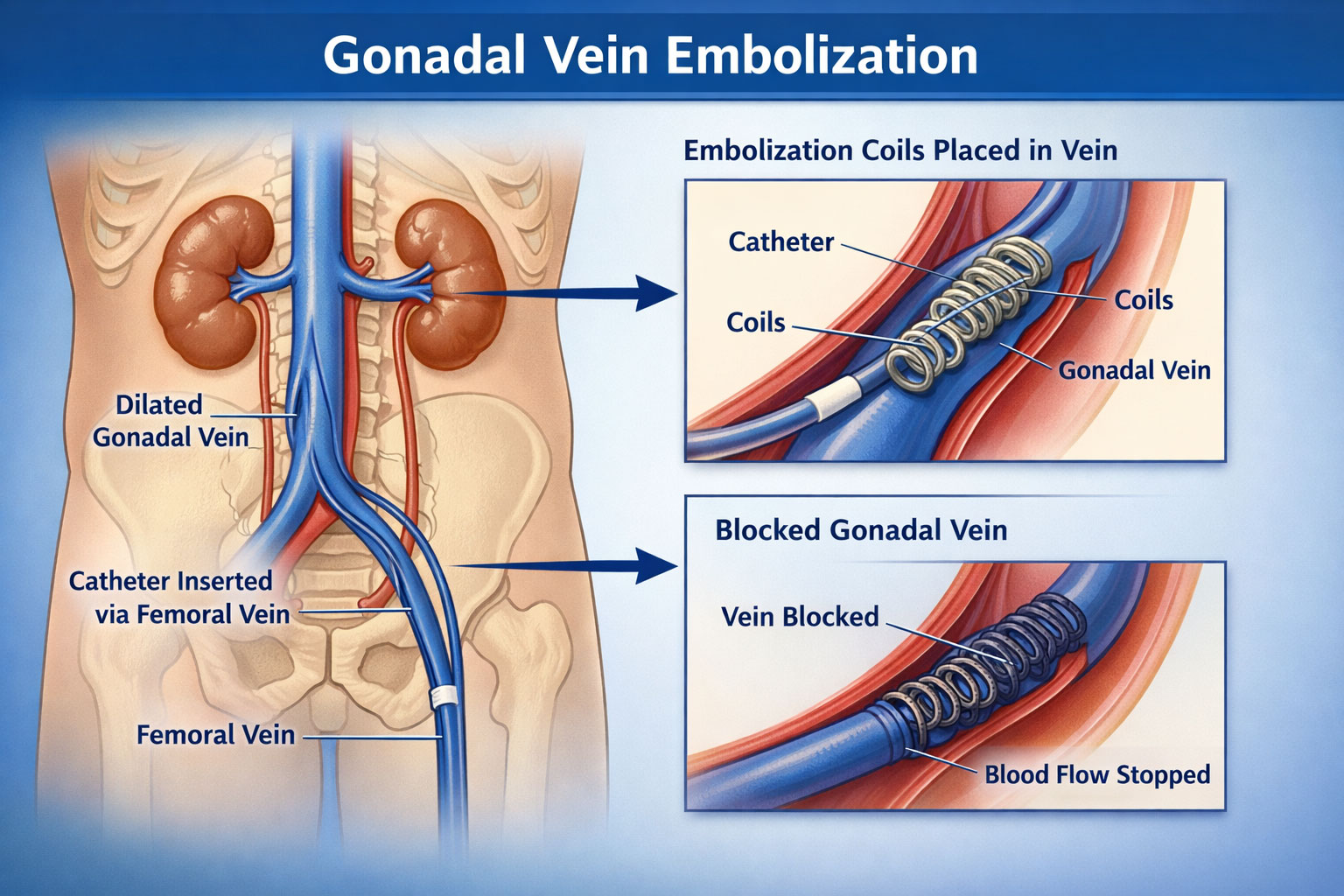
Gonadal vein embolization is an image-guided procedure used to treat chronic pelvic pain caused by abnormal, dilated pelvic veins.
The treatment works by:
- Closing faulty ovarian (gonadal) veins
- Redirecting blood to healthy veins
- Reducing venous pressure and congestion
- Relieving chronic pelvic pain
Chronic pelvic pain in women is frequently linked to other underlying reproductive conditions as well. Uterine fibroids — non-cancerous growths inside or around the womb are one of the most common causes of persistent pelvic pressure, heaviness, and pain in women of reproductive age. Uterine fibroid embolization treats this by blocking the blood supply to the fibroids through a catheter, shrinking them over time and relieving pain without surgical removal of the uterus.
Pelvic congestion syndrome and fibroids are not the only conditions affecting a woman’s pelvic health. Blocked fallopian tubes — often discovered during investigations for infertility or pelvic pain — can be treated with a similarly minimally invasive approach. Fallopian tube recanalization uses fine catheters under X-ray guidance to clear the blockage and restore tubal function, offering women a path to natural conception without surgery or general anaesthesia.
Abnormal gonadal veins are not exclusive to women. In men, the same veins can become enlarged and cause a condition called varicocele, where pooling of blood around the testicle raises local temperature and affects sperm quality and fertility. Varicocele embolization uses an identical catheter-based technique to seal these faulty veins, improving blood flow, reducing discomfort, and restoring fertility parameters without any surgical incision.