

Chennai-based Endovascular & IR Specialist, Dr. Ravindran Ramalingam offers minimally invasive, scar-free treatments ensuring faster recovery and minimal pain.

Endovascular &
IR Specialist

Center Address
- Gleneagles Health City, Perumbakkam, Chennai, TN
- Maruti Scans, Velachery, Chennai, TN

Peripheral arterial disease

Angioplasty / Stenting for Peripheral Artery Disease (PAD)

A Minimally Invasive Way to Open Blocked Leg Arteries and Relieve Pain

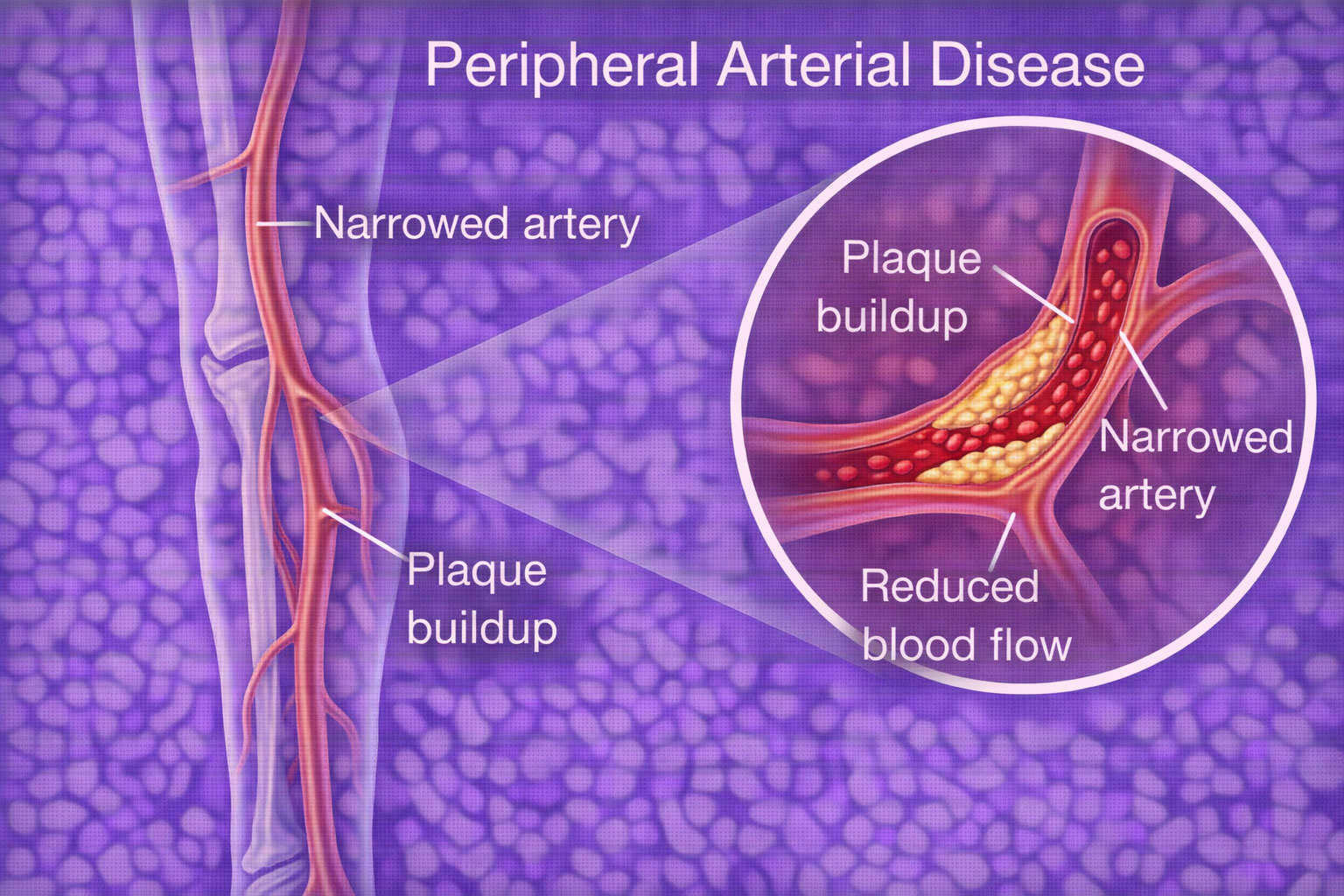
Pain while walking, cold feet, slow-healing wounds, or blackened toes can be signs of Peripheral Artery Disease (PAD)—a condition where leg arteries become narrow or blocked.

Angioplasty and stenting are minimally invasive, image-guided treatments that open these blocked arteries, improve blood flow, reduce pain, and help save limbs—often without open surgery.
👉 Leg pain while walking or a non-healing foot wound?

What Is Angioplasty / Stenting for Peripheral Artery Disease?

  • Angioplasty uses a small balloon to widen a narrowed or blocked artery.
  • Stenting places a tiny metal mesh tube (stent) to keep the artery open after it’s widened.

This treatment:

  • Restores blood flow to the leg or foot
  • Reduces walking pain (claudication)
  • Helps wounds heal
  • Lowers the risk of limb loss
  • Avoids major surgery in many patients
  • No big cuts

  • Small puncture, no stitches

  • Faster recovery

  • Often same-day or next-day discharge

What Is Peripheral Artery Disease (PAD)?

Peripheral Artery Disease is a condition where fatty deposits (plaque) narrow or block arteries that carry blood to the legs and feet.

Common symptoms:

  • Pain or cramping in the calf, thigh, or buttock while walking
  • Cold or numb feet
  • Weak or absent foot pulses
  • Slow-healing wounds or ulcers
  • Blackening of toes or foot (in severe cases)

Why PAD is serious:

  • It limits walking and daily activities
  • It prevents wounds from healing
  • Severe PAD can lead to infections and limb loss
  • It also signals higher risk of heart attack and stroke

How Is Angioplasty / Stenting for PAD Done?

Angioplasty/stenting for PAD is generally safe in experienced centers. Possible risks with approximate incidence include:

  • Bruising or pain at puncture site – common (10–20%)
  • Bleeding or small hematoma – uncommon (5–10%)
  • Re-narrowing of the artery over time – uncommon (10–30%, varies by artery and stent type)
  • Allergic reaction to contrast dye – rare (<2%)
  • Infection – rare (<1%)
  • Artery injury or clot – rare (<1–2%)

What Are the Risks?

Pulmonary embolism thrombectomy/thrombolysis is generally safe in experienced centers, especially when benefits outweigh risks.
Possible risks with approximate incidence include:

  • Bleeding at puncture site – common (5–10%)
  • Minor bleeding elsewhere – uncommon (3–5%)
  • Major bleeding (including internal bleeding) – rare (1–2%)
  • Allergic reaction to contrast dye – rare (<2%)
  • Heart rhythm problems during procedure – uncommon (1–3%)
  • Infection – rare (<1%)
Peripheral Arterial Disease Treatment Chennai – Angioplasty & Stenting

What Are the Alternatives?

Your treatment options depend on:

  • Your symptoms and walking ability
  • Which arteries are narrowed or blocked
  • Your overall health and other medical conditions

Your doctor will help you choose the safest and most effective option.

Alternative 1: No Active Treatment (Observation)

  • Avoids medicines or procedures
  • PAD does not always lead to amputation
  • However, when tests show severely reduced blood flow to the leg or arm:
    • There is about a 1 in 5 chance each year of amputation or death
    • Symptoms and circulation problems are likely to worsen over time

Alternative 2: Medicines and Lifestyle Changes

  • Includes:
    • Healthy diet
    • Regular exercise / walking program
    • Stopping smoking
    • Medicines to control cholesterol, blood pressure, and blood thinning
  • These steps are always recommended for all PAD patients
  • May be enough in mild to moderate PAD
  • Helps slow disease progression and reduce symptoms
  • May not be sufficient in severe or limb-threatening PAD

Alternative 3: Surgery for PAD

  • Can be done instead of or along with minimally invasive procedures
  • Can treat more complex or long-segment blockages
  • Often provides longer-lasting results in selected cases
  • However, surgery:
    • Has a higher risk of complications
    • Major complications (such as heart attack) occur in up to 6 in 100 patients
    • Minor complications occur in about 15–30 in 100 patients
    • Requires longer hospital stay and recovery time

Choosing the Right PAD Treatment

Many patients today benefit from minimally invasive, image-guided procedures that restore blood flow with less risk, less pain, and faster recovery compared to open surgery. A personalized vascular evaluation helps choose the best treatment to save the limb and improve quality of life.

📌 Angioplasty/stenting is often chosen when symptoms limit life, wounds don’t heal, or there’s a risk to the limb.

What Happens After Your Procedure?

After treatment:

  • Leg pain while walking often improves over days to weeks
  • You can usually go home the same day or next day
  • Mild soreness at the puncture site may last 1–2 days
  • You’ll take blood-thinning and cholesterol medicines as advised
  • Walking and lifestyle changes are encouraged
  • Follow-up visits and scans help keep the artery open longer

Frequently Asked Questions (FAQs) – Angioplasty / Stenting for Peripheral Artery Disease (PAD)

Angioplasty uses a small balloon to open a narrowed or blocked leg artery, and stenting places a tiny metal mesh tube to keep the artery open and improve blood flow to the leg or foot.

Peripheral artery disease is a condition where fatty deposits narrow or block the arteries that carry blood to the legs and feet, causing pain while walking, cold feet, or slow-healing wounds.

This treatment is considered for people who have:

  • Leg pain while walking that limits daily life
  • Non-healing foot or leg wounds
  • Severe narrowing or blockage seen on scans
  • Risk of limb damage due to poor blood flow

No. It is a minimally invasive, catheter-based procedure, not open surgery.

It is done under local anesthesia and sometimes light sedation, so most patients feel minimal discomfort.

The procedure usually takes 45 minutes to 2 hours, depending on how many arteries are treated.

Many patients go home the same day or the next day, depending on their condition and the complexity of the procedure.

Success rates are high, especially when combined with medicines, walking exercise, and lifestyle changes.

Yes, re-narrowing can happen over time, but medicines, regular walking, and follow-up help reduce this risk. Repeat treatment is possible if needed.

Risks are usually mild and uncommon, such as bruising, bleeding, or artery re-narrowing. Serious complications are rare.

Most patients start walking within a day and gradually increase activity as advised by their doctor.

Yes. By improving blood flow, angioplasty/stenting greatly improves the chances of wound healing and reduces the risk of infection or amputation.

Yes. You will usually need blood-thinning and cholesterol-lowering medicines to keep the artery open and protect your heart and legs.

Angioplasty/stenting is less invasive, has faster recovery, and uses small punctures instead of big cuts. Bypass surgery is more invasive and used in selected cases.

Yes. It is available in most advanced IR and vascular centers across India.

Why Choose Angioplasty / Stenting for PAD?

  • Minimally invasive
  • No big cuts or stitches
  • Faster recovery
  • Relieves walking pain
  • Helps wounds heal
  • Can prevent limb loss

Take the Next Step Toward Pain-Free Walking

If you have leg pain while walking, cold feet, or a non-healing wound, don’t wait—PAD is treatable, and early care saves limbs.

Angioplasty/stenting offers a safe, effective, and minimally invasive way to restore blood flow and get you moving again.
Call Now Button