

Chennai-based Endovascular & IR Specialist, Dr. Ravindran Ramalingam offers minimally invasive, scar-free treatments ensuring faster recovery and minimal pain.

Endovascular &
IR Specialist

Center Address
- Gleneagles Health City, Perumbakkam, Chennai, TN
- Maruti Scans, Velachery, Chennai, TN

Pre-Operative Tumor Embolization

A Smart, Minimally Invasive Step to Make Tumor Surgery Safer 

Some tumors have very rich blood supply. During surgery, these tumors can bleed a lot, making the operation longer and riskier. 

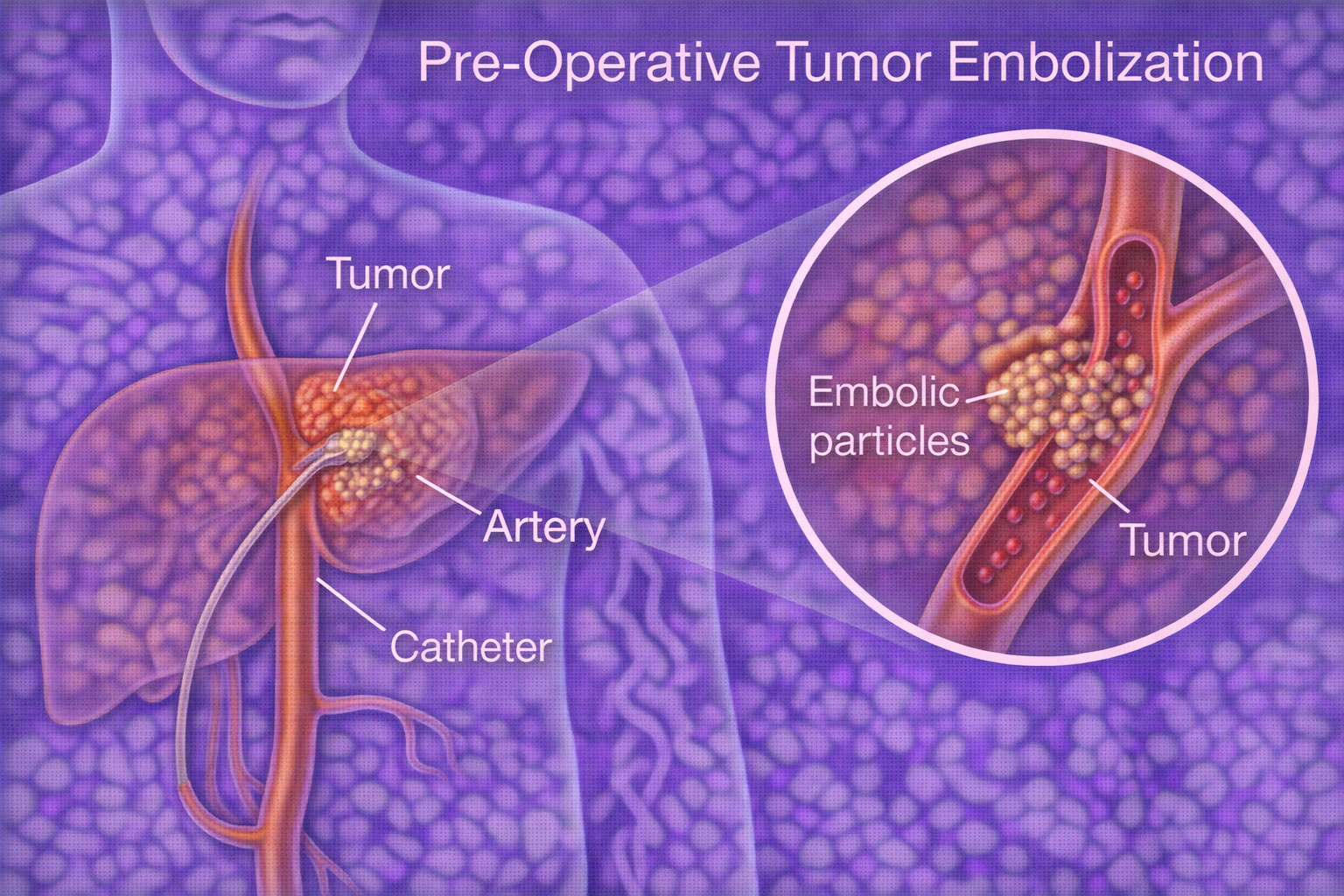
Pre-operative tumor embolization is a minimally invasive, image-guided procedure done before surgery to reduce blood flow to the tumor, helping surgeons remove it more safely with less blood loss. 
👉 Scheduled for tumor surgery or told your tumor is highly vascular? 

What Is Pre-Operative Tumor Embolization?

Pre-operative tumor embolization is a procedure where a doctor blocks the blood vessels feeding a tumor using special materials delivered through a thin tube (catheter). 

This treatment: 

  • Reduces bleeding during surgery 
  • Makes tumor removal safer and easier 
  • Can shorten surgery time 
  • Lowers the need for blood transfusions 
  • Helps surgeons remove the tumor more completely in many cases 
  • No big cuts 

  •  Small puncture in the groin or arm

  •  Performed before planned surgery

  •  Proven to improve surgical safety in selected tumors 

Why Is Pre-Operative Tumor Embolization Done?

It is done when a tumor: 

  • Has very high blood supply (highly vascular tumor) 
  • Is likely to cause heavy bleeding during surgery 
  • Is located in areas like: 
  • Brain (meningioma, some skull tumors) 
  • Spine 
  • Head and neck 
  • Pelvis 
  • Bone or soft tissue tumors 

Main goals: 

  • Reduce blood loss during surgery 
  • Improve visibility for the surgeon 
  • Lower surgical risk and complications 
  • Shorten recovery time in some cases 

How Is Pre-Operative Tumor Embolization Done?

The procedure is performed by an interventional radiologist in a cath lab using X-ray guidance. 

Step-by-step: 

  • You lie on the procedure table; local anesthesia (and sometimes sedation) is given 
  • A small puncture is made in the groin or arm artery 
  • A thin catheter is guided to the blood vessels supplying the tumor 
  • Contrast dye is injected to map the tumor’s blood supply 
  • Embolic materials (particles, glue, or coils) are injected to block these vessels 
  • Blood flow to the tumor is checked to confirm reduction 
  • The catheter is removed and a small dressing is applied 

What Are the Risks?

Pre-operative tumor embolization is generally safe in experienced centers. Possible risks with approximate incidence include: 

  • Pain or fever for 1–2 days – common (10–20%) 
  • Bruising or bleeding at puncture site – common (10–20%) 
  • Temporary swelling or inflammation near the tumor – common (10–20%) 
  • Infection – rare (<1–2%) 
  • Allergic reaction to contrast dye – rare (<2%) 
  • Unintended blockage of nearby normal vessels – rare (<1–2%) 
  • Nerve or tissue injury (depends on tumor location) – rare (<1–2%) 
pre operative tumor embolization chennai

What Are the Alternatives?

Your treatment options depend on: 

  • The type, size, and location of the tumor 
  • The amount of blood supply to the tumor 
  • Your overall health and surgical plan 

Your surgeon and interventional radiologist will guide you through the best approach. 

Alternative 1: Surgery Without Pre-Operative Embolization 

  • The tumor is removed directly with surgery 
  • Avoids an additional procedure before surgery 
  • Limitation: highly vascular (blood-rich) tumors can cause: 
  • Heavy bleeding during surgery 
  • Longer operation time 
  • Higher need for blood transfusions 
  • Increased surgical risk and complications 

Alternative 2: Medications or Radiation to Shrink the Tumor Before Surgery 

  • Certain tumors may respond to medications or radiotherapy before surgery 
  • May help reduce tumor size or blood supply over time 
  • Avoids an interventional procedure 
  • Limitations: 
  • Takes weeks to months to show effect 
  • Not effective for all tumor types 
  • May still not adequately reduce surgical bleeding risk 

📌 Pre-operative embolization is chosen when it can clearly reduce surgical risk and blood loss. 

What Happens After Your Procedure?

After embolization: 

  • You’ll be monitored in the hospital for a few hours or overnight 
  • Mild pain or fever may occur and is usually temporary 
  • You can usually start normal activities the next day (as advised) 
  • Surgery is typically performed within 1–3 days 
  • During surgery, doctors usually see much less bleeding 
  • Overall recovery depends mainly on the surgery and tumor type 

Frequently Asked Questions (FAQs) – Pre-Operative Tumor Embolization

Pre-operative tumor embolization is a minimally invasive, image-guided procedure done before surgery to block the blood vessels supplying a tumor, which helps reduce bleeding during the operation. 

It is done to make tumor surgery safer by: 

  • Reducing blood loss 
  • Shortening surgery time 
  • Improving the surgeon’s view during surgery 
  • Lowering the need for blood transfusions 

It is commonly used for highly vascular tumors, such as: 

  • Brain tumors (like meningiomas) 
  • Spine tumors 
  • Head and neck tumors 
  • Bone and pelvic tumors 
  • Some soft tissue tumors 

No. It is a catheter-based, minimally invasive procedure, not open surgery. 

It is done under local anesthesia and sometimes sedation, so most patients feel little or no pain during the procedure. 

The procedure usually takes 1 to 3 hours, depending on the tumor’s size and blood supply. 

No. Embolization does not remove the tumor. It only reduces the blood supply to make the upcoming surgery safer. 

Surgery is usually done within 24 to 72 hours after embolization, depending on the treatment plan. 

Possible risks include pain, fever, bruising at the puncture site, infection, allergic reaction to contrast dye, or rarely injury to nearby tissues. Serious complications are rare. 

Yes. In experienced centers, it is safe and widely used to reduce surgical risk in selected tumors. 

Many patients stay overnight for observation, especially if surgery is planned soon after. 

By reducing blood flow to the tumor, embolization reduces bleeding, improves visibility, and can make tumor removal easier and safer. 

No. Embolization is done only for selected tumors where reducing blood supply will clearly improve surgical safety. 

Yes. It is available in advanced interventional radiology and cancer surgery centers across India. 

No. It usually means your doctor wants to make your surgery safer and reduce complications, especially if your tumor has high blood supply. 

Why Choose Pre-Operative Tumor Embolization?

  • Makes surgery safer

  • Reduces blood loss

  • Shortens surgery time

  • Lowers need for transfusion

  • Minimally invasive

  • Proven support for complex tumor surgeries

Planning Tumor Surgery? Make It Safer First.

If your tumor has high blood supply or your doctor expects heavy bleeding during surgery, pre-operative embolization can make a big difference.

This simple, minimally invasive step can reduce risks and help your surgery go smoother and safer.
Call Now Button