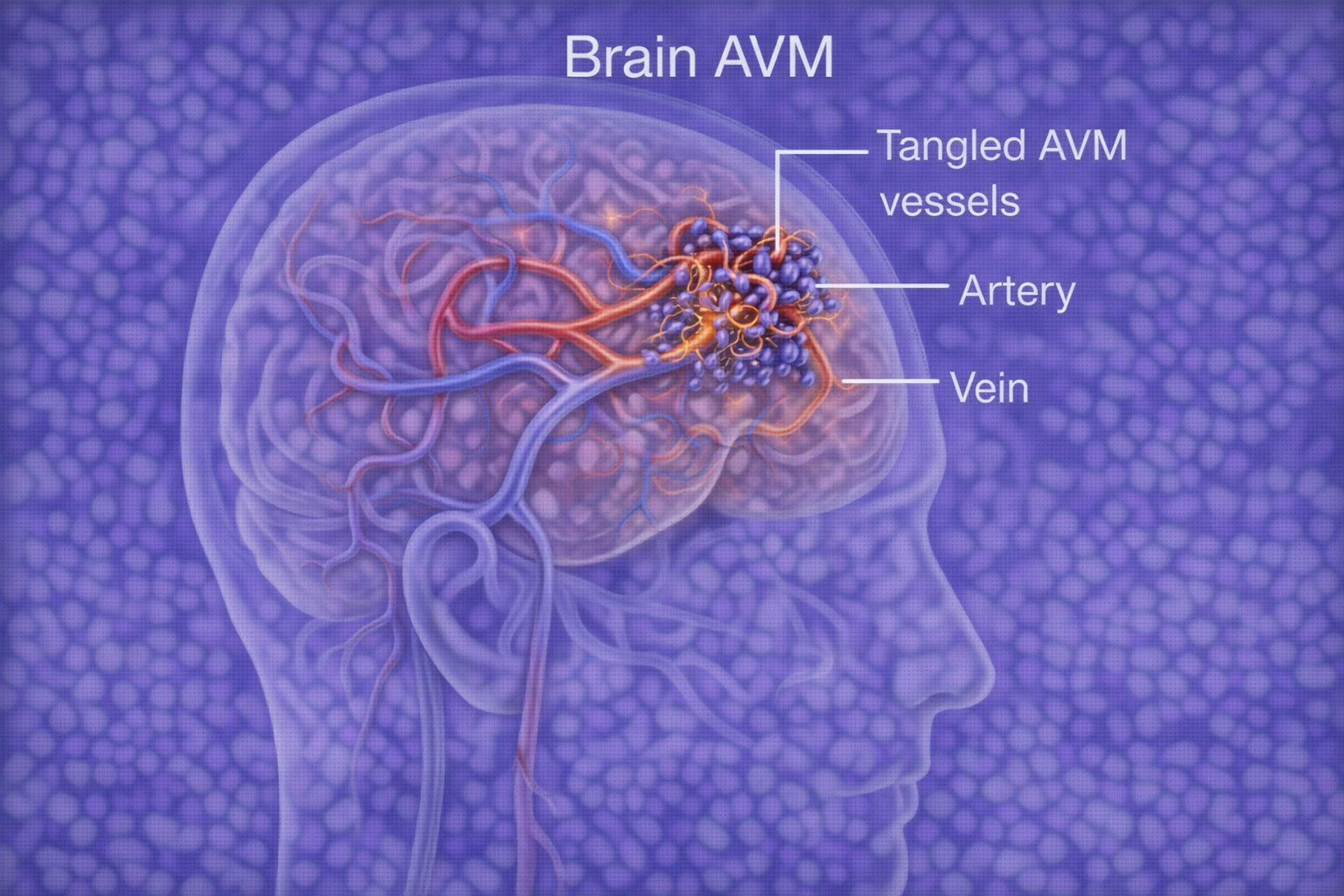
Brain AVM embolization is a procedure where a specialist:
- Reaches the AVM from inside the blood vessels using a thin tube (catheter), and
- Injects special glue, liquid agents, or tiny particles to block the abnormal vessels
This:
- Reduces blood flow to the AVM
- Lowers the risk of bleeding
- Can shrink the AVM
- Is often used before surgery or radiosurgery to make treatment safer
A brain AVM is not the only vascular abnormality that can develop inside the brain. A brain aneurysm, where the wall of a blood vessel weakens and bulges outward, carries a similar risk of sudden rupture and serious brain bleed. Like AVM embolization, it is treated through the same catheter-based approach from inside the blood vessels, without any need to open the skull.
The same type of abnormal vessel tangle that forms in the brain can also develop inside the lungs. Pulmonary AVM embolization uses the same technique — blocking the abnormal connection between arteries and veins — but targets the lung circulation instead, preventing low oxygen levels and the risk of stroke caused by clots crossing through the AVM.
A brain AVM itself is one specific type within a larger group of blood vessel abnormalities known as vascular malformations. Vascular malformation treatment covers the full range of these conditions, including venous, lymphatic, and arteriovenous types, with each requiring a different treatment approach depending on its location, size, and structure.