Brain AVM embolization is a procedure where a doctor blocks the abnormal blood vessels of the AVM using special glue or tiny particles delivered through a thin tube (catheter) guided into the brain’s arteries.
This treatment:
- Reduces blood flow into the abnormal vessels
- Lowers the risk of bleeding in the brain
- Shrinks the AVM before surgery or radiation
- Can be the primary treatment in selected cases
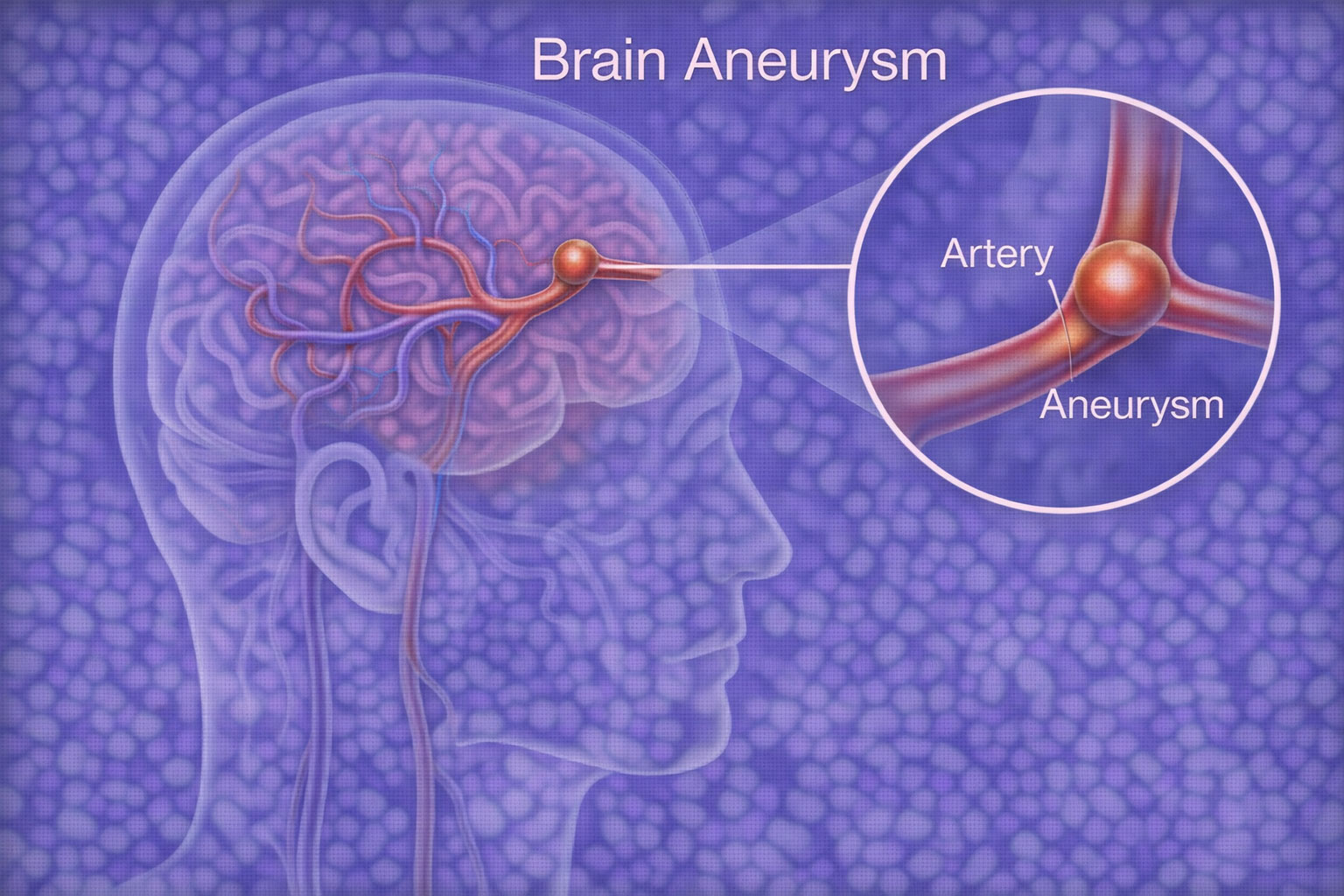
A brain AVM is not the only vascular abnormality that can affect the brain. A brain aneurysm — where a blood vessel wall weakens and balloons outward — is a closely related condition that also carries a serious risk of rupture and brain bleed. Both conditions are treated through the same minimally invasive endovascular approach, without opening the skull.
While AVMs in the brain are the most commonly treated, the same abnormal tangle of blood vessels can also form inside the lungs. Pulmonary AVM embolization follows the same principle — blocking the abnormal vessel to prevent bleeding and restore normal circulation — but targets the lung arteries instead of the brain.
It is worth understanding that an AVM is actually one type within a broader group of conditions called vascular malformations. Vascular malformation treatment covers this entire spectrum — including AVMs, venous malformations, and lymphatic malformations — with the treatment approach tailored depending on the location, size, and type of abnormality involved.