Chennai-based Endovascular & IR Specialist, Dr. Ravindran Ramalingam offers minimally invasive, scar-free treatments ensuring faster recovery and minimal pain.

Endovascular &
IR Specialist

Center Address
- Gleneagles Health City, Perumbakkam, Chennai, TN
- Maruti Scans, Velachery, Chennai, TN

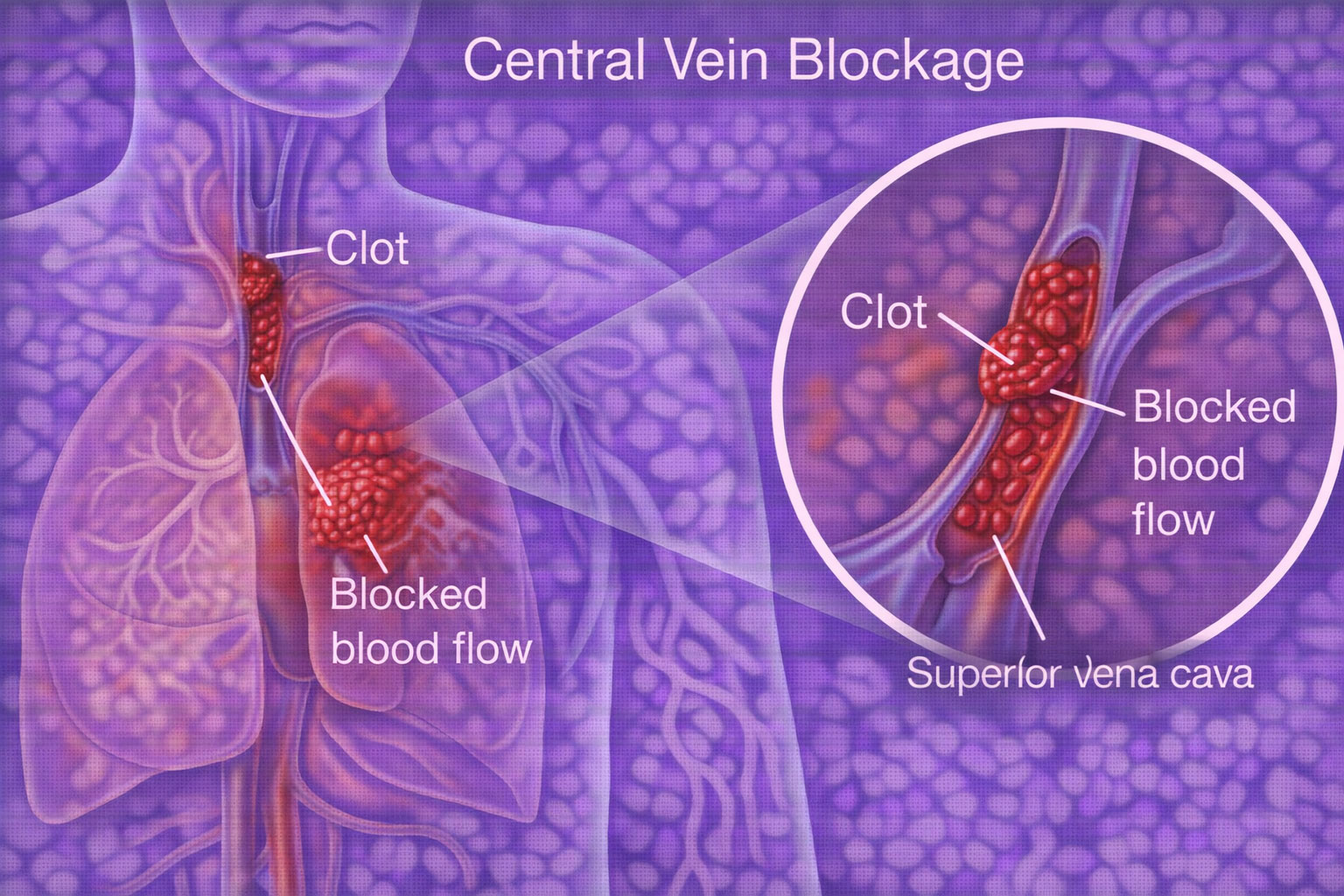
Central Vein Blockage

Endo-Venous Recanalization for Central Vein Blockage

A Minimally Invasive Way to Reopen Blocked Major Veins and Relieve Swelling

When a large (central) vein in the chest or neck gets narrowed or blocked, blood cannot flow back to the heart properly. This can cause arm, face, or neck swelling, pain, heaviness, and problems with dialysis access.

Endo-venous recanalization is a minimally invasive, image-guided treatment that reopens the blocked vein from inside—often with a balloon and sometimes a stent—without open surgery.

👉 Do you have arm/face swelling or a blocked dialysis vein?

What Is Endo-Venous Recanalization for Central Vein Blockage?

Endo-venous recanalization is a catheter-based procedure used to reopen a blocked or severely narrowed central vein (such as the subclavian vein, brachiocephalic vein, or superior vena cava).

It may involve:

  • Crossing the blockage with fine wires
  • Balloon angioplasty to widen the vein
  • Stent placement to keep the vein open (if needed)

This treatment:

  • Restores normal blood flow
  • Reduces swelling and pain
  • Saves dialysis access
  • Avoids major surgery
  • No open surgery

  • Small puncture, no big cuts

  • Quick recovery

  • Often same-day discharge

What Is Central Vein Blockage?

Central vein blockage means a major vein near the heart (in the chest or neck) has become narrow or completely blocked.

Common causes include:

  • Previous dialysis catheters or central lines
  • Long-term pacemaker or device wires
  • Repeated venous access
  • Blood clots (thrombosis)
  • Scarring inside the vein

Common symptoms:

  • Swelling of the arm, neck, or face (usually on one side)
  • Heaviness, tightness, or pain
  • Prominent veins on the chest or arm
  • Poor dialysis flow or fistula/graft problems

How Is Endo-Venous Recanalization Done?

The procedure is performed by an interventional radiologist under X-ray (fluoroscopy) guidance.

Step-by-step:

  • You lie comfortably on the procedure table
  • Local anesthesia (and sometimes light sedation) is given
  • A small puncture is made in the arm, neck, or groin vein
  • A thin catheter is guided to the blocked vein
  • The blockage is crossed with a fine wire
  • A balloon is inflated to open the vein
  • A stent may be placed to keep it open (if required)

Blood flow is checked and the puncture site is dressed

What Are the Risks?

Endo-venous recanalization is generally safe when done by experienced specialists.
Possible risks with approximate incidence include:

  • Bruising or pain at puncture site – common (10–20%)
  • Bleeding or small hematoma – uncommon (5–10%)
  • Re-narrowing or re-blockage over time – uncommon (10–30%, depends on cause)
  • Infection – rare (<1–2%)
  • Vein injury or tear – rare (<1–2%)
  • Allergic reaction to contrast dye – rare (<2%)
pulmonary avm embolization chennai

What Are the Alternatives?

Your treatment options depend on:

  • Your symptoms and how much they affect daily life
  • Overall health and medical conditions
  • Personal preferences and long-term goals

Your clinician will help you choose the most appropriate approach.

Alternative 1: No Active Treatment (Observation)

  • Avoids procedures or surgery
  • However, the vein blockage will remain and may worsen over time
  • There is a risk that new blood clots may form in the blocked vein
  • This can lead to increasing pain, swelling, skin changes, or ulcers

Alternative 2: Surgical Repair or Bypass

  • Surgery can repair the damaged vein or bypass the blocked segment
  • May improve blood flow in selected cases
  • However, compared to minimally invasive treatments, surgery:
    • Has significantly higher risks
    • Requires general anesthesia
    • Involves longer hospital stay and recovery time
    • Carries a higher chance of complications

Choosing the Right Vein Treatment

Many patients today benefit from minimally invasive, image-guided vein procedures that restore blood flow with lower risk, less pain, and faster recovery compared to open surgery. A personalized evaluation ensures the safest and most effective treatment plan.

📌 Whenever possible, endo-venous recanalization is preferred because it is less invasive and preserves existing access.

What Happens After Your Procedure?

After the procedure:

  • Swelling and heaviness usually improve over days to weeks
  • You can often go home the same day
  • Mild soreness at the puncture site may last 1–2 days
  • Dialysis access (if present) often works much better
  • You may be given blood thinners or antiplatelet medicines
  • Follow-up scans or check-ups are advised

Good follow-up helps keep the vein open for longer.

Frequently Asked Questions (FAQs) – Endo-Venous Recanalization for Central Vein Blockage

Endo-venous recanalization is a minimally invasive, catheter-based procedure used to reopen blocked or severely narrowed large veins in the chest or neck to restore normal blood flow.

Central vein blockage means a major vein near the heart (such as the subclavian vein, brachiocephalic vein, or superior vena cava) is narrowed or completely blocked, often due to previous catheters, clots, or scarring.

Common symptoms include:

  • Swelling of the arm, face, or neck
  • Heaviness or pain in the arm
  • Prominent veins on the chest or arm
  • Poor dialysis flow or fistula problems

This procedure is considered for patients who have:

  • Symptomatic arm/face swelling
  • Blocked or failing dialysis access due to vein blockage

Confirmed central vein narrowing or occlusion on scans

No. It is a minimally invasive, image-guided procedure, not open surgery.

It is done under local anesthesia and sometimes light sedation, so most patients feel minimal discomfort.

The procedure usually takes 45 minutes to 2 hours, depending on how complex the blockage is.

Many patients are treated as day-care and go home the same day. Some may stay overnight for observation.

Success rates are high in experienced centers, especially when the blockage is treated early.

Re-narrowing can happen over time, but the procedure can be repeated, and stents help keep the vein open longer.

Yes. Reopening the central vein often improves dialysis flow and reduces arm swelling, helping save existing access.

Risks are usually mild and uncommon, such as bruising, bleeding, infection, or vein injury. Serious complications are rare.

Many patients notice gradual improvement over days to weeks, depending on how long the vein was blocked.

Most patients return to normal activities within 1–2 days.

Yes. Endo-venous recanalization is available in specialized vascular and interventional radiology centers across India.

Why Choose Endo-Venous Recanalization?

  • Minimally invasive

  • No big surgery or scars

  • Relieves swelling and pressure

  • Saves dialysis access

  • Faster recovery

  • Can be repeated if needed

Take the Next Step Toward Better Blood Flow

If you have arm, face, or neck swelling, or problems with dialysis access due to vein blockage, don’t wait.

Endo-venous recanalization offers a safe, effective, and minimally invasive solution to reopen blocked central veins.
Call Now Button