Chennai-based Endovascular & IR Specialist, Dr. Ravindran Ramalingam offers minimally invasive, scar-free treatments ensuring faster recovery and minimal pain.

Endovascular &
IR Specialist

Center Address
- Gleneagles Health City, Perumbakkam, Chennai, TN
- Maruti Scans, Velachery, Chennai, TN

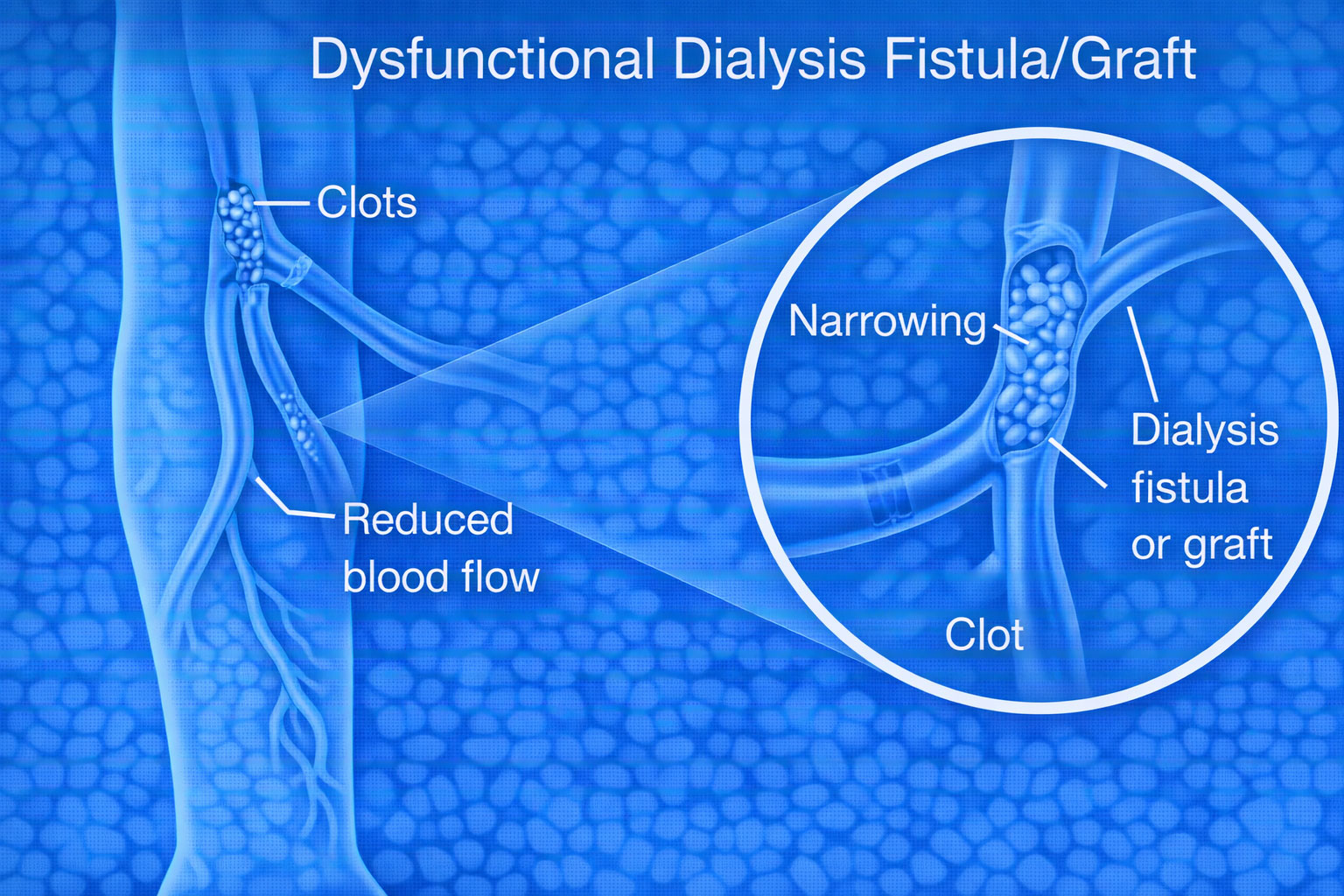
Dysfunctional dialysis fistula or graft

Dialysis Fistula Thrombectomy / Angioplasty

A Minimally Invasive Way to Save Your Dialysis Fistula and Restart Dialysis Quickly

For people on hemodialysis, a dialysis fistula is a lifeline. Sometimes, this fistula can get blocked by a clot (thrombosis) or become narrow (stenosis), making dialysis difficult or impossible.

Fistula thrombectomy and angioplasty are minimally invasive, image-guided procedures that can reopen the fistula, restore blood flow, and help you continue dialysis without major surgery.

👉 Is your dialysis fistula not working or suddenly blocked?

What Is Dialysis Fistula Thrombectomy / Angioplasty?

  • Fistula thrombectomy is a procedure to remove a blood clot from a blocked dialysis fistula or graft.
  • Fistula angioplasty is a procedure to widen a narrow part of the fistula using a small balloon.

These procedures:

  • Restore blood flow in the fistula
  • Save your existing dialysis access
  • Avoid the need for new surgery
  • Allow dialysis to restart quickly
  • No open surgery
  • Small puncture, no stitches
  • Fast recovery
  • Often same-day dialysis possible

When Is Dialysis Fistula Thrombectomy / Angioplasty Done?

These procedures are done when:

  • Your fistula suddenly stops working
  • There is no thrill or weak flow in the fistula
  • Dialysis machine alarms due to poor flow
  • Your arm becomes swollen or painful
  • Scans show clot or narrowing in the fistula

Early treatment is very important—the sooner it’s done, the higher the chance of saving the fistula.

How Is Dialysis Fistula Thrombectomy / Angioplasty Done?

The procedure is done by an interventional radiologist under X-ray (fluoroscopy) guidance.

Step-by-step:

  • You lie comfortably on the procedure table
  • The arm is cleaned and numbed with local anesthesia
  • A small needle puncture is made into the fistula
  • Contrast dye is injected to see the blockage or narrowing
  • For clot: special devices or medicines are used to remove the clot
  • For narrowing: a balloon is inflated to widen the vessel
  • Sometimes a stent may be placed if needed
  • Blood flow is checked, and the puncture site is dressed

What Are the Risks?

Fistula thrombectomy and angioplasty are generally safe when done by experienced specialists.
Possible risks with approximate incidence include:

  • Bruising or pain at puncture site – common (10–20%)
  • Bleeding or hematoma – uncommon (5–10%)
  • Re-blockage of the fistula – uncommon (10–20% over time)
  • Infection – rare (<1–2%)
  • Damage to the blood vessel – rare (<1–2%)
  • Allergic reaction to contrast dye – rare (<2%)
Dialysis Fistula Repair Chennai – Restore Access Fast

What Are the Alternatives?

Your treatment choices depend on:

  • How urgently you need dialysis
  • The condition of your blood vessels
  • Your overall health and long-term dialysis plan

Your nephrologist and vascular access specialist will help you choose the safest option.

Alternative 1: No Procedure

  • Avoids undergoing any access procedure
  • However, if you depend on dialysis, you must have another way to receive it
  • Without proper dialysis access, your condition can worsen rapidly and become life-threatening

Alternative 2: Hemodialysis Catheter

  • A soft plastic tube placed into a large vein, usually in the neck
  • Allows immediate dialysis
  • Commonly used as a temporary solution
  • Drawbacks include:
    • Higher risk of infection
    • Risk of vein narrowing or blockage over time
    • Not ideal for long-term use

Alternative 3: Surgery to Repair or Create a New Fistula or Graft

  • Involves surgical correction of an existing access or creation of a new one
  • Usually considered a last-resort option
  • This is because there are limited sites in the body where fistulas or grafts can be safely created
  • Requires surgery and recovery time

Alternative 4: Peritoneal Dialysis

  • A tube is placed into the abdomen (belly)
  • Special dialysis fluid is put in and then drained out to clean the blood
  • Can often be done at home
  • Not suitable for all patients and requires training and strict hygiene

Choosing the Right Dialysis Option

The best dialysis access method depends on your medical condition, urgency, and long-term treatment plan. A personalized assessment helps ensure safe, effective, and continuous dialysis care.

📌 Whenever possible, saving the existing fistula with thrombectomy/angioplasty is preferred.

What Happens After Your Procedure?

After the procedure:

  • Blood flow in the fistula is checked immediately
  • Many patients can use the fistula for dialysis the same day or next day
  • Mild soreness or bruising may last 1–2 days
  • You can usually go home the same day
  • Regular follow-up and fistula care are advised

Proper care can help keep your fistula working longer.

Frequently Asked Questions (FAQs) – Dialysis Fistula Thrombectomy / Angioplasty

Dialysis fistula thrombectomy removes a blood clot from a blocked fistula, while angioplasty uses a small balloon to widen a narrowed part of the fistula to restore blood flow for dialysis.

A fistula can get blocked due to:

  • Blood clot formation
  • Narrowing (stenosis) over time
  • Repeated needle punctures
  • Poor blood flow or vessel scarring

You may need it if:

  • Your fistula suddenly stops working
  • There is no thrill or weak flow
  • Dialysis sessions have poor flow or machine alarms
  • Your arm becomes swollen or painful

No. It is a minimally invasive, needle-based procedure, not open surgery.

The procedure is done under local anesthesia, so most patients feel minimal discomfort.

In many cases, yes—the fistula can often be used the same day or the next day for dialysis.

Most fistula thrombectomy or angioplasty procedures take 45 to 90 minutes.

Success rates are high, especially when the procedure is done early after blockage.

Yes, re-blockage can happen over time. If it does, the procedure can be repeated in many cases.

Risks are usually mild and uncommon, such as bruising, bleeding, or re-narrowing. Serious complications are rare.

Most patients are treated as day-care and can go home the same day.

Surgery is considered only if minimally invasive treatment is not successful or if the fistula cannot be saved.

  • Check for thrill daily
  • Avoid heavy lifting with that arm
  • Keep the site clean
  • Attend regular follow-ups
  • Report any swelling, pain, or poor flow early

Yes. Dialysis fistula thrombectomy and angioplasty are available in most hospitals and dialysis centers with interventional radiology services in India.

You should seek help immediately if:

  • The thrill suddenly disappears
  • The arm becomes painful or swollen
  • Dialysis cannot be done due to poor flow
  • There is bleeding or signs of infection

Why Choose Dialysis Fistula Thrombectomy / Angioplasty?

  • Saves your existing dialysis fistula

  • Avoids major surgery

  • Quick recovery

  • Can restart dialysis quickly

  • Minimally invasive and safe

Don’t Let a Blocked Fistula Stop Your Dialysis

If your dialysis fistula is not working well or has suddenly stopped, quick treatment can save it.

Fistula thrombectomy and angioplasty offer a fast, safe, and effective way to restore blood flow and continue dialysis.
Call Now Button