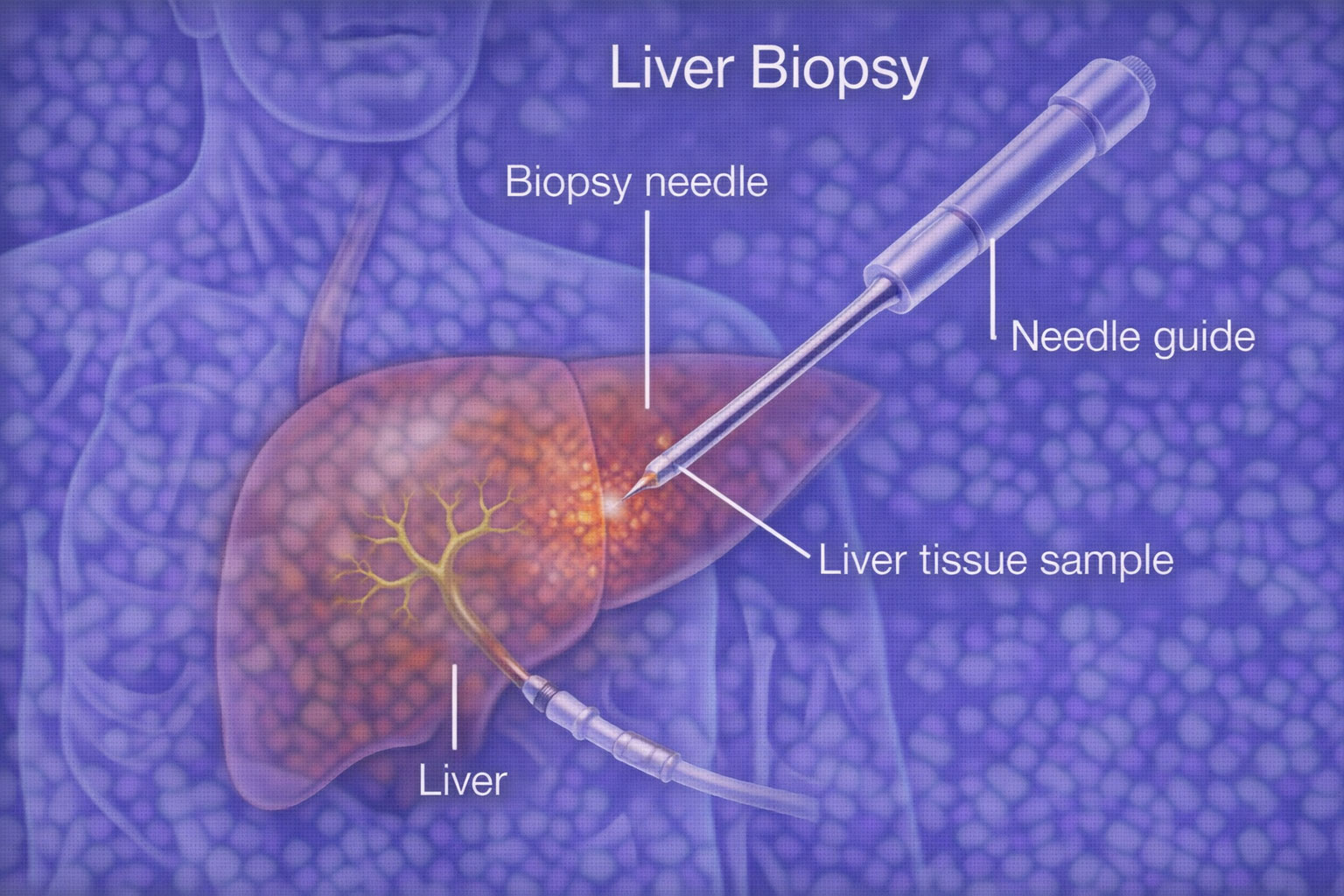
A liver biopsy is a medical procedure in which a doctor takes a small sample of liver tissue using a thin needle. The sample is sent to the lab to check:
- Inflammation or infection (like hepatitis, TB, etc.)
- Fatty liver disease
- Fibrosis or cirrhosis (scarring of the liver)
- Liver tumors or cancer
- Cause of abnormal liver function tests
Types of liver biopsy:
- Ultrasound or CT-guided needle biopsy (most common)
- Transjugular liver biopsy (through a neck vein, in special cases)
- Surgical biopsy (rare, during surgery)
A standard liver biopsy involves passing a needle through the skin and into the liver, which works well for most patients. However, in those with severe cirrhosis, significant clotting abnormalities, or large amounts of abdominal fluid, this approach carries a higher risk of bleeding. For these patients, a transjugular liver biopsy offers a safer route — accessing the liver through a vein in the neck instead of through the skin, which significantly reduces the bleeding risk and makes tissue sampling possible even in patients who would otherwise not be suitable candidates.
When a liver biopsy confirms the presence of a tumor — particularly hepatocellular carcinoma or liver metastases — the next step is targeted treatment. Chemoembolization (TACE) is one of the most effective minimally invasive treatments for liver cancer, delivering chemotherapy directly into the tumor’s artery while simultaneously cutting off its blood supply. The biopsy result guides whether TACE is appropriate, what drug to use, and how aggressively the tumor needs to be treated.
When liver disease leads to blockage of the bile ducts — causing jaundice, infection, or progressive liver damage — drainage of the biliary system becomes a priority alongside tissue diagnosis. A biliary drain (PTBD) is placed under image guidance to restore bile flow, relieve jaundice, and protect the liver from further injury — often performed in the same patient who has already undergone or is being prepared for a liver biopsy to confirm the underlying diagnosis.