Chennai-based Endovascular & IR Specialist, Dr. Ravindran Ramalingam offers minimally invasive, scar-free treatments ensuring faster recovery and minimal pain.

Endovascular &
IR Specialist

Center Address
- Gleneagles Health City, Perumbakkam, Chennai, TN
- Maruti Scans, Velachery, Chennai, TN

Kidney drain – PCN

Percutaneous Nephrostomy & Stenting (PCN)

A Minimally Invasive Way to Relieve Kidney Urine Blockage and Protect Kidney Function

When urine cannot drain from the kidney to the bladder due to a blockage, pressure builds up and can damage the kidney, cause severe pain, infection, or fever.

Percutaneous Nephrostomy & Stenting (PCN) is a minimally invasive, image-guided procedure that drains urine from the kidney and/or places a stent to bypass or open the blockage, giving quick relief and protecting kidney function—often without major surgery.

👉Severe flank pain, fever, or kidney blockage on scan?

What Is Percutaneous Nephrostomy & Stenting (PCN)?

PCN includes two closely related treatments:

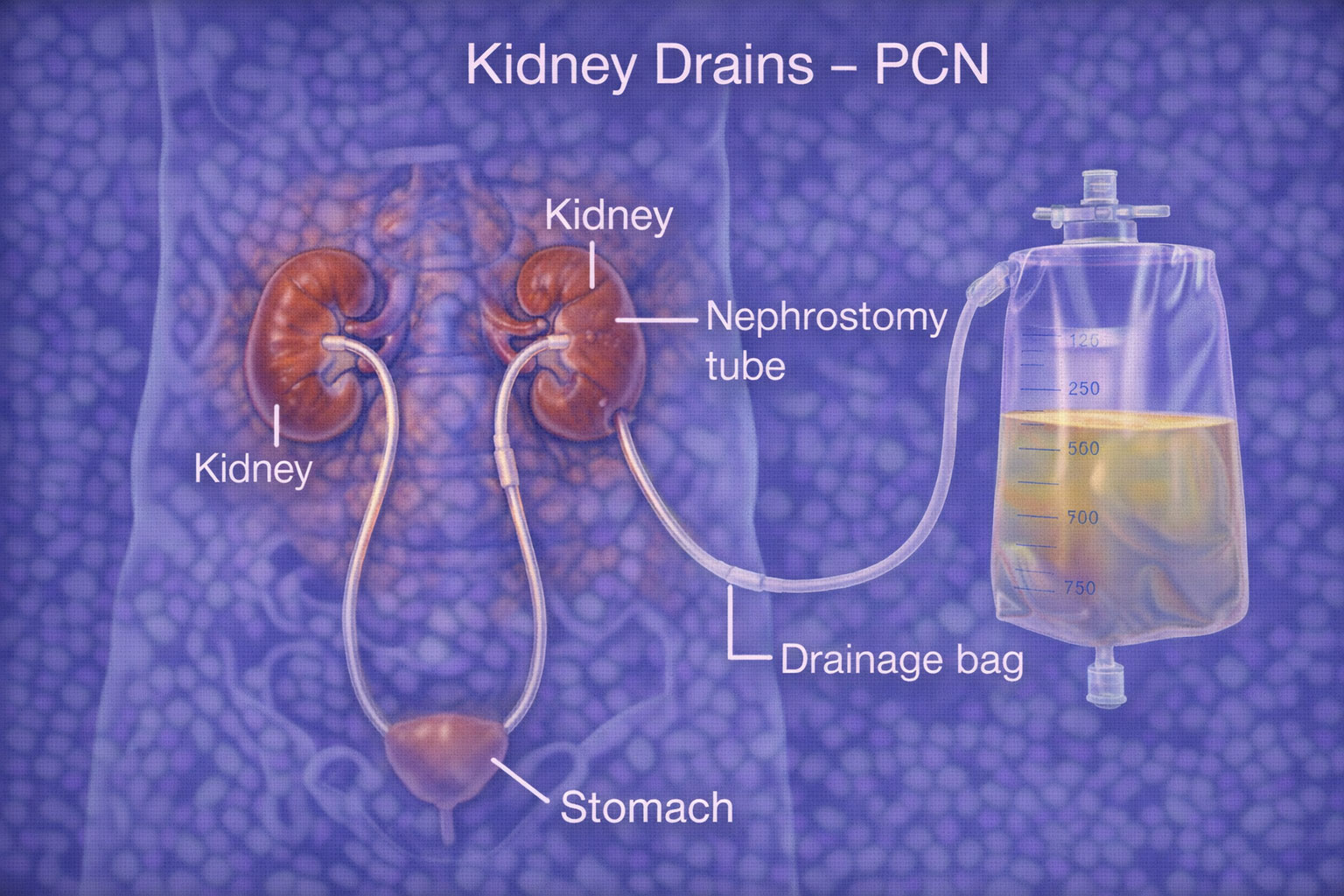
  • Percutaneous nephrostomy: A small tube is placed through the skin into the kidney to drain urine outside into a bag.
  • Ureteric stenting: A thin internal tube (stent) is placed from the kidney to the bladder to keep the urine pathway open.

This:

  • Relieves pressure and pain
  • Treats or prevents infection
  • Protects kidney function
  • Allows time for definitive treatment (stone removal, surgery, cancer therapy, etc.)
  • Minimally invasive

  • Done under local anesthesia

  • Fast symptom relief

  • Often life-saving in infection or kidney failure

Why Is Percutaneous Nephrostomy & Stenting (PCN) Done?

PCN is done when urine flow from the kidney is blocked due to:

  • Kidney or ureteric stones
  • Tumors pressing on the urine pipe (ureter)
  • Strictures (narrowing) after surgery or infection
  • Pregnancy-related obstruction (in selected cases)
  • Severe infection (pyonephrosis)
  • Sudden kidney failure due to blockage
  • When endoscopic access is not possible or urgent drainage is needed

Main goals:

  • Quickly drain the kidney
  • Relieve pain and fever
  • Prevent permanent kidney damage
  • Stabilize the patient for further treatment

How Is Percutaneous Nephrostomy & Stenting (PCN) Done?

The procedure is performed by an interventional radiologist using ultrasound and X-ray guidance.

Step-by-step:

  • You lie on your stomach or side; local anesthesia (and sometimes mild sedation) is given
  • Using ultrasound, the doctor guides a thin needle into the kidney
  • A wire and small tube (catheter) are placed to drain urine outside (nephrostomy)
  • If possible, a stent is passed internally from kidney to bladder to restore natural urine flow
  • The tube or stent position is checked with X-ray
  • The tube (if left outside) is secured to the skin and connected to a drainage bag

What Are the Risks?

PCN is generally safe when done by experienced specialists. Possible risks with approximate incidence include:

  • Pain at the tube site – common (20–30%)
  • Blood in urine for a short time – common (10–20%)
  • Minor bleeding around the kidney – uncommon (5–10%)
  • Infection or fever after the procedure – uncommon (5–10%)
  • Tube blockage or displacement – uncommon (5–10%)
  • Significant bleeding needing treatment – rare (<1–2%)
  • Injury to nearby organs – very rare (<1%)
percutaneous nephrostomy chennai percutaneous nephrostomy chennai treatment

What Are the Alternatives?

Your options depend on:

  • Why the kidney drain or ureteral stent is needed (stone, tumor, infection, blockage, etc.)
  • Your overall health and other medical conditions
  • Your personal preferences and urgency of treatment

Your care team will discuss the most suitable choice for your situation.

Alternative 1: Ureteral Stent Placement from Below (Retrograde Stenting)

  • The stent is placed through the bladder and up into the ureter, not through the back
  • Usually performed by a urologist in the operating room
  • Avoids a tube coming out through the skin
  • May not be possible in all blockages, especially if the passage is completely blocked or distorted

Alternative 2: Surgery to Relieve the Blockage

  • Involves open or minimally invasive surgery to treat the cause of the obstruction
  • Can provide a more definitive solution in selected cases
  • However, surgery:
    • Is more invasive
    • Has higher risks of complications
    • Requires a longer hospital stay and recovery period

Alternative 3: No Procedure or Surgery

  • Avoids any intervention
  • Risk depends on the cause of blockage
  • Ongoing obstruction can lead to:
    • Kidney damage or kidney failure
    • Serious infection (sepsis)
  • These complications can be life-threatening if not treated in time

Choosing the Right Urinary Drainage Option

A percutaneous kidney drain (nephrostomy) or ureteral stent provides a fast, effective way to relieve pressure on the kidney, protect kidney function, and control infection when immediate drainage is needed. A personalized evaluation ensures the safest and most effective plan for you.

📌 When the kidney is blocked and infected or failing, PCN is often the fastest and safest solution.

What Happens After Your Procedure?

After PCN:

  • Pain and fever usually improve within 24–72 hours
  • You may receive antibiotics and pain medicines
  • If you have an external tube, nurses will teach you how to care for it
  • Urine color usually clears over a few days
  • Follow-up scans may be done to check kidney drainage
  • The tube may be removed later once an internal stent or definitive treatment is done
  • You can usually return to normal activities in a few days, as advised

Frequently Asked Questions (FAQs) – Percutaneous Nephrostomy & Stenting (PCN)

PCN is a minimally invasive procedure used to drain urine from a blocked kidney and/or place a stent to restore normal urine flow from the kidney to the bladder.

PCN is done to:

  • Relieve kidney blockage
  • Reduce pain and pressure in the kidney
  • Treat or prevent infection
  • Protect kidney function
  • Provide urgent drainage in emergency situations

Common causes include:

  • Kidney or ureter stones
  • Tumors pressing on the urine pipe
  • Strictures (narrowing) after surgery or infection
  • Severe infection (pyonephrosis)
  • External compression of the ureter

No. It is a needle-and-catheter, minimally invasive procedure, not open surgery.

It is done under local anesthesia, so you may feel pressure or mild discomfort, but usually no severe pain.

The procedure usually takes 30 to 60 minutes, depending on the difficulty of access.

Most patients stay in the hospital for 1 to 3 days, especially if there was infection or severe pain before the procedure.

Many patients feel relief in pain and fever within 24 to 72 hours after the kidney is drained.

Some patients will have an external nephrostomy tube at first. In many cases, this is temporary and can be removed after a stent or definitive treatment.

It may stay for a few days to a few weeks, depending on the cause of blockage and treatment plan.

Possible risks include pain at the tube site, blood in urine, minor bleeding, infection, tube blockage or displacement. Serious complications are uncommon.

Yes. Many patients go home with the tube and return later for follow-up and tube removal.

You will be taught how to keep the area clean, empty the urine bag, and watch for signs of infection or blockage.

Alternatives include ureteric stent placement through the bladder, surgery, or medical treatment, depending on the cause and urgency of the blockage.

Yes. When done by experienced specialists, PCN is a safe and widely used procedure, especially in emergencies.

Why Choose PCN?

  • Minimally invasive

  • Quick relief from pain and infection

  • Protects kidney function

  • Done under local anesthesia

  • Life-saving in blocked, infected kidneys

  • Proven and widely used procedure

Don’t Ignore a Blocked Kidney

A blocked kidney can quickly lead to infection and permanent damage. Percutaneous nephrostomy & stenting can save your kidney and your life by restoring urine flow quickly and safely.

Early treatment means safer recovery and better kidney health.
Call Now Button