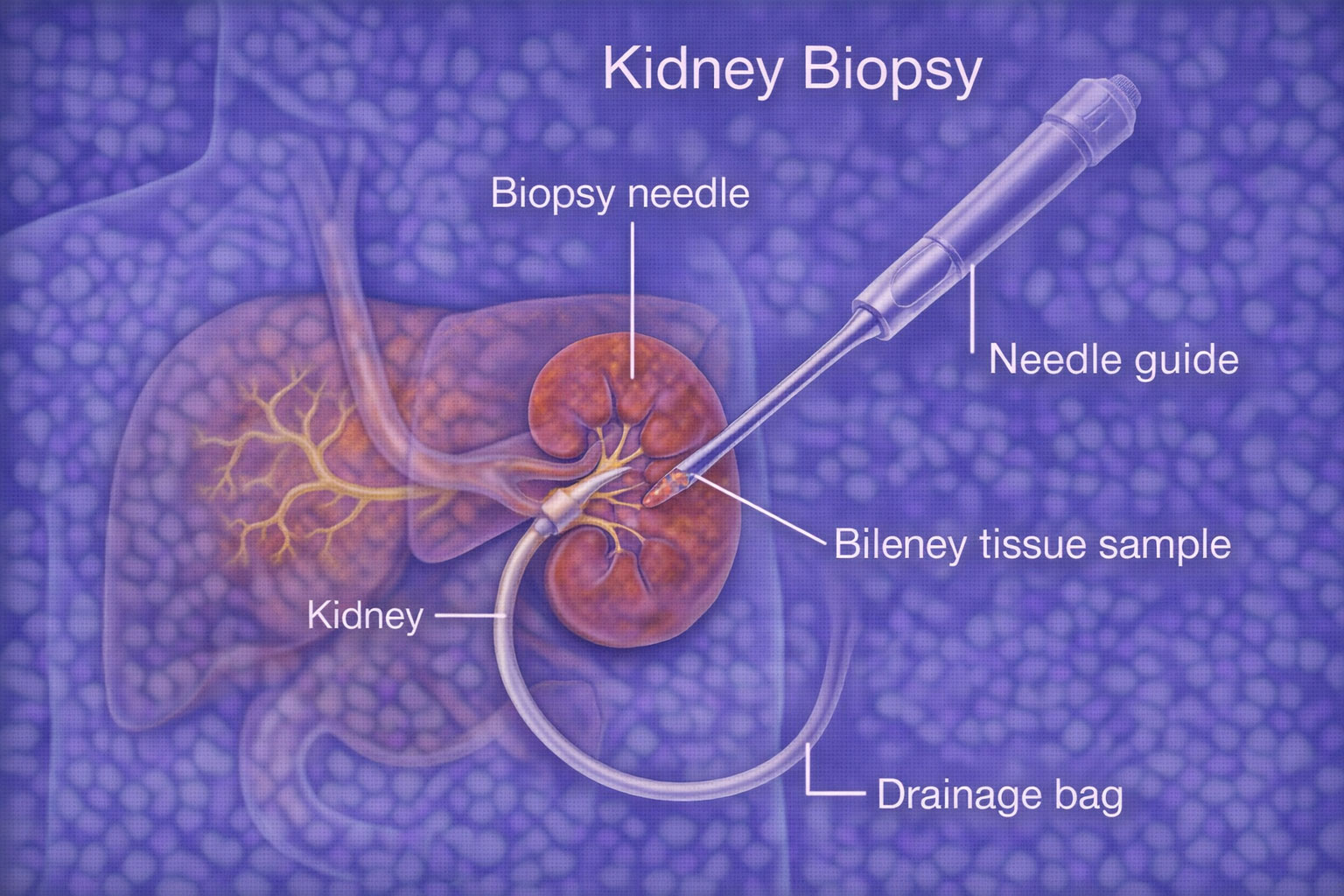
A kidney biopsy is a medical test in which a doctor removes a very small piece of kidney tissue using a thin needle. The sample is studied in the lab to find:
- Type of kidney disease
- Amount of inflammation or scarring
- Cause of protein or blood in urine
- Reason for kidney failure or worsening kidney function
- Problems after kidney transplant
Types of kidney biopsy:
- Ultrasound or CT-guided needle biopsy (most common)
- Transjugular biopsy (through a neck vein, in special high-risk cases)
- Surgical biopsy (rare)
A kidney biopsy tells the doctor what is wrong with the kidney tissue — but sometimes the kidney itself is also under physical stress from a blocked drainage system. When urine cannot flow out of the kidney normally due to a stone, tumour, or stricture, pressure builds up inside and damages the organ rapidly. A kidney drain (PCN) , a percutaneous nephrostomy, relieves this pressure immediately by placing a thin tube directly into the kidney under ultrasound guidance, protecting kidney function while the underlying blockage is being addressed.
In some patients, poor kidney function investigated through a biopsy turns out to be caused not by disease within the kidney tissue itself but by reduced blood supply reaching the kidney. Narrowing of the renal artery, the main vessel supplying the kidney, starves the organ of oxygen and causes progressive damage. Renal artery angioplasty and stenting restore normal blood flow to the kidney using a small balloon and stent delivered through a catheter, often stabilizing or even improving kidney function once the blood supply is corrected.
The kidney is just one of many organs where tissue sampling through image guidance is performed. The same principles of ultrasound and CT-guided needle placement used in a kidney biopsy apply equally to the liver, lung, breast, thyroid, and lymph nodes. The image-guided biopsy page explains how this technique is adapted for different organs, what preparation is involved, and what patients can expect during and after the procedure.