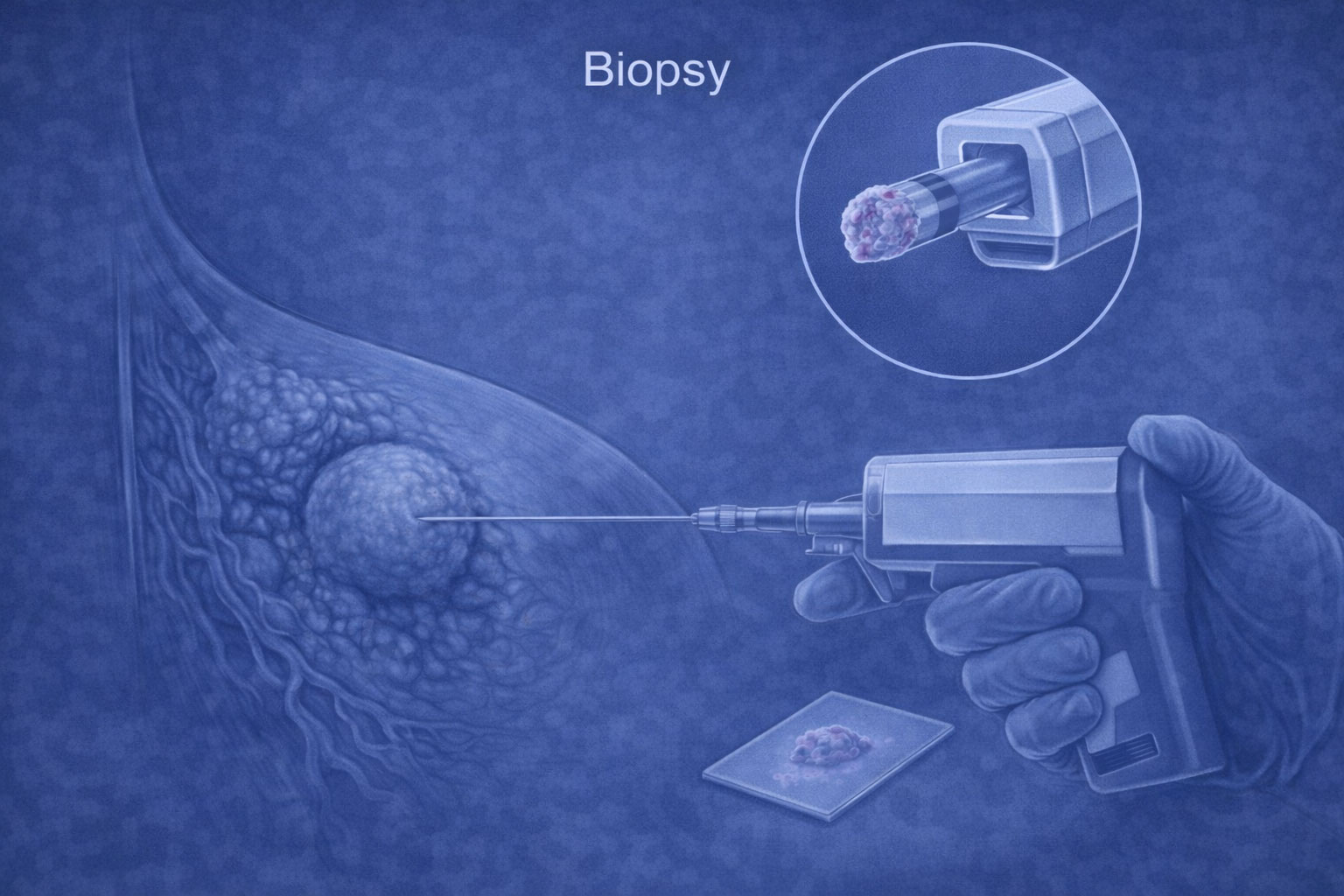
A biopsy is a medical procedure in which a doctor removes a small piece of tissue from the body and sends it to a lab for testing.
The test helps to:
- Confirm or rule out cancer
- Identify infection or inflammation
- Find out the exact nature of a lump or growth
- Guide the right treatment plan
Biopsies can be done from many parts of the body, such as:
- Breast
- Thyroid
- Liver
- Lung
- Lymph nodes
- Bone or soft tissue
Today, most biopsies are done using image guidance — meaning the doctor uses ultrasound or CT scan in real time to place the needle in exactly the right spot. This makes the procedure safer, more accurate, and far less discomforting than older methods.
The type of biopsy recommended depends on which organ is involved and what the doctor suspects. For example, a liver biopsy is commonly advised when blood tests or scans suggest liver disease, infection, or a growth that needs confirmation. Similarly, a lung biopsy is used to evaluate nodules or masses seen on a chest CT — helping doctors distinguish between infection, inflammation, and cancer before starting any treatment.
In some cases, a full biopsy may not even be necessary. A simpler test called fine-needle aspiration cytology (FNAC) uses a very thin needle to collect a small sample of cells — enough to provide a diagnosis quickly, with minimal discomfort and no hospital stay.