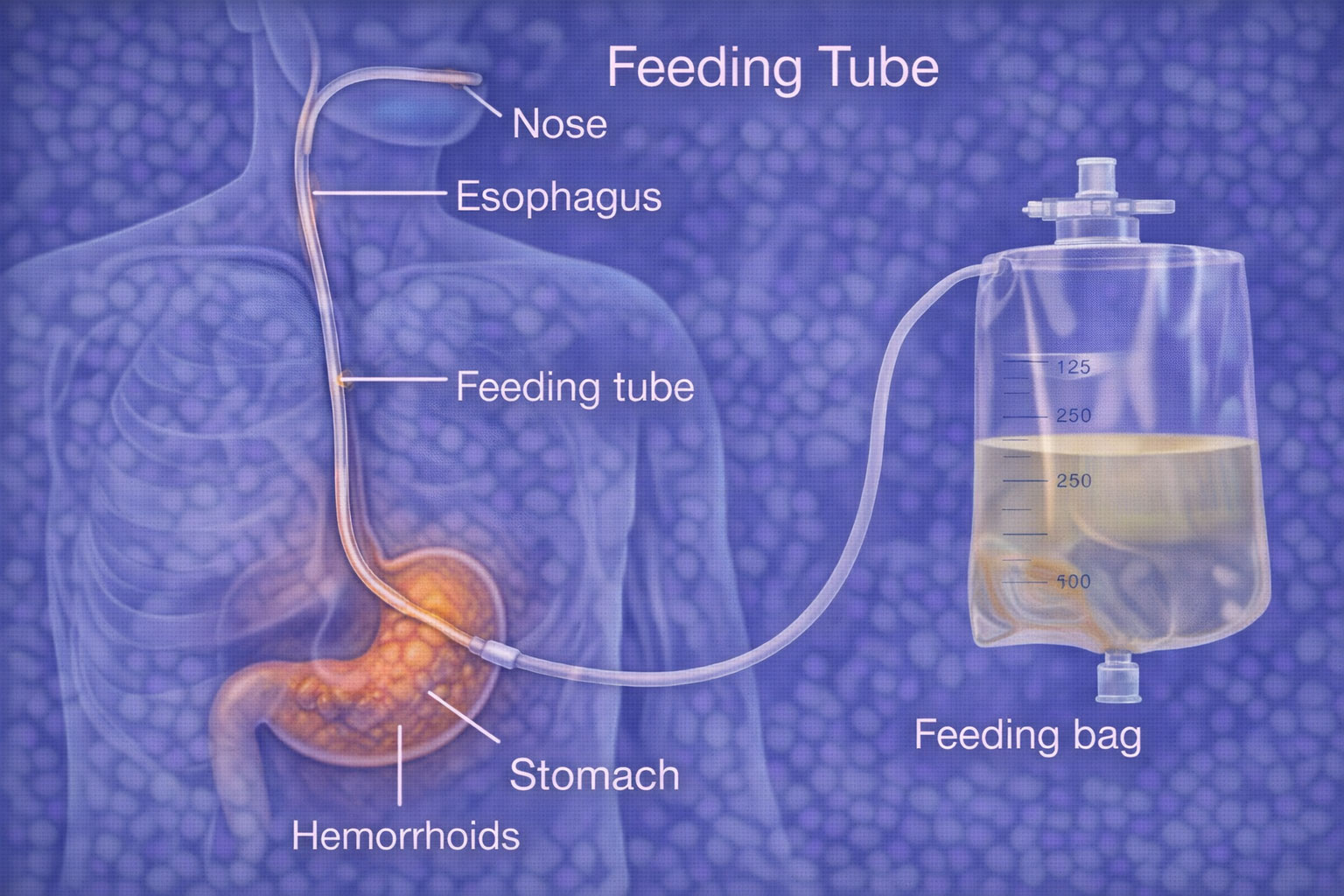
Percutaneous gastrostomy (G-tube): A feeding tube is placed directly into the stomach through the skin.
Percutaneous gastrojejunostomy (GJ-tube): A longer tube goes from the stomach into the small intestine (jejunum) — useful when the stomach cannot be used safely for feeding.
These tubes:
- Provide nutrition, water, and medicines
- Reduce the risk of choking or aspiration
- Improve strength and recovery
- Can be temporary or long-term, depending on the condition
A feeding tube addresses the body’s nutritional needs, but many patients undergoing long-term treatment also need reliable venous access for delivering medications, chemotherapy, or fluids directly into the bloodstream. A port placement, a small device implanted just under the skin of the chest, serves this purpose, sitting discreetly beneath the surface and allowing repeated access without repeated needle pricks into fragile veins. Both the feeding tube and the port are placed using image guidance and are designed for patients who need consistent, dependable access over weeks or months.
For patients who need intravenous access but are not yet ready for a fully implanted port, a PICC line offers a simpler alternative: a thin catheter inserted through an arm vein and advanced into a central vein near the heart. Like a feeding tube, it can be used to deliver nutrition directly into the bloodstream in patients whose gut is temporarily unable to absorb food adequately.
Some patients requiring a feeding tube are also managing kidney failure and undergoing regular dialysis. In such cases, a tunnelled hemodialysis catheter (Permcath) may be placed alongside the feeding tube; both are tunnelled devices inserted under image guidance, designed to remain in place safely for an extended period while the patient recovers or continues long-term treatment.