

Fibroid treatment without surgery in Chennai is now the first conversation worth having, not the last resort after a hysterectomy has already been scheduled.
But most women never get that conversation.
They spend months, sometimes years, soaking through pads every two hours, passing clots the size of a coin, and dragging through their days with the kind of fatigue that no amount of sleep fixes. After consulting a gynaecologist, many are prescribed hormonal medication. The bleeding may slow temporarily, but eventually, it returns. The bleeding slows temporarily. Then it returns.
What nobody tells them is that heavy periods caused by fibroids are not purely a hormonal problem. They are a vascular problem. The fibroids are fed by blood vessels, and the most effective non-surgical treatment works by cutting off that blood supply, not by removing the uterus that contains them.
The 2-Hour Pad Test:
If you are soaking through a pad every 2 hours or passing blood clots larger than a 10-rupee coin, abnormal pelvic blood vessels feeding uterine fibroids could be causing the heavy bleeding rather than a simple hormonal imbalance. This pattern warrants a vascular assessment, not just a gynaecology review.
Is Changing Your Pad Every 2 Hours Normal?
The short answer is no. Many women hear that these symptoms are normal and spend years trying to manage them. Over time, they may start to see abnormal bleeding as their normal baseline.
Here are the three warning signs that indicate something beyond normal menstruation is happening.
12 or More Pads a Day When Heavy Becomes Dangerous
The clinical definition of heavy menstrual bleeding is soaking through a pad or tampon within 2 hours, or losing more than 80ml of blood per cycle.
Most women with fibroids exceed this by a significant margin.
What this level of blood loss does over time:
- Haemoglobin drops; iron stores deplete faster than diet and supplements can replenish them.
- Ferritin levels fall; the storage form of iron goes first, before haemoglobin itself shows abnormalities on a blood test.
- Oxygen-carrying capacity decreases; the body prioritises essential organs, while the muscles and brain receive less.
- The cycle becomes self-perpetuating: low iron impairs the body’s ability to regulate the uterine lining, which worsens bleeding in subsequent cycles.
Fatigue, Dizziness, and Anaemia: The Hidden Cost of Heavy Periods
The exhaustion that most women with fibroid-driven heavy bleeding describe is not tiredness. It is anaemia.
How to recognise anaemia from heavy periods:
- Persistent fatigue that does not resolve with sleep
- Breathlessness on mild exertion, climbing a flight of stairs, walking to the car.
- Pale skin, pale inner eyelids visible in iron deficiency
- Difficulty concentrating: cognitive effects of reduced oxygen delivery
- Palpitations: the heart working harder to compensate for reduced haemoglobin
A hemoglobin below 10 grams per decilitre is common in women with untreated fibroid bleeding and causes all of the above simultaneously. Most of these women blame their tiredness on their busy lives. They are not. They are anaemic because they are bleeding too much.
Why Heavy Menstrual Bleeding Is Often a Vascular Problem
This is the part that most gynaecology consultations miss and the part that changes the entire treatment conversation.
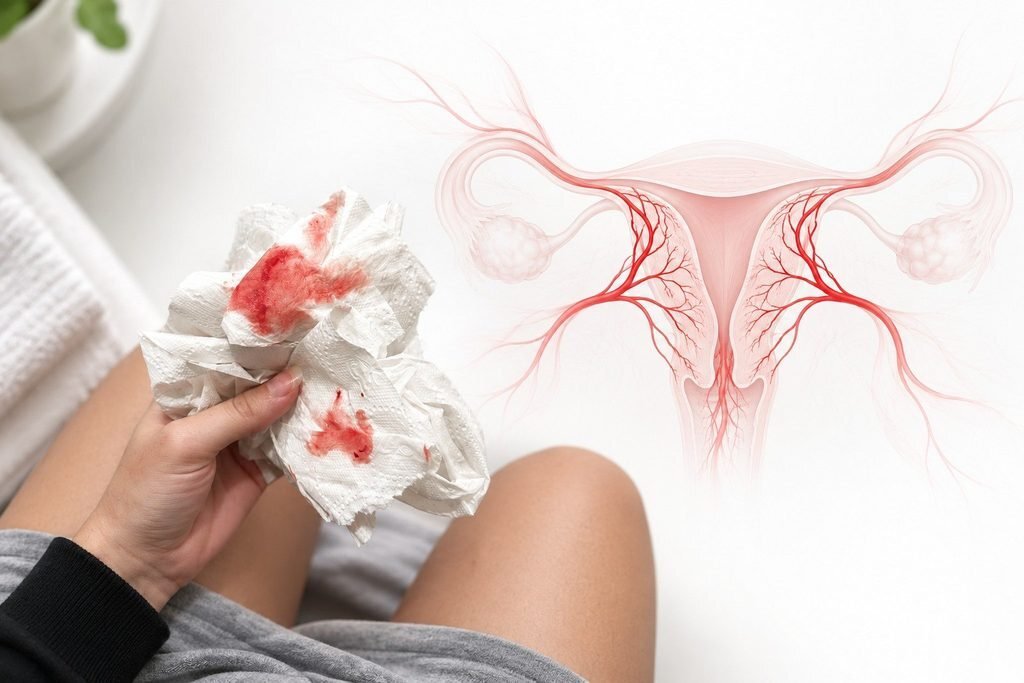
How Uterine Fibroids Feed on Pelvic Blood Vessels
Fibroids are not passive growths. They are metabolically active tissues that recruit their own blood supply.
As a fibroid grows, it stimulates the development of new arterial vessels, a process called neovascularisation, to sustain itself. These abnormal vessels are larger and more numerous than the normal uterine arterial supply. They carry significantly more blood to the uterine lining. That increased blood supply is what causes the heavy, prolonged bleeding that fibroids produce.
This is why hormonal medication that reduces oestrogen reduces bleeding temporarily but does not close the abnormal vessels. The moment medication stops, the fibroids resume growing and the bleeding returns.
The only way to durably reduce fibroid-driven bleeding is to address the blood supply feeding the fibroids either by removing them surgically or by blocking their arterial supply through embolisation.
Pelvic Congestion Syndrome When Pelvic Varicose Veins Cause Heavy Bleeding
Another vascular cause of heavy periods is Pelvic Congestion Syndrome (PCS), which routine gynaecology often overlooks.
PCS occurs when the ovarian and pelvic veins develop valve failure, the same mechanism that causes varicose veins in the legs. Blood pools in the pelvic venous system under chronically elevated pressure.
What PCS causes:
- Chronic pelvic pain: dull, aching, worse after prolonged standing or at the end of the day
- Heavy and prolonged periods: elevated venous pressure increases blood flow to the uterine lining.
- Pelvic heaviness and pressure, particularly in the second half of the menstrual cycle
- Visible varicose veins on the thighs, vulva, or inner legs; these are often the pelvic varicosities surfacing externally.
Doctors diagnose PCS using pelvic Doppler ultrasound or MRI venography rather than a standard gynaecological examination. Many women with PCS undergo repeated investigations and treatments for gynaecological causes of pelvic pain before doctors identify the underlying vascular cause.
Why Hormonal Treatment Alone Misses the Root Cause
Hormonal medication, combined oral contraceptives, progesterone, and GnRH agonists reduce oestrogen-driven fibroid growth and temporarily suppress heavy bleeding.
The limitation is fundamental: hormonal medication does not close the abnormal vessels. It does not shrink established fibroids to a degree that persists after medication stops. And for women who cannot tolerate or do not want long-term hormonal treatment, it is not a sustainable solution.
The root cause in fibroid-driven heavy bleeding is vascular. The treatment that addresses the root cause is also vascular.
Non-Surgical Pin-Hole Treatments Available in Chennai
UFE Uterine Fibroid Embolization
UFE treatment in Chennai at Dr Ravindran’s clinic is performed as an outpatient procedure. The uterus is preserved completely. No surgical incision on the uterus or abdomen. No general anaesthesia.
How UFE works:
- A 2mm puncture at the wrist or groin, no larger
- Catheter guided to both uterine arteries under live X-ray imaging.
- Tiny microspheres are delivered into the arterial branches feeding the fibroids
- Blood supply to fibroid tissue is blocked; normal uterine tissue retains sufficient collateral supply.
- Fibroids begin shrinking within weeks: 40 to 60 per cent volume reduction by 3 months.
What patients experience:
- Cramping and pelvic discomfort for 24 to 72 hours post-procedure, managed with oral pain relief
- Same-day or overnight discharge in most cases
- Return to desk work: 7 to 10 days.
- First post-UFE period: significantly lighter; most women notice the difference within their first or second cycle
According to NIH data, 90 per cent of UFE patients report significant symptom relief at 12 months. Heavy bleeding is the symptom that responds most consistently and most rapidly.
For a complete clinical overview of uterine fibroid symptoms and the full non-surgical care pathway, read the Complete Guide to Uterine Fibroid Symptoms and Non-Surgical Treatment in Chennai.
Pelvic Vein Embolisation for PCS
For women with confirmed Pelvic Congestion Syndrome, pelvic vein embolisation closes the refluxing ovarian and pelvic veins through the same catheter-based approach used for UFE.
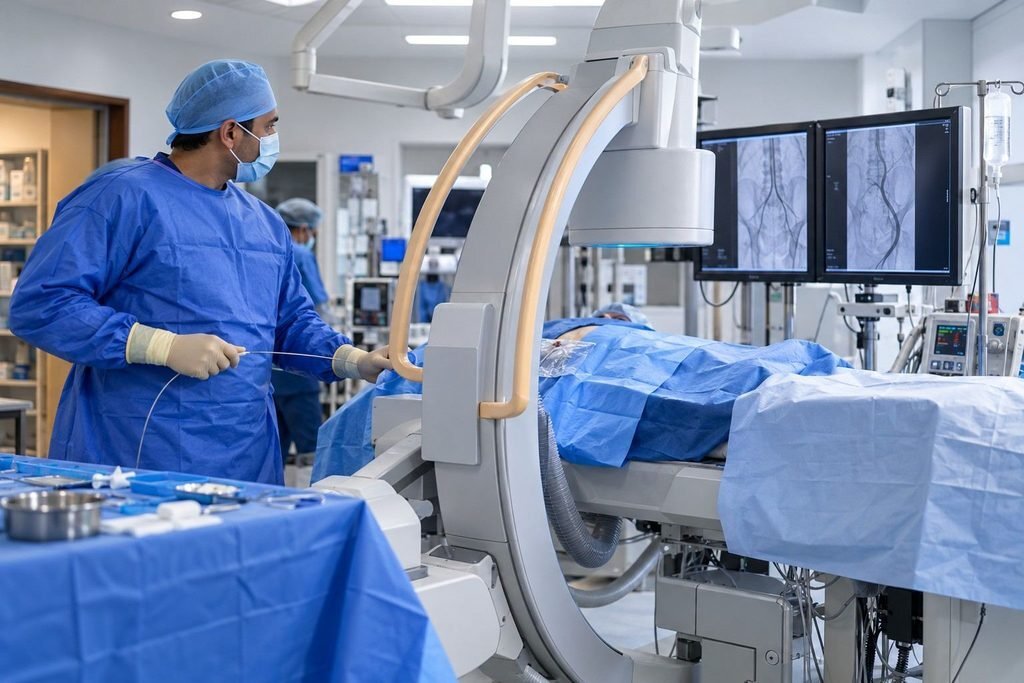
A catheter placed via a 2mm wrist or neck puncture reaches the ovarian veins. Coils or a sclerosant agent blocks the abnormal venous reflux. Pelvic venous pressure normalises. Chronic pelvic pain and the heavy periods it contributes to resolve progressively over 4 to 8 weeks.
No surgical incision. No general anaesthesia. Home by evening in most cases.
UFE vs Hysterectomy vs Myomectomy: The Honest Comparison
For full procedure details and candidacy information, visit the UFE Treatment Page.
How to Get an Evaluation from an Interventional Radiologist in Chennai
What to Expect at Your First Assessment
The evaluation process before UFE or pelvic vein embolisation is straightforward.
What to bring:
- Pelvic ultrasound or MRI reports if you have them
- Recent haemoglobin and ferritin blood tests
- Menstrual history: cycle length, pad usage per day, duration of heavy bleeding
- List of any hormonal or iron medications currently being taken
What happens at the consultation:
- Review of existing imaging to confirm fibroid number, size, and location
- Doppler assessment if PCS is suspected maps pelvic venous reflux
- Clear explanation of whether UFE or pelvic vein embolisation is appropriate for your case
- If surgery is genuinely the better option, you will be referred directly.
Insurance and Cost
UFE is covered under most major Indian health insurance policies when:
- A documented clinical diagnosis of symptomatic fibroids exists.
- Pelvic ultrasound or MRI confirms fibroid presence.
- Pre-authorisation is obtained before the procedure date.
Estimated UFE cost in Chennai:
₹75,000 to ₹1,20,000 depending on case complexity and bilateral vs unilateral uterine artery treatment. A specific estimate is provided after scan review at consultation.
Overall, UFE may offer a cost advantage over hysterectomy when you factor in hospitalisation, anaesthesia, and lost income during post-operative recovery.
Frequently Asked Questions
Yes, and this is one of the most common presentations of uterine fibroids. Fibroids develop their own abnormal blood supply, significantly increasing blood flow to the uterine lining during menstruation. Soaking a pad every 2 hours, passing large clots, or bleeding for more than 7 days consistently warrants a vascular assessment alongside a gynaecological review.
Yes. Pelvic Congestion Syndrome valve failure in the pelvic and ovarian veins elevates venous pressure in the pelvis, increasing blood flow to the uterine lining and worsening period heaviness. PCS is diagnosed on pelvic Doppler ultrasound or MRI venography and treated through pelvic vein embolisation, the same catheter-based approach used for UFE.
UFE preserves the uterus completely. Future pregnancy remains technically possible. However, for women actively planning pregnancy in the near term, myomectomy has a stronger evidence base for fertility preservation. Women with fertility as a primary concern should discuss both options at consultation.
Most women notice a significant reduction in period heaviness within their first or second cycle after UFE, typically 4 to 8 weeks post-procedure. Fibroid shrinkage continues for 3 to 6 months. Haemoglobin and ferritin levels recover as the body rebuilds iron stores with normal period blood loss.
Most major Indian health insurance policies cover UFE when a documented diagnosis of symptomatic uterine fibroids exists, and pre-authorisation is obtained before the procedure. Call your insurer and ask specifically whether uterine fibroid embolisation is listed under your policy. The hospital insurance desk can assist with pre-authorisation documentation.
Consult Dr Ravindran Ramalingam in Chennai
Dr Ravindran is an Endovascular and Interventional Radiologist at Gleneagles Hospital Perumbakkam, serving patients from Velachery, OMR, Adyar, Pallikaranai, Tambaram, and across South Chennai.
Every consultation begins with a review of your existing scan reports. If UFE is appropriate for your case, your doctor will explain the procedure, recovery, and expected outcomes in full before you make any decision. This way, you know what to expect and can make an informed decision about your treatment.

Heavy Periods & Frequent Pad Changes? Fibroid Treatment In Chennai – Irdoctor
08/09/2026[…] If you’ve been quietly dealing with frequent pad changes for a while now, you’re not alone, and it’s genuinely worth reading more about what’s normal and what isn’t here: Changing Your Pad Every Few Hours May Not Be Normal — Non-Surgical Fibroid Treatment in Chennai. […]