

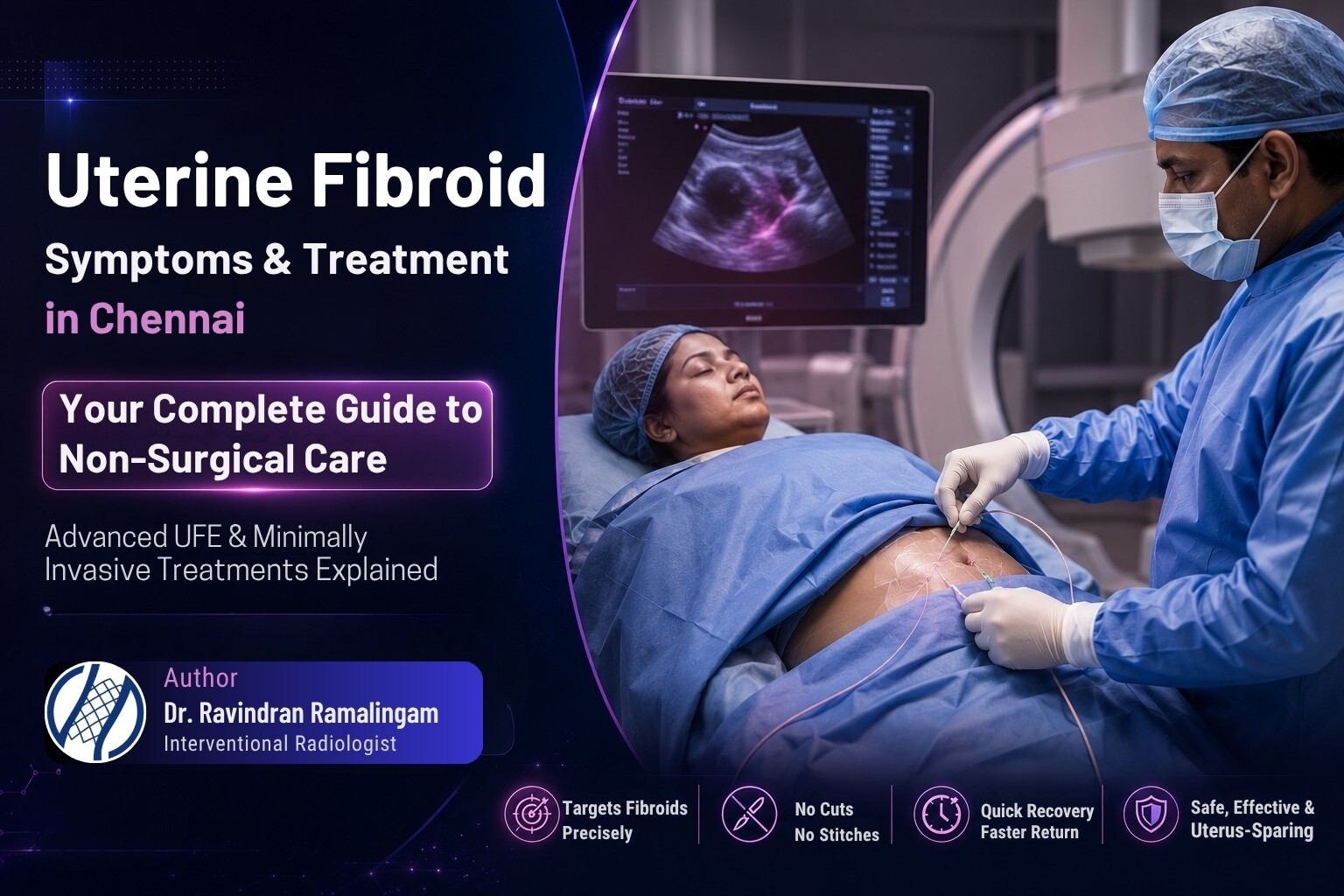
Heavy periods that disrupt your routine, a persistent heaviness in your lower abdomen, or a swelling you cannot explain. These are not symptoms to manage around. There are signs that your body needs a proper evaluation. Fibroid treatment in Chennai has advanced significantly: today, most women with uterine fibroids do not need a hysterectomy or major surgery to find lasting relief. Minimally invasive, image-guided procedures performed as day-care treatments now deliver outcomes that match or exceed those of surgery, with a fraction of the recovery time at UFEChennai.
This guide covers everything you need to know: how to identify fibroid symptoms early, what your diagnosis involves, and which treatment option is right for your specific situation, including the non-surgical alternative that is changing how fibroids are managed across Chennai and India.
What Are Uterine Fibroids?
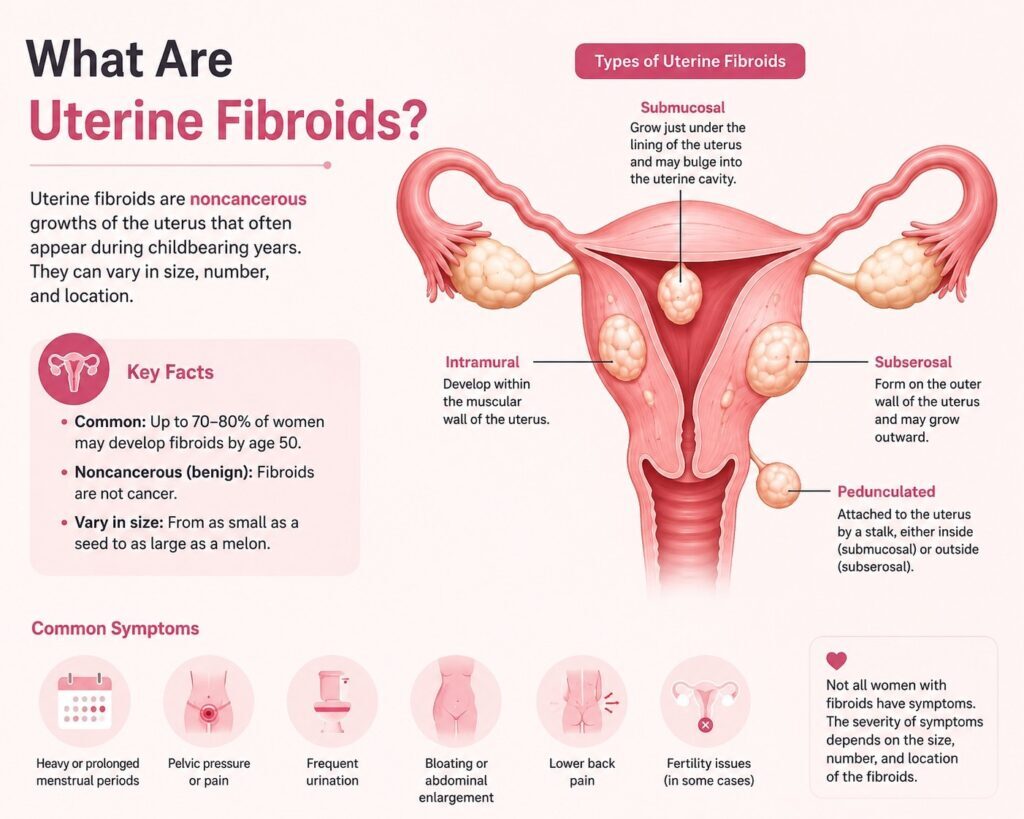
“Uterine fibroids are non-cancerous, hormone-sensitive growths that develop from the smooth muscle wall of the uterus, affecting an estimated 70% of women by age 50, and are the leading cause of heavy menstrual bleeding and the most common reason for hysterectomy in India.”
| 70% of women develop fibroids by age 50 (NIH, 2023) | 90% Symptom improvement rate after UFE (Journal of Vascular and Interventional Radiology) | 7 days Average return to activity after UFE vs. 6 weeks after hysterectomy | 95% Of UFE patients avoid hysterectomy at 5-year follow-up (FIBROID Registry) |
Fibroid Symptoms You Should Not Ignore
Fibroids do not always cause symptoms, but when they do, the impact on daily life can be significant and progressive. Many women normalise heavy bleeding or pelvic discomfort for years before seeking evaluation, by which point treatment becomes more complex than it would have been earlier.
Recognising the symptoms that indicate active fibroid disease, rather than normal menstrual variation, is the critical first step toward getting appropriate care.
| 🩸 Heavy or prolonged periods Soaking a pad every 1–2 hours, passing large clots, or bleeding lasting more than 7 days, is the most common and most disruptive fibroid symptom | 🔵 Pelvic pressure or pain A constant heaviness or fullness in the lower abdomen, often worse when sitting or lying down | 🚽 Frequent urination Larger fibroids press directly on the bladder, causing urgency and frequency without any infection present |
| 😣 Painful periods Menstrual cramps are significantly more intense than your previous baseline, particularly when combined with heavy bleeding | 🤰 Abdominal swelling A visibly enlarged lower abdomen, large fibroids can make the uterus the size of a 4-5 month pregnancy | 👶 Fertility or pregnancy issues Submucosal fibroids inside the uterine cavity can interfere with implantation and increase the risk of miscarriage |
Advanced Warning Signs: When to Seek Urgent Assessment
- Bleeding so heavy it causes dizziness, fatigue, or breathlessness signs of fibroid-related anaemia
- Sudden severe pelvic pain may indicate fibroid degeneration or torsion requiring urgent evaluation
- Complete inability to urinate large fibroid compressing the urinary tract
- Rapidly increasing abdominal size over weeks requires imaging to rule out a rare malignant change
Important
Fibroids are not cancerous, but their symptoms, particularly heavy bleeding over months, cause iron-deficiency anaemia in a significant proportion of patients. Many women presenting for fibroid evaluation in Chennai are found to have haemoglobin levels below 8 g/dL. Do not wait until symptoms become severe before seeking evaluation.
People Also Ask: Can fibroids go away on their own without treatment?
Fibroids rarely disappear without intervention during reproductive years. They are oestrogen-sensitive,₹ so they typically grow during pregnancy and shrink after menopause when oestrogen levels fall. However, waiting for menopause is not a practical strategy for women in their 30s and 40s with active symptoms. Early fibroid treatment in Chennai prevents years of progressive, avoidable blood loss and discomfort.
Key Takeaway
Heavy periods, pelvic pressure, and frequent urination are not normal; they are treatable fibroid symptoms. If any two of these affect your routine, a specialist evaluation and pelvic ultrasound will tell you exactly what you are dealing with and what your options are.
Why Do Fibroids Develop? Causes and Risk Factors
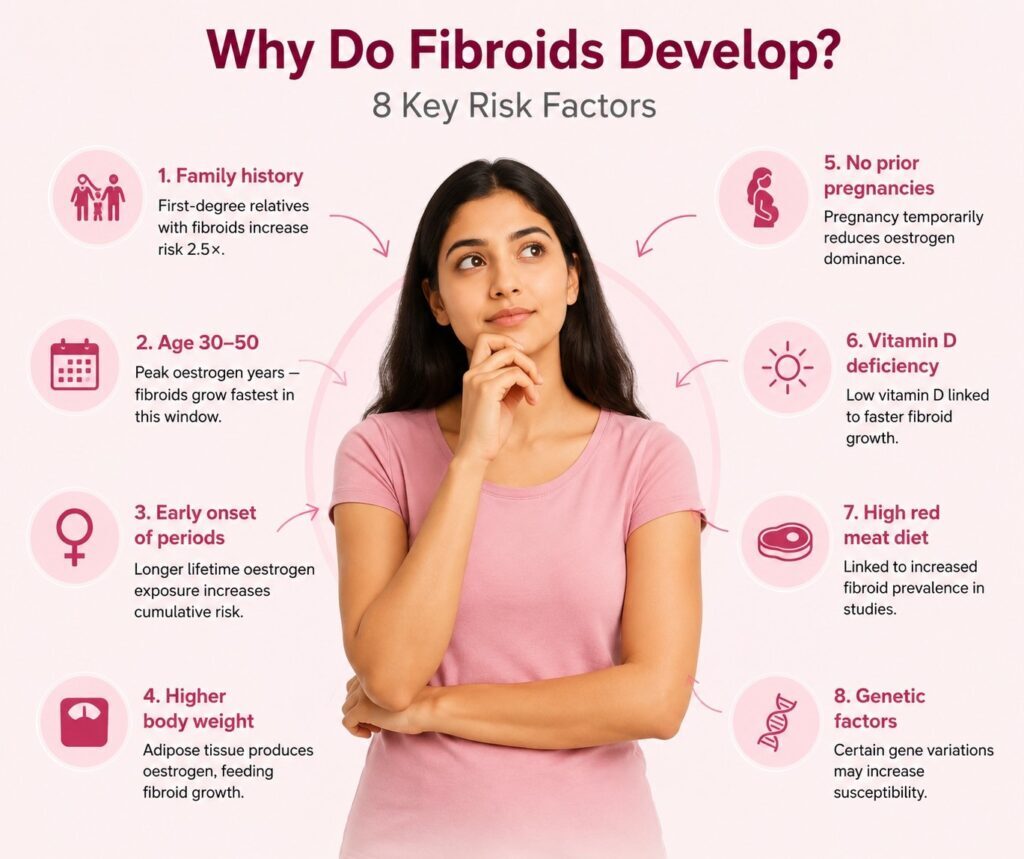
Fibroid treatment in Chennai develops from the smooth muscle cells of the uterine wall when a single cell begins dividing abnormally, driven primarily by oestrogen and progesterone. The exact trigger for this initial cell change is not fully understood, but the risk factors that increase the likelihood are well established.
Key Risk Factors That Increase Fibroid Development
| Risk Factor | How It Contributes | Modifiable? |
|---|---|---|
| Family history | First-degree relatives with fibroids increase risk 2.5× (NIH) | No |
| Age 30–50 | Peak oestrogen years — fibroids grow fastest in this window | No |
| Early onset of periods | Longer lifetime oestrogen exposure increases cumulative risk | No |
| Higher body weight | Adipose tissue produces oestrogen, feeding fibroid growth | Yes |
| No prior pregnancies | Pregnancy temporarily reduces oestrogen dominance | Partially |
| Vitamin D deficiency | Low vitamin D linked to faster fibroid growth (NIH, 2022) | Yes |
| High red meat diet | Linked to increased fibroid prevalence in population studies | Yes |
Pro Tip For High-Risk Women
If you have a mother or sister with fibroids, start annual pelvic ultrasound screening from age 28–30, even before symptoms develop. Catching fibroids when they are small (under 3cm) dramatically expands your treatment options and makes UFE significantly more straightforward than treating multiple large fibroids discovered late.
Key Takeaway
You cannot change your family history or age, but maintaining a healthy weight, correcting vitamin D deficiency, and reducing red meat consumption are all evidence-based steps that slow fibroid growth in high-risk women. More importantly, early detection through regular ultrasound keeps your treatment options open.
How Fibroids Are Diagnosed in Chennai
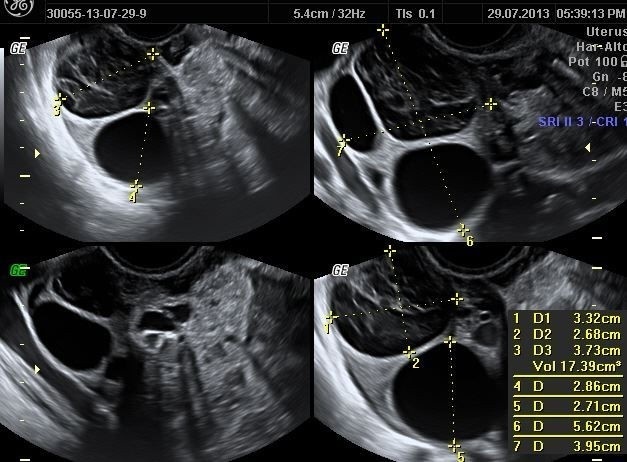
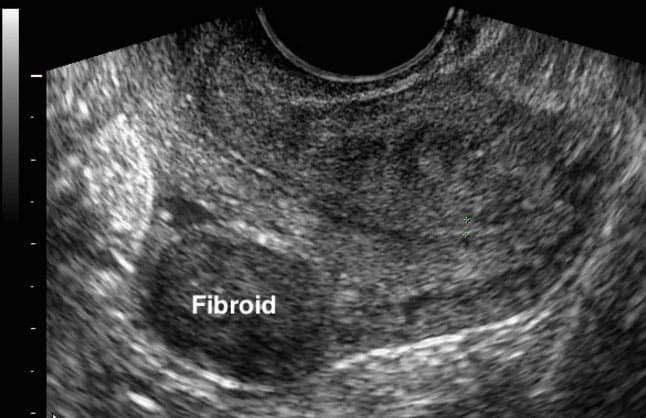
Fibroid diagnosis is straightforward and non-invasive. A pelvic ultrasound performed by an experienced radiologist provides all the information needed to confirm diagnosis, measure fibroid size and number, and assess their location within the uterus, the most critical factor in determining which treatment is most appropriate.
Diagnostic Tests and What Each One Shows
- Pelvic ultrasound: First-line investigation confirms fibroid presence, number, size, and location in under 20 minutes. Transvaginal ultrasound provides higher resolution for smaller fibroids
- MRI scan: Used when ultrasound findings are complex, when multiple fibroids are present, or when planning UFE MRI maps blood supply to each fibroid with precision not available on ultrasound
- Blood tests: Full blood count to assess haemoglobin level (anaemia from heavy bleeding) and hormone profile where relevant
- Hysteroscopy: Direct camera examination of the uterine cavity, used specifically when submucosal fibroids affecting fertility are suspected
Chennai-based Dr Ravindran Ramalingam — Endovascular & Interventional Radiologist illustrates how specialist-led imaging changes treatment outcomes by personally reviewing MRI and ultrasound findings before every UFE procedure.
He ensures that fibroid blood supply mapping is accurate enough to achieve complete devascularisation in a single session, which directly reduces retreatment rates and improves long-term symptom relief.
Common Mistake
Proceeding to treatment based on symptom severity alone without imaging confirmation of fibroid type and location. A submucosal fibroid inside the uterine cavity requires different management from an intramural fibroid within the muscle wall. Treatment without this distinction leads to suboptimal outcomes regardless of the procedure chosen.
Key Takeaway
A pelvic ultrasound is all patients need to confirm the diagnosis and begin planning treatment. For UFE candidates, an MRI adds the precision mapping that ensures the procedure targets every fibroid’s blood supply completely. Always confirm your specialist reviews the imaging personally before finalising your treatment plan.
Fibroid Treatment Options in Chennai: Surgery vs. Non-Surgical UFE
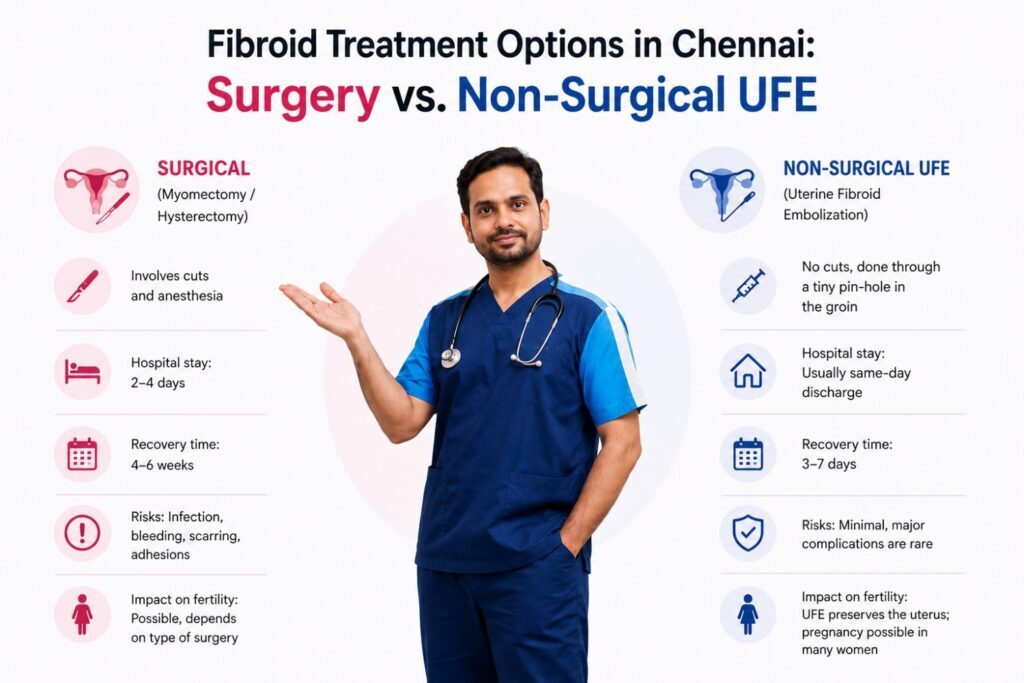
Treatment choice depends on three factors: fibroid size and location, severity of symptoms, and whether the patient plans a future pregnancy. For the majority of women with symptomatic fibroids who do not require fertility preservation in the immediate term, UFE delivers equivalent or superior symptom relief to surgery with dramatically lower procedural risk and recovery time.
What Happens During Uterine Fibroid Embolization (UFE)?
UFE is a minimally invasive, image-guided procedure performed by an Interventional Radiologist. It cuts off the blood supply that feeds fibroid growth, causing fibroids to shrink progressively over 3–6 months. There is no surgical incision, no general anaesthesia required, and the uterus remains completely intact throughout.
- A small needle puncture approximately 2mm is made in the wrist or groin under local anaesthesia. No surgical cut is required.
- A thin catheter is guided through the arterial system to the uterine arteries under real-time X-ray (fluoroscopy) guidance with precision not possible in open surgery.
- EmbolizationTiny biocompatible particles are injected through the catheter, blocking the blood vessels that supply the fibroids. All fibroids in both uterine arteries are treated in a single session.
- Recovery beginsThe procedure takes 45–90 minutes. Patients stay overnight for pain management and go home the following morning. The uterus remains fully intact.
- Fibroid shrinkageOver 3–6 months, treated fibroids shrink by 40–70% of their original volume. Heavy bleeding typically resolves within the first 1–2 menstrual cycles after UFE.
UFE vs. Surgery: Side-by-Side Comparison
| Feature | UFE (Non-Surgical) | Myomectomy (Surgery) | Hysterectomy (Surgery) |
|---|---|---|---|
| Anaesthesia | Local + sedation | General or spinal | General or spinal |
| Hospital stay | 1 night | 2–4 nights | 3–5 nights |
| Recovery time | 7–14 days | 4–6 weeks | 6–8 weeks |
| Uterus preserved | ✅ Yes | ✅ Yes | ❌ No |
| Treats all fibroids | ✅ All in one session | ⚠️ Accessible ones only | ✅ Removes all |
| Fibroid recurrence | Low (5–15%) | Higher (15–30%) | Zero (uterus removed) |
| Future fertility | Possible (case-dependent) | Preserved | ❌ Not possible |
| Success rate | 90%+ symptom relief | 80–85% | 100% (permanent) |
People Also Ask: Is UFE safe for women who want to get pregnant?
UFE is generally not the first-line recommendation for women planning immediate pregnancy, as the procedure reduces blood flow to the uterus temporarily. However, successful pregnancies after UFE are documented in medical literature. Women with fibroids causing infertility who wish to preserve fertility are typically better served by myomectomy first. A specialist assessment is essential to determine the right sequence of treatment for each patient’s fertility goals.
Pro Tip – Asking the Right Questions
Before agreeing to a hysterectomy for fibroids, ask your gynaecologist one question: “Am I a candidate for UFE?” If the answer is vague or dismissive, seek a second opinion from an Interventional Radiologist. In India, a significant proportion of hysterectomies performed for fibroid disease are performed on women who were suitable UFE candidates but were never offered the option.
Key Takeaway
UFE treats all fibroids in a single session, preserves the uterus, requires only a 1-night hospital stay, and delivers 90%+ symptom relief at 5-year follow-up. For most women with symptomatic fibroids who are not planning immediate pregnancy, UFE is the medically superior alternative to hysterectomy not a last resort.
Why Chennai Patients Choose UFE Over Surgery
The practical advantages of UFE over surgical options are significant, and they matter most to working women, mothers, and patients who cannot afford weeks away from their responsibilities. Beyond the clinical outcomes, the lived experience of UFE recovery is fundamentally different from surgical recovery.
- No surgical incision only a 2mm needle puncture in the wrist or groin
- Uterus remains completely intact no organ removal
- All fibroids treated in a single procedure session
- 1-night hospital stay vs. 3–5 nights for hysterectomy
- Return to light activity within 3–5 days
- Full recovery in 7–14 days vs. 6–8 weeks for open surgery
- Heavy bleeding typically improves within the first 1–2 cycles after treatment
- No surgical menopause risk — ovaries remain unaffected
Recovery: What to Expect After UFE
- Day 1–3: Mild to moderate pelvic cramping managed with standard pain relief. Most patients go home the morning after the procedure
- Day 3–7: Fatigue and mild discomfort. Light walking encouraged from day 2. Avoid heavy lifting
- Week 2: Most patients return to desk work. Driving resumes when pain-free and off strong analgesics
- Month 1–3: Menstrual bleeding progressively lighter. Pelvic pressure reduces as fibroids begin shrinking
- Month 3–6: Maximum fibroid shrinkage achieved. Follow-up ultrasound or MRI confirms treatment response
People Also Ask: How long do fibroids take to shrink after UFE?
Fibroids begin shrinking immediately after UFE as their blood supply is cut off. Measurable size reduction, typically 40–70% of the original volume, occurs over 3–6 months. Heavy menstrual bleeding usually improves significantly within the first 1–2 cycles after treatment. Pelvic pressure and urinary symptoms improve as fibroid volume reduces over the following months.
Key Takeaway
UFE recovery is measured in days, not weeks. Most Chennai patients return to their routine within 7–14 days, compared to 6–8 weeks after hysterectomy. The procedure does not just treat symptoms: it restores quality of life significantly faster than any surgical alternative.
Fibroid Specialist in Chennai — Dr. Ravindran Ramalingam
Dr Ravindran Ramalingam is an Endovascular and Interventional Radiologist based in Chennai with specialised expertise in minimally invasive treatments for uterine fibroids. He performs UFE as his primary treatment modality using real-time fluoroscopic and ultrasound guidance to ensure complete devascularisation of all fibroids in a single session.
Why an Interventional Radiologist Performs UFE
UFE requires navigation through the arterial system under live imaging, a skill set specific to Interventional Radiology training. Gynaecologists and general surgeons do not perform this procedure. Choosing a specialist with dedicated IR training and high UFE procedure volume directly determines the completeness of fibroid treatment and the retreatment rate.
People Also Ask: Which doctor performs UFE for fibroids in Chennai?
UFE for uterine fibroids is performed exclusively by Interventional Radiologists, not gynaecologists or general surgeons. In Chennai, Dr Ravindran Ramalingam at Gleneagles Health City, Perumbakkam, specialises in UFE and other minimally invasive vascular procedures. He performs the pre-procedure MRI review and the UFE itself, ensuring treatment precision and complete fibroid devascularisation in a single session.
Frequently Asked Questions
How do I know if my heavy periods are caused by fibroids?
A pelvic ultrasound confirms it in a single visit. Heavy bleeding, pelvic pressure, and frequent urination together strongly suggest fibroids. A specialist will also check your haemoglobin level since fibroid-related blood loss commonly causes anaemia before diagnosis.
What is the difference between UFE and a hysterectomy?
UFE shrinks fibroids by cutting their blood supply your uterus stays intact. A hysterectomy removes the uterus permanently. UFE needs only a 1-night stay and 7–14 days of recovery. Hysterectomy requires 3–5 nights and 6–8 weeks of recovery.
Why is fibroid treatment without hysterectomy preferred now?
UFE delivers 90%+ symptom relief, preserves the uterus, needs no surgical incision, and allows return to routine in 7–14 days. Most eligible women in Chennai now discuss UFE before surgery — not after.
When is surgery still necessary for fibroids?
Surgery suits specific cases, such as submucosal fibroids affecting fertility, very large fibroids causing urinary obstruction, or suspected malignancy. A specialist evaluation determines whether you genuinely need surgery or whether UFE is the better first option.
Which doctor performs UFE for fibroids in Chennai?
UFE is performed exclusively by Interventional Radiologists, not gynaecologists. Dr Ravindran Ramalingam at Gleneagles Health City, Perumbakkam, Chennai, specialises in UFE. Contact: +91 8190 907 908.
Key Takeaways Complete Summary
- Uterine fibroids affect 70% of women by age 50. Heavy periods, pelvic pressure, and frequent urination are the most common symptoms requiring evaluation
- A pelvic ultrasound confirms the diagnosis in a single visit. MRI is added for UFE planning to map the fibroid blood supply precisely
- UFE is a 45–90 minute, image-guided procedure with 1-night hospital stay, 90%+ symptom relief, and full recovery in 7–14 days
- Hysterectomy is not the only option, and for most eligible patients, it is not the best first option
- UFE treats all fibroids in a single session, preserves the uterus completely, and eliminates the risks of open surgery and general anaesthesia
- UFE must be performed by a trained Interventional Radiologist. Operator experience is the single strongest predictor of treatment success and retreatment rate.
Conclusion: You Have More Options Than You Were Told
If you have been managing heavy periods, pelvic discomfort, or a growing abdomen for months and have been told that surgery is your main option, this guide exists to tell you that the picture is more complete than that. Fibroid treatment in Chennai has changed. UFE delivers lasting relief without removing your uterus, without a surgical incision, and without weeks of recovery.
The first step is a pelvic ultrasound, a 20-minute scan that gives you a complete picture of your fibroid burden and opens a clear, informed conversation about every treatment available to you. You deserve that conversation before you agree to anything.
Ready to Explore Your Non-Surgical Options?
Book a consultation with Dr Ravindran Ramalingam — Interventional Radiologist, Gleneagles Health City, Chennai
📞 Call +91 8190 907 908. | Learn About UFE at irdoctor.in ↗
Medical Disclaimer: This article is for informational purposes only and does not constitute medical advice, diagnosis, or treatment recommendations. All fibroid management decisions should be made with a qualified medical specialist following clinical assessment and appropriate diagnostic imaging.

Changing Your Pad Every 2 Hours? It May Not Be Normal: Non-Surgical Fibroid Treatment In Chennai - Dr. Ravindran - Endovascular & Interventional Radiologist
07/09/2026[…] For a complete clinical overview of uterine fibroid symptoms and the full non-surgical care pathway, read the Complete Guide to Uterine Fibroid Symptoms and Non-Surgical Treatment in Chennai. […]