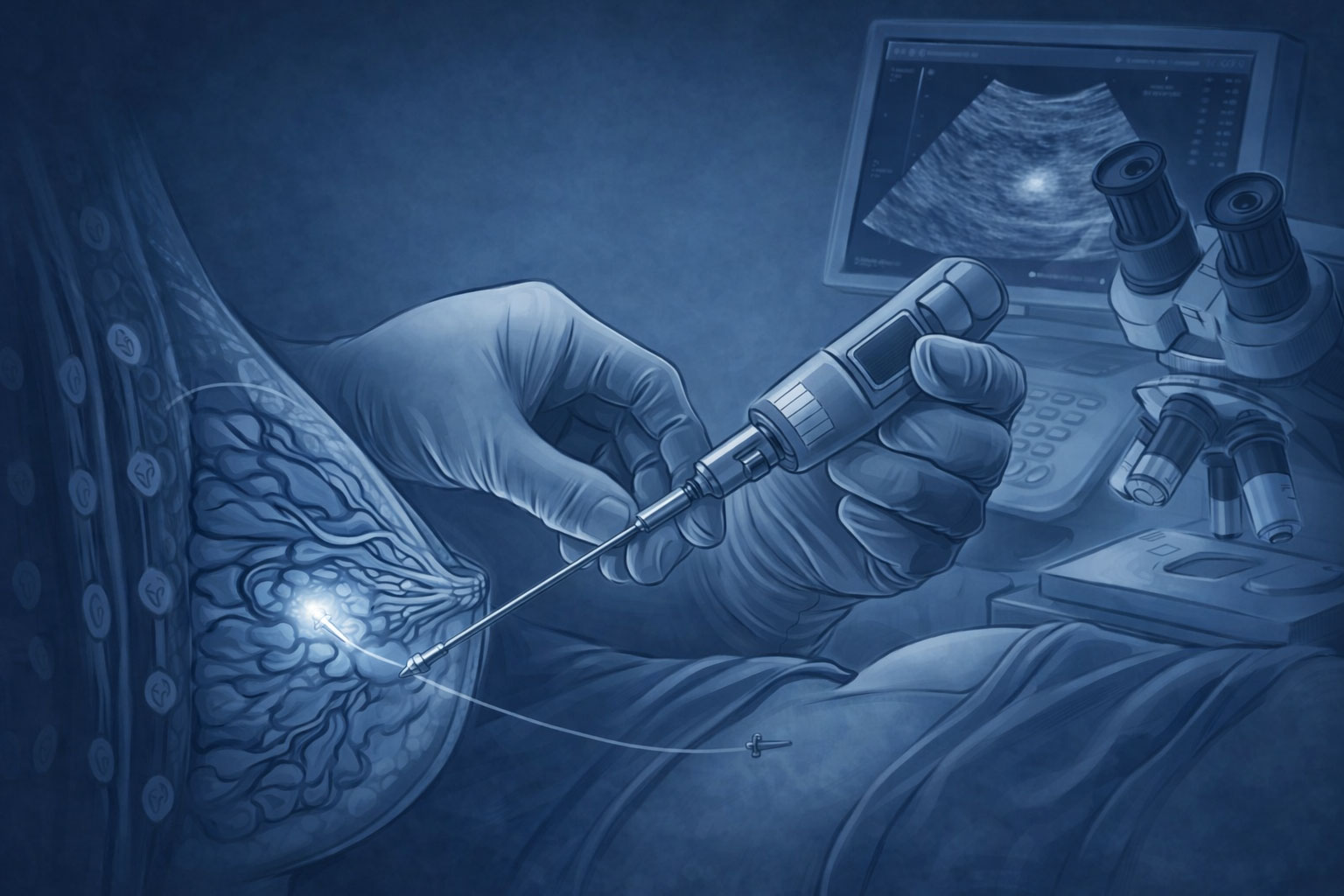
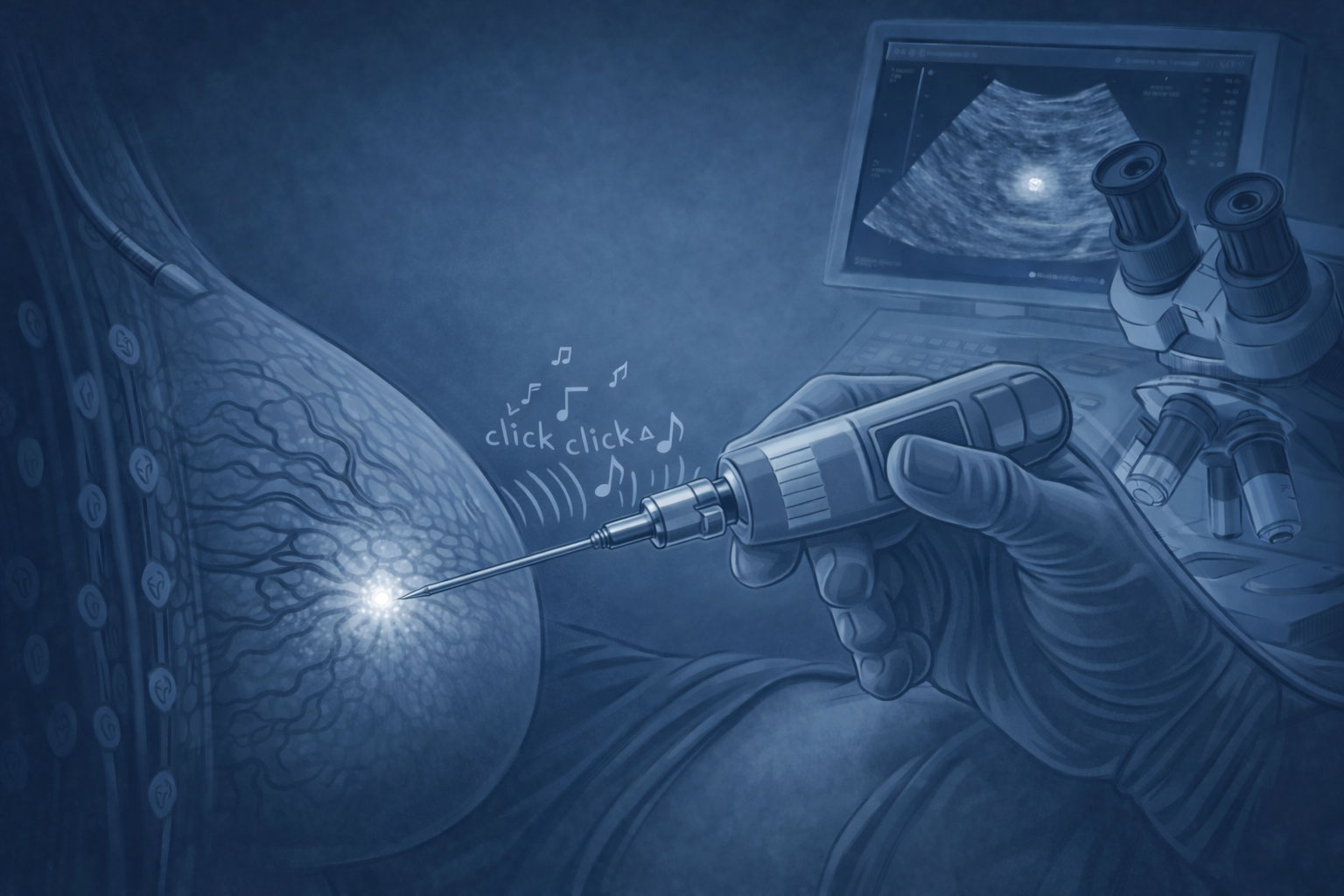
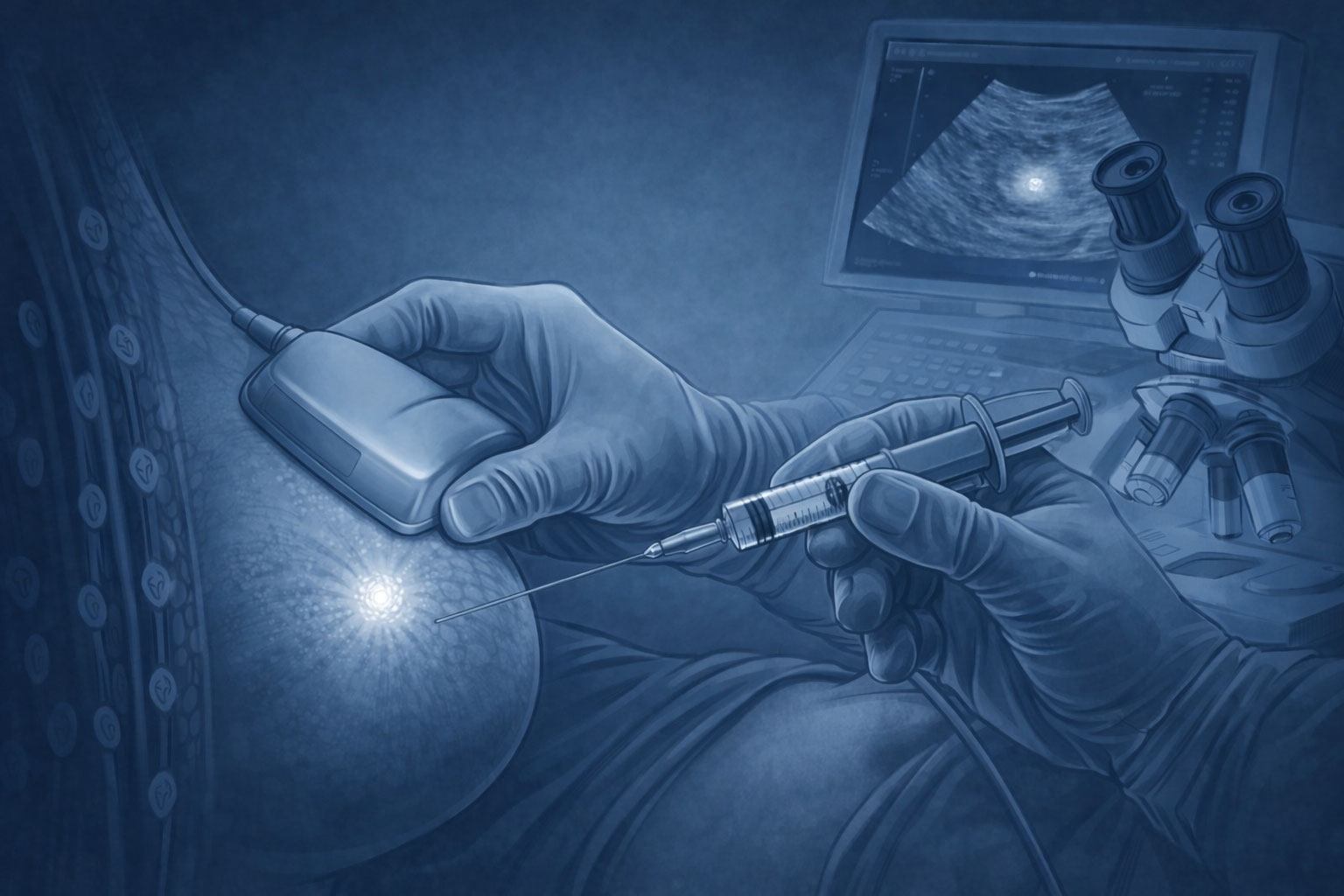
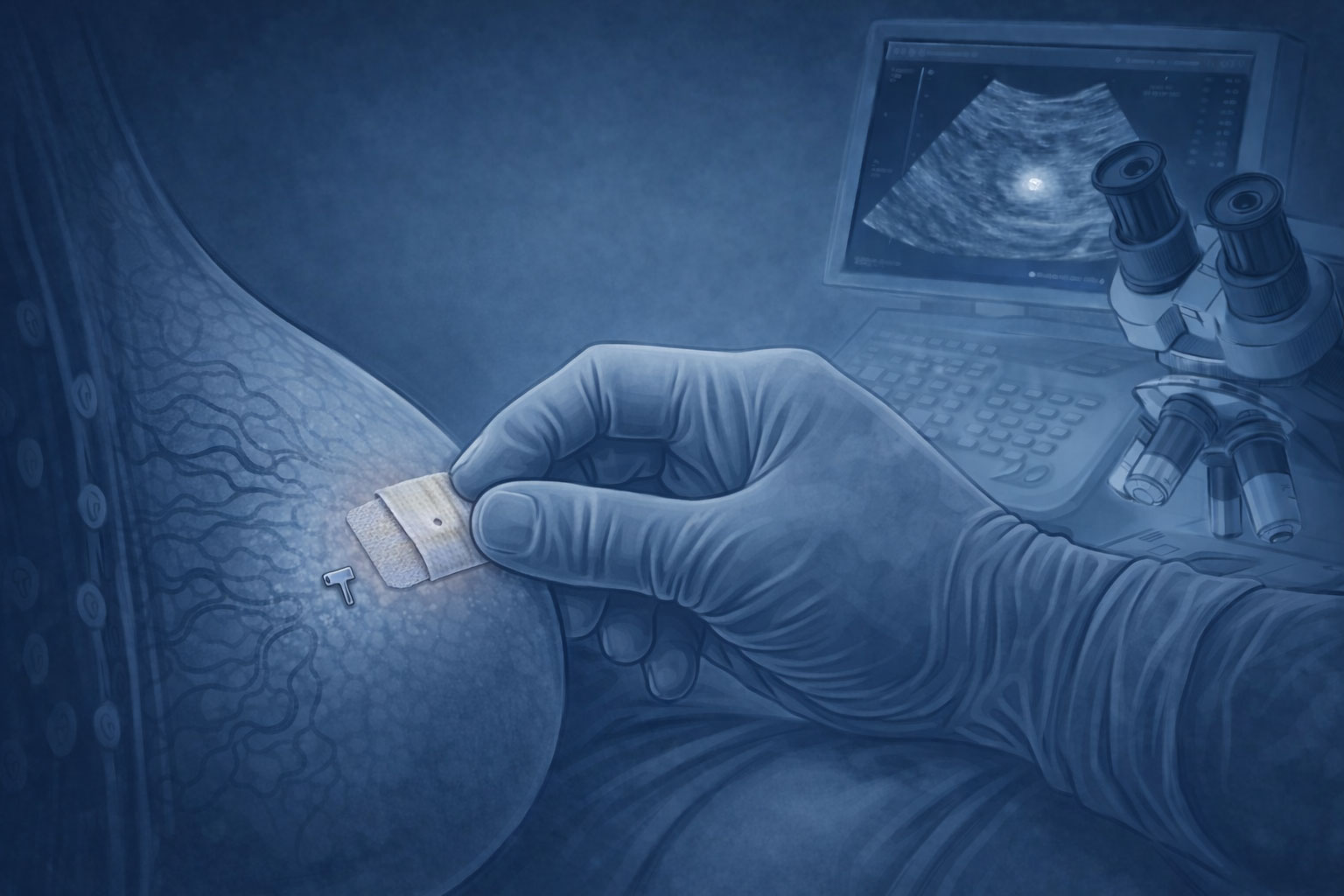
A breast biopsy is a medical test in which a small sample of tissue or cells is taken from a breast lump or suspicious area and examined under a microscope.
It helps to:
- Confirm whether a lump is benign or cancerous
- Avoid unnecessary breast surgery
- Plan the most appropriate treatment
- Provide clarity and peace of mind
Not every breast lump requires a full core biopsy. In many cases, a simpler and quicker test called FNAC (fine needle aspiration cytology) is performed first, using a very thin needle to collect a small number of cells from the lump. This gives the doctor an early indication of whether the growth is likely to be harmless or needs further investigation, often on the same day and without any hospital admission.
Image-guided biopsy is not limited to the breast alone. The same minimally invasive technique is used to sample tissue from many other organs in the body. A thyroid biopsy, for example, follows an identical approach — using ultrasound guidance to place a fine needle precisely into a thyroid nodule and collect tissue for examination, helping diagnose conditions ranging from benign cysts to thyroid cancer.
For a broader understanding of how tissue sampling is performed across different organs — including the liver, lung, kidney, and lymph nodes — the image-guided biopsy page covers the full range of procedures, what to expect, and how each one is tailored to the organ being tested.