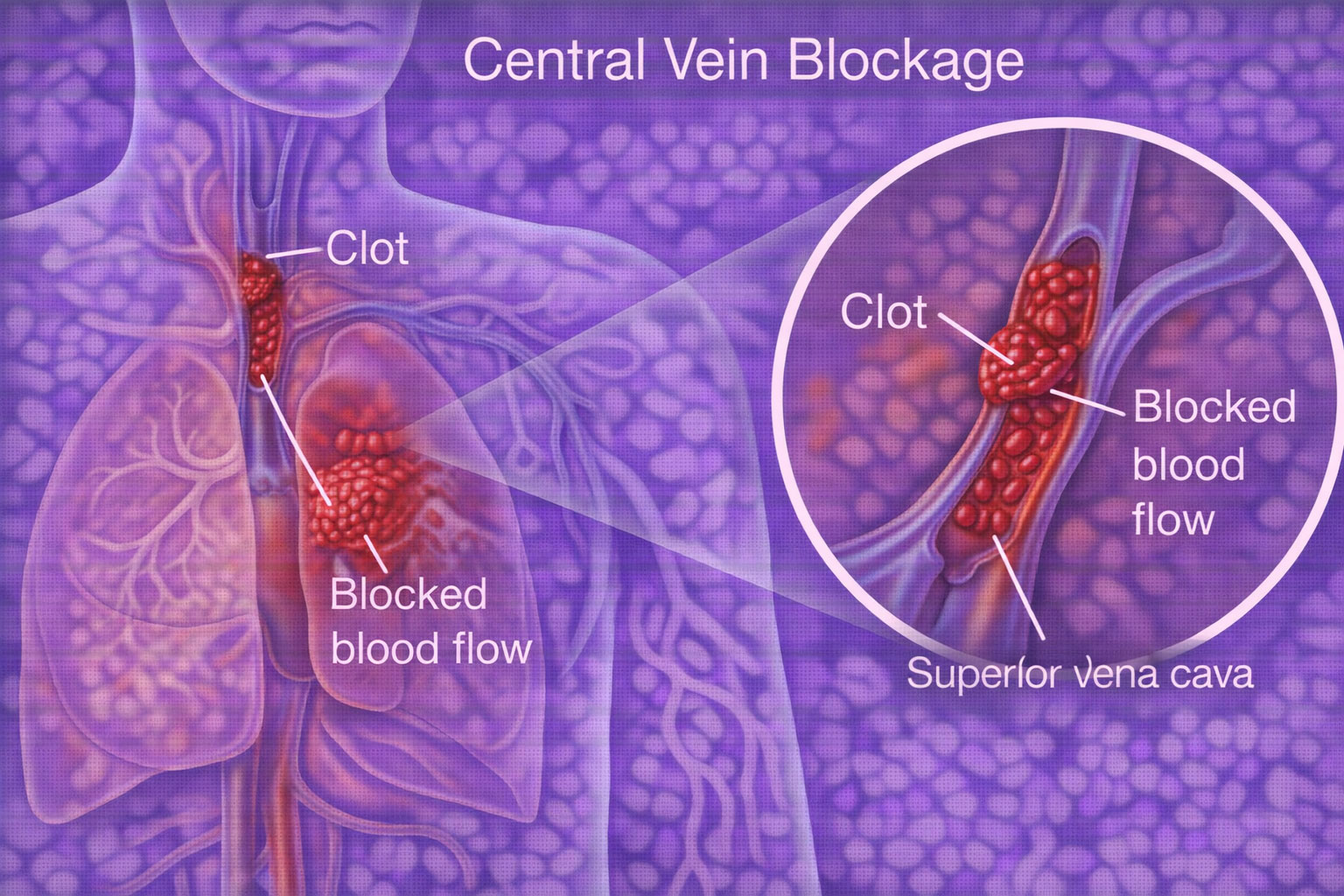
Endo-venous recanalization is a catheter-based procedure used to reopen a blocked or severely narrowed central vein (such as the subclavian vein, brachiocephalic vein, or superior vena cava).
It may involve:
- Crossing the blockage with fine wires
- Balloon angioplasty to widen the vein
- Stent placement to keep the vein open (if needed)
This treatment:
- Restores normal blood flow
- Reduces swelling and pain
- Saves dialysis access
- Avoids major surgery
Central veins are also the same vessels used to place long-term intravenous access lines. A PICC line, a peripherally inserted central catheter, is threaded through an arm vein and advanced into the central venous system to deliver chemotherapy, antibiotics, or nutrition over weeks or months. A blocked central vein can prevent PICC placement or cause it to fail, making treatment of the blockage a necessary first step.
For patients on dialysis, central venous blockage is a particularly serious problem. When the veins are narrowed or blocked, a tunnelled hemodialysis catheter (Permcath) cannot function properly, reducing dialysis efficiency and putting the patient at risk. Restoring central vein patency through recanalization is often what allows the catheter to work reliably again.
In patients where a fistula or graft is used for dialysis access, central vein blockage is one of the most common underlying reasons for poor flow or failure. A dysfunctional dialysis fistula or graft that stops working despite appearing intact on the surface often has a central vein obstruction as its root cause — making both conditions part of the same vascular access problem that needs to be assessed and treated together.