Chennai-based Endovascular & IR Specialist, Dr. Ravindran Ramalingam offers minimally invasive, scar-free treatments ensuring faster recovery and minimal pain.

Endovascular &
IR Specialist

Center Address
- Gleneagles Health City, Perumbakkam, Chennai, TN
- Maruti Scans, Velachery, Chennai, TN

Bronchial artery embolization

A Life-Saving, Minimally Invasive Treatment for Coughing Up Blood

Coughing up blood (called hemoptysis) can be frightening and sometimes life-threatening. It often happens due to lung infections, tuberculosis, bronchiectasis, tumors, or chronic lung disease.

Bronchial Artery Embolization (BAE) is a minimally invasive, image-guided procedure that stops bleeding from the lungs quickly and safely—without open surgery.

👉 Coughing up blood or recurrent chest bleeding?

What Is Bronchial Artery Embolization?

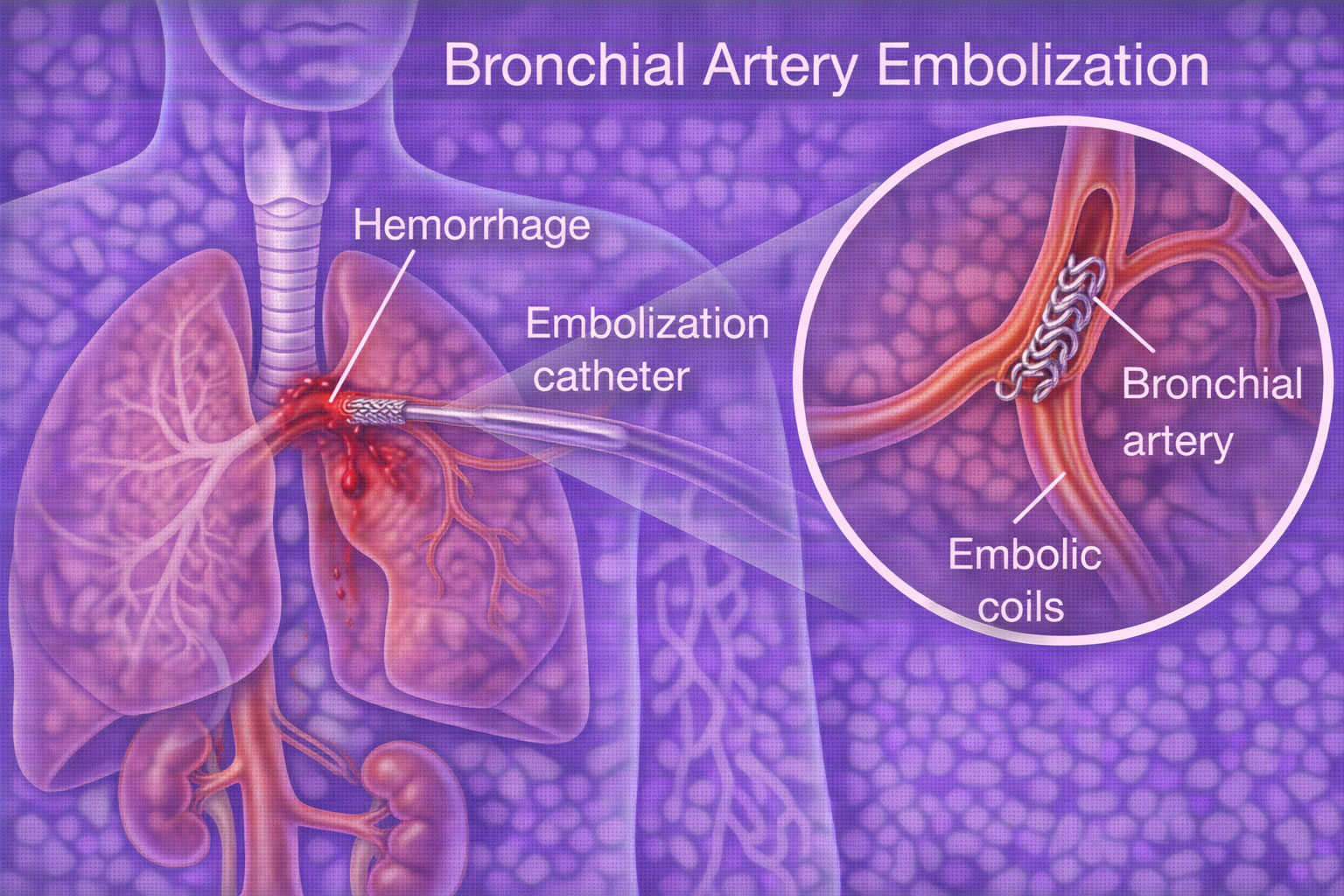
Bronchial Artery Embolization is a procedure where a doctor blocks the bleeding blood vessels in the lungs using tiny particles or coils delivered through a thin tube (catheter).

This treatment:

  • Stops active bleeding from the lungs
  • Prevents re-bleeding in many patients
  • Avoids major chest surgery
  • Works even in emergency situations
  • No open surgery
  • Small puncture, no stitches
  • Rapid control of bleeding
  • Often life-saving

Why Is Bronchial Artery Embolization Done?

BAE is done when a patient has:

  • Moderate to severe hemoptysis (coughing up blood)
  • Recurrent episodes of bleeding from the lungs
  • Bleeding due to conditions like:
    • Tuberculosis (TB)
    • Bronchiectasis
    • Lung infections
    • Lung tumors
    • Chronic lung disease
  • Bleeding that does not stop with medicines

The main goals are to stop the bleeding quickly, stabilize the patient, and avoid surgery.

How Is Bronchial Artery Embolization Done?

The procedure is performed by an interventional radiologist in a cath lab under X-ray guidance.

Step-by-step:

  • You lie on the procedure table; local anesthesia is given (sometimes light sedation)
  • A small puncture is made in the groin or wrist artery
  • A thin catheter is guided to the bronchial arteries (vessels supplying the lungs)
  • Contrast dye is injected to find the bleeding vessel
  • Tiny particles, glue, or coils are injected to block the bleeding artery
  • Blood flow is checked, and the catheter is removed
  • A small dressing is applied

What Are the Risks?

Bronchial artery embolization is generally safe when done in experienced centers. Possible risks with approximate incidence include:

  • Chest pain or discomfort – common (10–20%, usually temporary)
  • Fever for 1–2 days – common (5–10%)
  • Bruising at puncture site – common (10–20%)
  • Re-bleeding later – uncommon (10–30% over time, depends on disease)
  • Infection – rare (<1%)
  • Injury to nearby vessels or nerves – very rare (<1%)
  • Allergic reaction to contrast dye – rare (<2%)
Best Bronchial Artery Embolization Chennai for Hemoptysis

What Are the Alternatives?

Your treatment options depend on:

  • The amount and cause of bleeding
  • Your breathing status and overall health
  • Your personal preferences and medical condition

Your clinician will help you choose the safest and most effective option.

Alternative 1: No Active Treatment (Observation)

  • Avoids undergoing any procedure
  • However, ongoing lung bleeding can be dangerous
  • Blood in the airways can block breathing and lead to serious complications or death
  • Symptoms may worsen suddenly and become life-threatening

Alternative 2: Lung Surgery

  • Involves surgically removing the bleeding part of the lung
  • Considered a major and invasive operation
  • Carries higher risks, especially in sick or unstable patients
  • Requires longer recovery time and hospital stay
  • Because of these risks, minimally invasive embolization is usually tried first

Choosing the Right Treatment

For many patients, bronchial artery embolization offers a fast, effective, and less invasive way to control life-threatening lung bleeding, with lower risk and quicker recovery compared to surgery.

📌 For significant or repeated bleeding, BAE is often the fastest and safest way to control it.

What Happens After Your Procedure?

After BAE:

  • Bleeding usually stops immediately or within a short time
  • You’ll be monitored in the hospital for 1–2 days
  • Mild chest pain or fever may occur for a short time
  • You can usually return to normal activities within a few days
  • Treatment of the underlying lung disease continues
  • Follow-up visits are important to reduce the chance of re-bleeding

Frequently Asked Questions (FAQs) – Bronchial Artery Embolization (BAE)

Bronchial artery embolization is a minimally invasive, image-guided procedure used to stop bleeding from the lungs by blocking the abnormal or bleeding blood vessels.

BAE is done to treat moderate to severe or recurrent hemoptysis (coughing up blood), especially when bleeding does not stop with medicines or keeps coming back.

Yes. Coughing up blood can be serious and sometimes life-threatening, especially if the amount is large or keeps happening. It needs urgent medical evaluation.

No. BAE is a catheter-based, minimally invasive procedure, not open chest surgery.

It is done under local anesthesia and sometimes light sedation. Most patients feel minimal discomfort.

The procedure usually takes 1 to 2 hours, depending on how many bleeding vessels are treated.

BAE is very effective in stopping active lung bleeding in most patients, especially in emergency situations.

Yes, re-bleeding can occur in some patients, especially if the underlying lung disease continues. Repeat embolization can be done if needed.

Possible side effects include chest pain, fever, bruising at the puncture site, or rarely infection or vessel injury. Serious complications are rare.

Most patients stay in the hospital for 1–2 days for observation after the procedure.

Yes. BAE is commonly and safely used in patients with TB, bronchiectasis, and chronic lung infections to control bleeding.

BAE stops the bleeding, but the underlying lung disease still needs treatment to reduce the chance of bleeding coming back.

Most patients return to normal activities within a few days, depending on their overall condition.

Yes. BAE is available in advanced interventional radiology and tertiary care centers across India.

You should seek urgent medical help if:

  • You cough up more than a few streaks of blood
  • Bleeding keeps happening or is increasing
  • You feel breathless, dizzy, or weak
  • You have known lung disease and new bleeding starts

Why Choose Bronchial Artery Embolization?

  • Quickly stops lung bleeding

  • Minimally invasive

  • Avoids major surgery

  • Life-saving in emergencies

  • Faster recovery

  • Can be repeated if needed

Don’t Ignore Coughing Up Blood

If you or your loved one is coughing up blood, it can be serious and even life-threatening. Early treatment can save lives.

Bronchial Artery Embolization offers a fast, safe, and effective way to control lung bleeding without surgery.
Call Now Button