Chennai-based Endovascular & IR Specialist, Dr. Ravindran Ramalingam offers minimally invasive, scar-free treatments ensuring faster recovery and minimal pain.

Endovascular &
IR Specialist

Center Address
- Gleneagles Health City, Perumbakkam, Chennai, TN
- Maruti Scans, Velachery, Chennai, TN

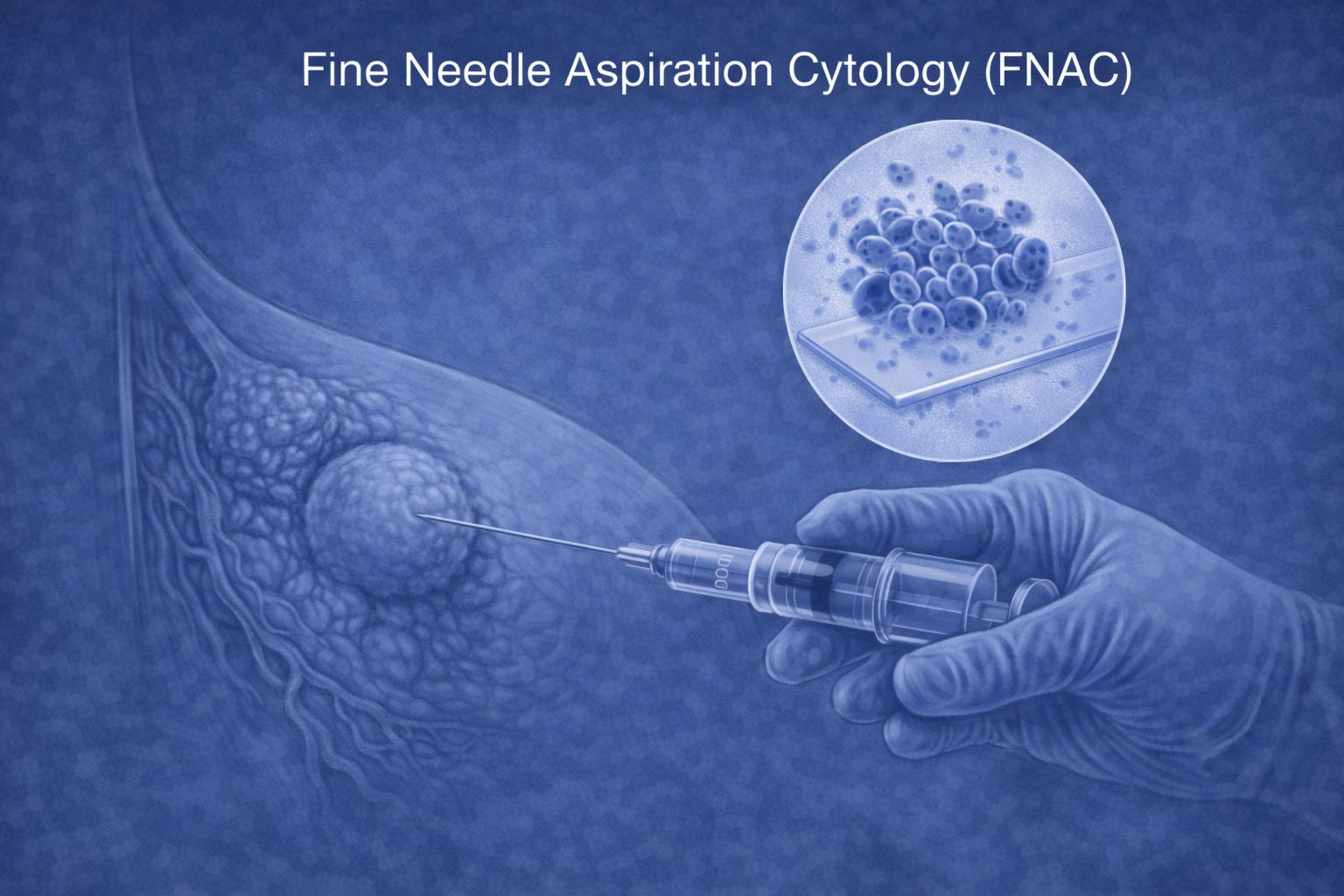
Fine Needle Aspiration Cytology (FNAC)

A Quick, Safe Test to Find Out What a Lump Really Is 

When you notice a lump, swelling, or abnormal area in the body—or when a scan shows something unusual—doctors often recommend FNAC to get a clear answer. 

Fine Needle Aspiration Cytology (FNAC) is a simple, minimally invasive test that uses a very thin needle to take a small sample of cells and check whether the lump is benign (non-cancerous), infected, inflamed, or cancerous. 

👉 Have a lump or an abnormal scan and need clarity? 

What Is Fine Needle Aspiration Cytology (FNAC)?

FNAC is a medical test where a doctor uses a very thin needle to collect a small number of cells from a lump or organ. These cells are then examined under a microscope by a pathologist. 

FNAC helps to: 

  • Find out if a lump is benign or cancerous 
  • Detect infection or inflammation 
  • Decide what treatment is needed next 
  • Avoid unnecessary surgery in many cases 

Common areas where FNAC is done: 

  • Breast 
  • Thyroid 
  • Lymph nodes 
  • Salivary glands 
  • Soft tissue lumps 
  • Liver or lung (with image guidance) 
  • Quick test
  • No stitches
  • Usually done as a day-care procedure
  • Very low risk

Why Is Fine Needle Aspiration Cytology (FNAC) Done?

FNAC is done when: 

  • You have a lump or swelling 
  • A scan (USG/CT/MRI) shows an abnormal spot 
  • The doctor wants to rule out cancer 
  • The cause of enlarged lymph nodes is unclear 
  • There is a need to confirm infection or inflammation 

Main goals: 

  • Get a quick and accurate diagnosis 
  • Start the right treatment early 
  • Avoid unnecessary surgery 
  • Reduce anxiety by knowing the exact cause 

How Is Fine Needle Aspiration Cytology (FNAC) Done?

Most FNAC tests are done in the clinic or radiology room. Some are done with ultrasound or CT guidance for deeper or smaller lumps. 

Step-by-step: 

  • You lie or sit comfortably 
  • The skin is cleaned, and sometimes local anesthesia is applied 
  • very thin needle is inserted into the lump 
  • small sample of cells is gently aspirated (suction) 
  • The needle is removed, and pressure is applied for a few minutes 
  • A small bandage is placed 
  • The sample is sent to the lab for testing 

What Are the Risks?

FNAC is very safe. Most people have no problems at all. Possible risks with approximate incidence include: 

  • Mild pain or soreness at the site – common (20–30%) 
  • Small bruise – common (10–20%) 
  • Minor bleeding – uncommon (5–10%) 
  • Infection – rare (<1%) 
  • Need for repeat FNAC (if sample is insufficient) – uncommon (5–10%) 
fine needle aspiration cytology chennai

What Are the Alternatives?

The best approach depends on: 

  • Your symptoms and overall health 
  • The size, location, and appearance of the lump or swelling 
  • How urgent it is to get a clear diagnosis 

Your clinician will help you choose the most appropriate option. 

Alternative 1: No FNAC 

  • Avoids undergoing any procedure 
  • However, without FNAC, doctors may find it difficult to confirm the diagnosis 
  • This can lead to delay or incorrect treatment if the condition turns out to be serious 


Alternative 2: Watchful Waiting (Observation and Follow-Up) 

  • Regular monitoring with imaging tests (like ultrasound) or blood tests 
  • Used to see if the lump grows, shrinks, or changes over time 
  • Avoids immediate needle testing 
  • Main drawback: if the problem is serious, treatment may be delayed 


Alternative 3: Surgical Biopsy or Excision 

  • Involves surgery to remove part or all of the lump for testing 
  • Considered a more invasive option 
  • Carries higher risks, such as pain, infection, and scarring 
  • Requires a longer recovery period 
  • Surgeons often prefer a simple test like FNAC first before planning surgery 

📌 FNAC is often the first and simplest step to get a diagnosis quickly and safely. 

What Happens After Your Procedure?

After FNAC: 

  • You can go home immediately 
  • Mild pain or swelling may last a few hours to a day 
  • You can return to normal activities the same day or next day 
  • Keep the area clean and dry for 24 hours 
  • The report usually comes in 1–5 days 
  • Your doctor will explain the result and plan further treatment if needed 

Frequently Asked Questions (FAQs) – Fine Needle Aspiration Cytology (FNAC)

FNAC is a simple, minimally invasive test where a very thin needle is used to take a small sample of cells from a lump or organ to check if it is benign, infected, inflamed, or cancerous. 

Doctors recommend FNAC to: 

  • Find out what a lump or swelling really is 
  • Rule out or confirm cancer 
  • Detect infection or inflammation 
  • Decide the next step in treatment 
  • Avoid unnecessary surgery in many cases 

Most people feel only a small prick or slight pressure. The test is quick and usually well tolerated. 

No. FNAC is a needle-based, outpatient procedure, not surgery. 

The procedure usually takes 5 to 15 minutes. 

No. FNAC is a day-care test, and you can go home immediately after the procedure. 

Most reports are available in 1 to 5 days, depending on the lab and whether special tests are needed. 

No. FNAC is done to find out what the lump is. Many FNAC results show non-cancerous (benign) conditions. 

FNAC is highly accurate for many common lumps, especially in the thyroid, breast, and lymph nodes. Sometimes, a biopsy may still be needed for confirmation. 

This is a common fear, but with modern techniques, the risk of spreading cancer is extremely low to almost zero. 

FNAC is very safe. Minor side effects like mild pain, bruising, or small bleeding can occur. Serious problems like infection are very rare. 

Usually no. Your doctor may advise you to stop certain blood-thinning medicines for a short time if needed. 

Yes. FNAC can be done using ultrasound or CT guidance for deeper organs like the liver, lung, or deep lymph nodes. 

If the sample is not enough or the result is unclear, your doctor may suggest a repeat FNAC or a biopsy. 

Yes. FNAC is widely available in hospitals and diagnostic centers across India. 

Why Choose FNAC?

  • Quick and simple test 
  • Minimally invasive
  • Very low risk
  • No stitches or hospital stay
  • Helps avoid unnecessary surgery
  • Guides the right treatment

Don’t Delay a Clear Diagnosis

If you have a lump, swelling, or abnormal scan, FNAC can give you fast and reliable answers and help your doctor plan the best treatment.

Early diagnosis means better treatment and peace of mind.
Call Now Button