Here is the updated content:
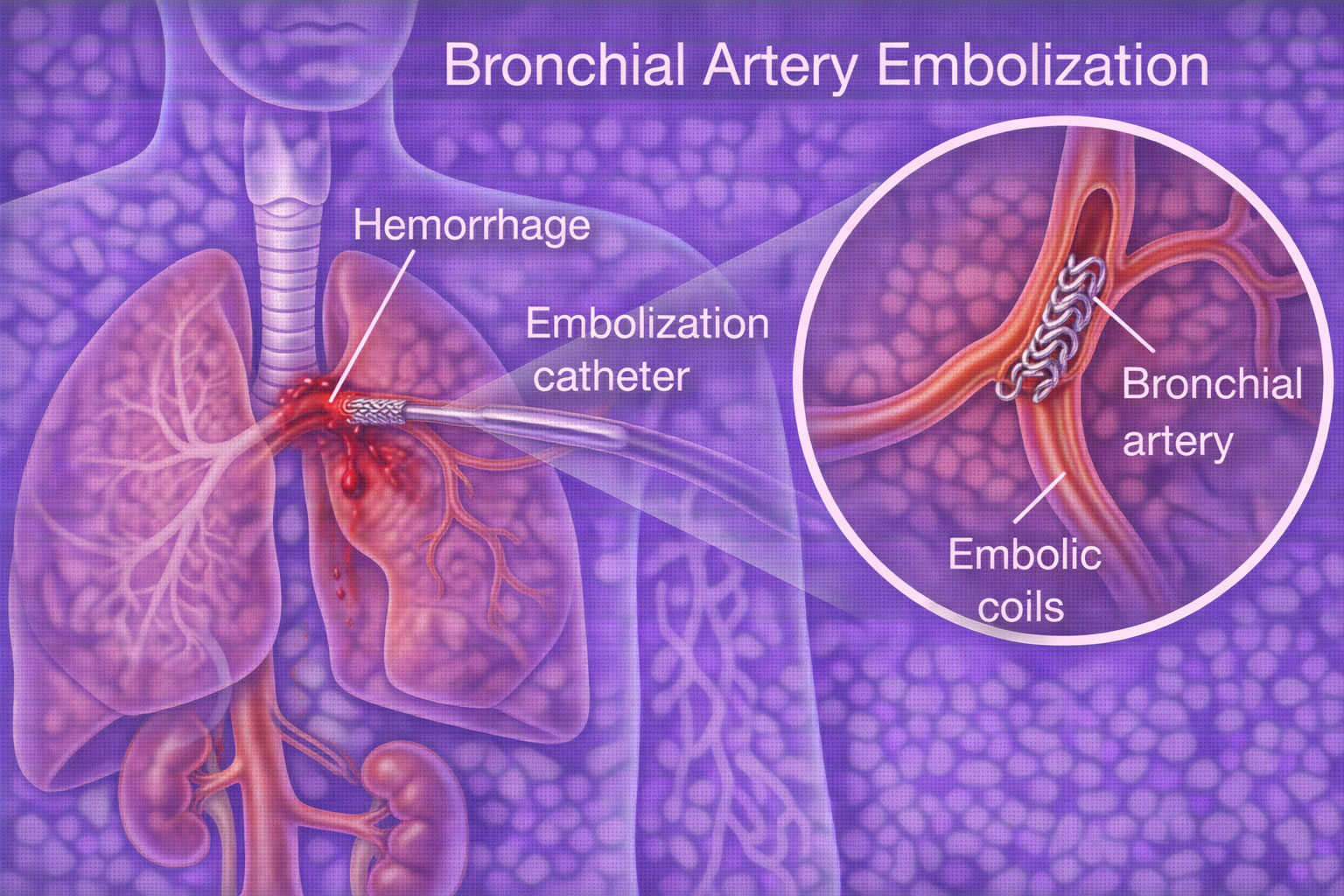
Bronchial Artery Embolization is a procedure where a doctor blocks the bleeding blood vessels in the lungs using tiny particles or coils delivered through a thin tube (catheter).
This treatment:
- Stops active bleeding from the lungs
- Prevents re-bleeding in many patients
- Avoids major chest surgery
- Works even in emergencies
Before any treatment for a lung condition can begin, an accurate diagnosis is essential. A lung biopsy is often performed alongside or before embolization using CT guidance to collect a small tissue sample from a lung nodule or mass. This helps confirm whether the bleeding is linked to tuberculosis, a fungal infection, lung cancer, or another underlying condition, so the right treatment plan can follow.
In some patients, bleeding in the lungs is accompanied by fluid collecting in the space surrounding the lung, a condition called pleural effusion. When this happens, pleural fluid drainage is carried out alongside embolization to remove the accumulated fluid, relieve breathlessness, and allow the lung to expand fully during recovery.
While bronchial artery embolization specifically targets bleeding in the lungs, the same catheter-based technique is used to control bleeding elsewhere in the body. Gastrointestinal bleeding where arteries supplying the stomach or intestines begin to bleed is managed through an identical approach, with the doctor navigating to the exact bleeding vessel and sealing it using the same materials used in the chest.